
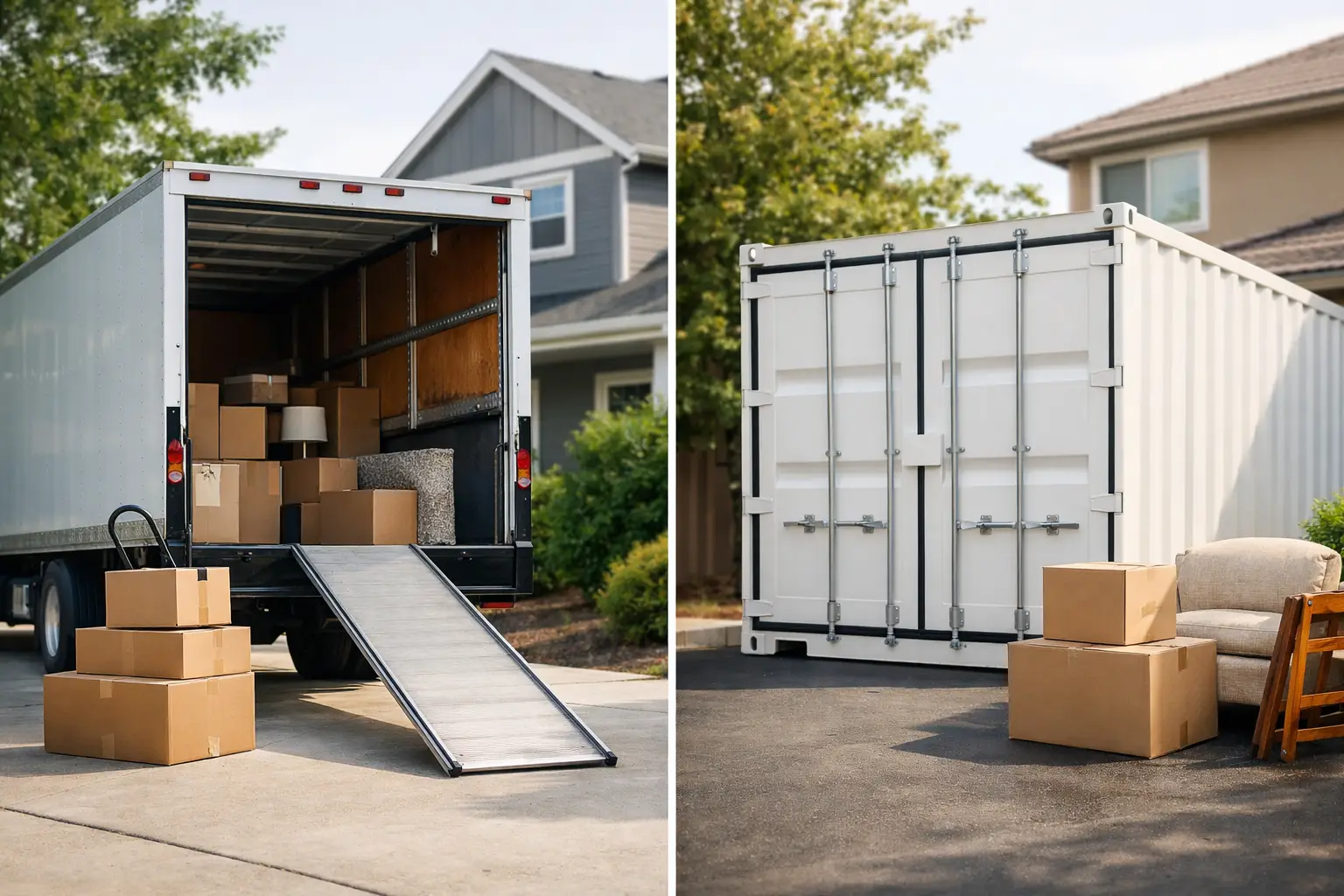
Moving Truck or Storage Container: Which Fits?
A move rarely goes exactly as planned. Closing dates shift, a lease ends before the new place is ready, helpers cancel, and the garage somehow holds more than expected. Choosing a moving truck or storage container is really about deciding how much control you need over the schedule – and how much moving-day pressure you are willing to take on.
A rental truck can be the right answer for a short, local move with a firm start and finish. A portable storage container can make more sense when your timeline is uncertain, you need storage before or after the move, or you want to load without racing a return deadline. The best choice depends on the details of your move, not just the advertised daily price.
Moving Truck or Storage Container: Start With Your Timeline
The biggest difference is simple: a moving truck is built for a fast move, while a portable storage container is built for a move that may take time.
With a truck rental, you generally pick it up, load it, drive it, unload it, refuel it, and return it within a scheduled rental period. That works well when you are moving from one apartment or house directly into another and both locations are ready. If you have a reliable crew, a clear route, and a realistic plan to finish in a day or two, the speed can be useful.
The downside is that the clock is always running. A late closing, elevator delay, rainstorm, or missing helper can turn a simple move into an expensive rush. You may also be forced to pack everything before the truck arrives, even if you would rather sort, donate, or sell items as you go.
A storage container is delivered to your home, business, or job site and stays there while you load it. You can work room by room, pack over several days or weeks, and keep the container until you are ready for it to be moved or stored. That flexibility is especially valuable during home renovations, downsizing, estate cleanouts, and moves with a gap between addresses.
When a Moving Truck Makes More Sense
A truck rental is not automatically the harder option. For the right move, it can be efficient and cost-effective.
It is often a good fit when you are moving locally, have access to both properties on the same day, and can complete loading and unloading quickly. A small studio, one-bedroom apartment, or limited office move may not need the extra time that comes with a container rental. If you are comfortable driving a larger vehicle and have friends or movers ready to help, a truck can keep the process compact.
A truck may also be better if your destination cannot accommodate a container. Tight streets, limited parking, certain apartment communities, and some homeowners associations can restrict where a container may be placed. Before deciding, check the space at both locations and ask about permits or parking rules if needed.
Still, compare the full cost rather than the daily truck rate alone. A truck move can include mileage charges, fuel, insurance coverage, moving supplies, extra rental days, and the cost of hiring labor for a tightly scheduled window. Those expenses can add up quickly when the move takes longer than expected.
When a Storage Container Is the Better Fit
A portable storage container gives you breathing room. Instead of handling every part of the move in one intense day, you can make steady progress on your own schedule.
This approach works particularly well when you need to clear space before listing a home, protect furniture during remodeling, or store belongings between a sale and a new move-in date. It can also help small businesses manage inventory overflow, office updates, or seasonal equipment without making repeated trips to an off-site storage unit.
For contractors, on-site storage can keep tools and materials close to the job. That reduces loading and unloading every morning and gives crews a more organized place to keep equipment. The container stays where the work is happening, which is often more practical than renting a truck or driving back and forth to a storage facility.
At MODS, containers are weatherproof steel units with double-sealed doors and ventilation. They load at ground level, so you do not have to carry furniture up a steep truck ramp. When it is time to move the container, the Level Lift delivery system keeps it level during transport to help reduce shifting inside.
That does not mean a container removes every moving task. You still need to pack carefully, protect furniture, distribute weight properly, and leave enough room for the doors to close securely. But it gives you more time to do those things right.
Consider Access at Both Locations
A container needs a clear, reasonably level delivery area. Driveways are common placement spots, but every property is different. Consider overhead clearance, low branches, gates, parked vehicles, narrow turns, and soft ground. If your new address is a downtown apartment or a neighborhood with limited street access, a truck may be easier to manage.
For homes in Fort Worth, Amarillo, and Oklahoma City, weather can also affect moving plans. Wind, heat, sudden rain, and icy conditions are much easier to work around when you have several days to load instead of one fixed truck-return deadline.
The Storage Question Changes the Decision
If you need storage, a truck rental often creates an extra step. You load the truck, unload at a self-storage unit, then load again when it is time to move. That means more lifting, more trips, and more chances for items to be damaged or misplaced.
A storage container can eliminate much of that handling. Load once at your property, then choose on-site storage, transportation to a new address, or secure off-site storage until you are ready. For many families, that is the real advantage. The container is not just transportation. It is a holding place that adapts when life does not follow the original calendar.
This is especially useful for situations such as these:
- Your new home is not ready when your current home sale closes.
- You are renovating several rooms and need furniture out of the way.
- You are staging a home and want to remove personal items gradually.
- Your business needs temporary space for inventory, records, or equipment.
If none of those situations apply and you can move directly from point A to point B, a truck may remain the simpler option. The value of a container increases when storage and timing are part of the problem.
Compare the Work, Not Just the Price
The lowest advertised price does not always produce the lowest-stress move. Think about the work each option asks you to do.
With a truck, you are responsible for driving a larger vehicle, planning the route, dealing with fuel, and returning it on time. That can be manageable for experienced movers, but it is a major consideration for anyone uncomfortable driving a loaded truck through traffic or backing into a tight driveway.
With a portable container, transportation is handled for you. Your focus stays on packing and loading. You also avoid unloading everything at a storage unit only to reload it later. The trade-off is that container delivery and pickup must be scheduled, and placement space needs to be available.
Ask yourself a few practical questions. Is there a firm move-in date? Do you need storage before, during, or after the move? Can you complete the work in one day without cutting corners? Are you comfortable driving a rental truck? Does your property have room for a container? Your answers usually make the better choice clear.
Pack for the Option You Choose
Good packing matters whether you use a truck or a container. Put heavier boxes on the bottom, keep weight balanced from side to side, and use moving blankets or padding around furniture. Fill open spaces so items cannot slide during transportation, but do not pack so tightly that boxes are crushed.
For a container, load large, heavy items first and place frequently needed belongings near the doors if you may need access before delivery. For a truck, plan the load order around unloading. Items needed first at the new home should be accessible, not buried behind mattresses and appliances.
A thoughtful load saves time later. It also makes it easier to find essentials when you are tired, surrounded by boxes, and just trying to get through the first night in a new place.
The right choice is the one that fits the move you actually have – including the delays, storage needs, and space limitations that do not show up on a checklist. If your move has a hard deadline and a direct route, a truck can do the job. If your schedule needs room to change, a portable storage container gives you a practical way to keep moving forward without forcing everything into one long day.