
U-Haul vs Portable Storage: Which Fits?
If your move depends on finishing everything in one day, a truck rental can make sense. If your schedule is already messy, the real question in the uhaul vs portable storage decision is how much pressure you want to put on yourself. For many households and businesses, that timing difference matters more than anything else.
A lot of people start by comparing price alone. That is understandable, but it usually misses the bigger cost in a move or storage project – time, stress, extra trips, rushed packing, and the risk of damage when everything gets crammed into one deadline. The better choice depends on what you are moving, how far it is going, and whether you need transportation, storage, or both.
U-Haul vs portable storage: the core difference
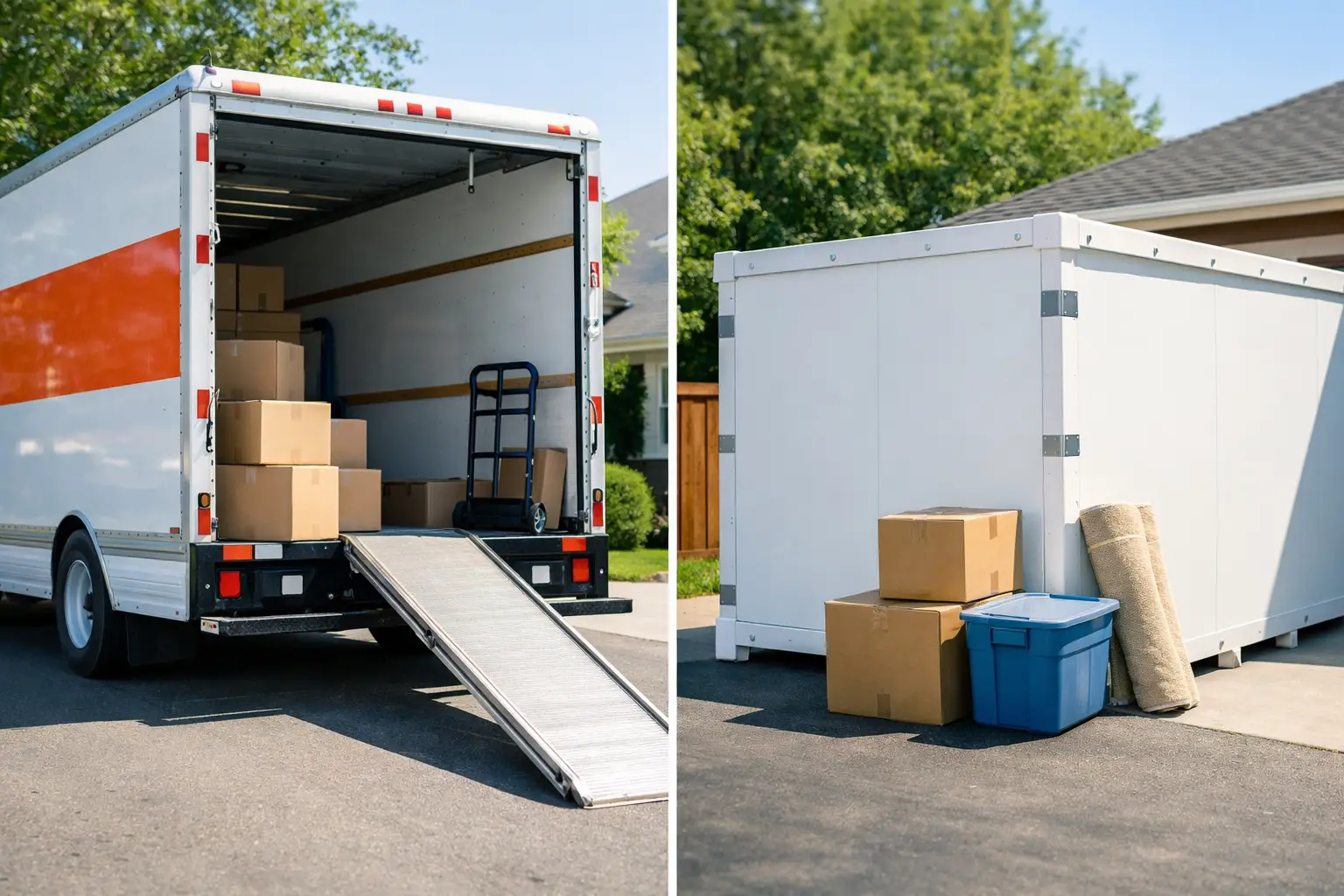
A U-Haul rental is a vehicle. You pick it up, load it, drive it, unload it, and return it on a set schedule. Portable storage is a container delivered to your home, business, or job site. You load it on the ground, keep it on-site or have it moved, and use it on a timeline that usually has more flexibility.
That difference changes the entire experience. With a truck, the clock starts when you pick up the keys. With portable storage, the process is built around your schedule instead of the rental counter’s schedule.
For a local apartment move with strong helpers and a clear plan, a truck can be efficient. For a renovation, staged move, downsizing project, estate cleanout, or business storage need, portable storage usually gives you more breathing room.
When a U-Haul makes more sense
There are times when renting a truck is the simpler answer. If you are moving a small amount of furniture across town and can load and unload the same day, a truck may cost less upfront. The same is true if you are comfortable driving a larger vehicle, have a crew lined up, and do not need any storage between locations.
Truck rentals also work well when access is tight and there is no good place to set a container, or when building rules make portable container placement difficult. Some customers simply prefer to stay in control of the drive and finish everything in one push.
But that lower starting price can change quickly. Fuel, mileage, equipment rental, coverage, and the value of your own time all add up. If the move takes longer than planned, the truck becomes expensive in ways that are easy to overlook at the beginning.
When portable storage is the better fit
Portable storage works best when life is not lining up neatly. That includes delayed closings, remodeling projects, temporary living arrangements, business overflow, and family moves where packing happens in phases instead of all at once.
Instead of rushing to load in a few hours, you can pack over several days or longer. That usually means better organization, less breakage, and fewer last-minute decisions. Ground-level loading also helps. You are carrying boxes and furniture straight in rather than pushing everything up a ramp into a truck.
For storage, the difference is even more obvious. With a truck, you still need another destination once it is loaded. With portable storage, the same container can stay on your property or be moved to a secure storage facility. That cuts out the extra unload-reload cycle that wears people out and increases the chance of damage.
Cost is not just the rental rate
People often ask which is cheaper, but the honest answer is that it depends on the job. A truck can be cheaper for a short, simple move completed in one day. Portable storage often provides better value when the project stretches over time or includes storage.
Think about the full picture. Are you paying for gas, mileage, moving blankets, dollies, and extra labor because the job has to be done fast? Will you need to rent a storage unit after the move anyway? Are you making multiple trips because the truck size was wrong or the timeline got away from you?
Portable storage can reduce those hidden costs by combining loading, transportation, and storage into one process. For homeowners and contractors, that can mean fewer disruptions. For families, it often means fewer paid hours for movers because the loading window is less frantic.
The schedule question matters more than most people expect
Moving problems are usually schedule problems. The house is not ready. The apartment elevator is booked for a narrow window. The renovation runs a week longer. The office furniture arrives before the suite is finished. This is where portable storage tends to pull ahead.
A truck rental gives you a deadline. Portable storage gives you flexibility. That can be the difference between a controlled move and a stressful one.
For example, if you are renovating a home in Fort Worth or clearing space during a commercial project in Oklahoma City, keeping a container on-site can simplify the entire job. You load as rooms are ready, keep tools or furniture out of the way, and avoid repeated trips to an off-site unit. That convenience is hard to match with a truck rental.
Protection and loading conditions
Not all moving and storage equipment is built the same way, and this is where shoppers should look past the basic sales pitch. A rental truck is meant for transport. A portable storage container should also be designed to protect items while sitting on-site or in storage.
That means construction matters. Steel containers, weather resistance, door seals, and ventilation all make a difference when contents may stay packed for a while. Ground-level access matters too, especially for heavier furniture, appliances, job-site materials, or older family members who are helping load.
Delivery also matters more than many first-time customers realize. A container that stays level during transport helps reduce shifting inside. That is a practical feature, not a marketing extra. When items move less, they are less likely to arrive damaged.
Which option works better for businesses and contractors?
For many business uses, portable storage is the stronger option. A truck is temporary transportation. A container can function as working storage. That is useful for retail overflow, office moves, school storage, records, seasonal inventory, and construction materials.
Contractors often need secure storage at the job site, not just a way to move tools from one address to another. Business owners may need a container for a month during a remodel, or while waiting for fixtures, permits, or inventory transitions. In those cases, renting a truck would solve only one small part of the problem.
This is where a local provider can be an advantage. Service, scheduling, and responsiveness matter when the container is part of your daily operation instead of a one-day rental.
Common situations where portable storage wins
Portable storage tends to be the better fit when your move has a gap between locations, when packing will happen over time, or when you need both transportation and storage in one solution. It also stands out for home staging, downsizing, estate transitions, and remodels where rooms need to be cleared in phases.
It is also a strong choice for customers who do not want to drive a large truck. That is not a small issue. For many people, avoiding truck driving, fuel stops, parking concerns, and return deadlines makes the entire process far more manageable.
So, how should you decide?
Start with three questions. Do you need to finish in one day? Do you need storage at any point? Do you want control over the pace of packing?
If the answers are yes, no, and no, a truck may be enough. If the answers involve uncertainty, timing gaps, or a need for storage, portable storage is usually the more practical choice.
For many customers, the best decision in the uhaul vs portable storage comparison comes down to this: are you renting transportation, or are you solving a bigger moving and storage problem? If it is the second one, a container-based service is often the better tool for the job.
MODS is built around that kind of flexibility – giving customers time to load, the option to store on-site or off-site, and a simpler process that does not depend on a one-day rush. When your move has real-life complications, that extra room in the schedule can make all the difference.
The right choice is the one that fits your timeline, your workload, and your stress level, not just the lowest number on the first quote.