
Staging a Home to Sell: How a Driveway Storage Container Helps You Declutter Fast
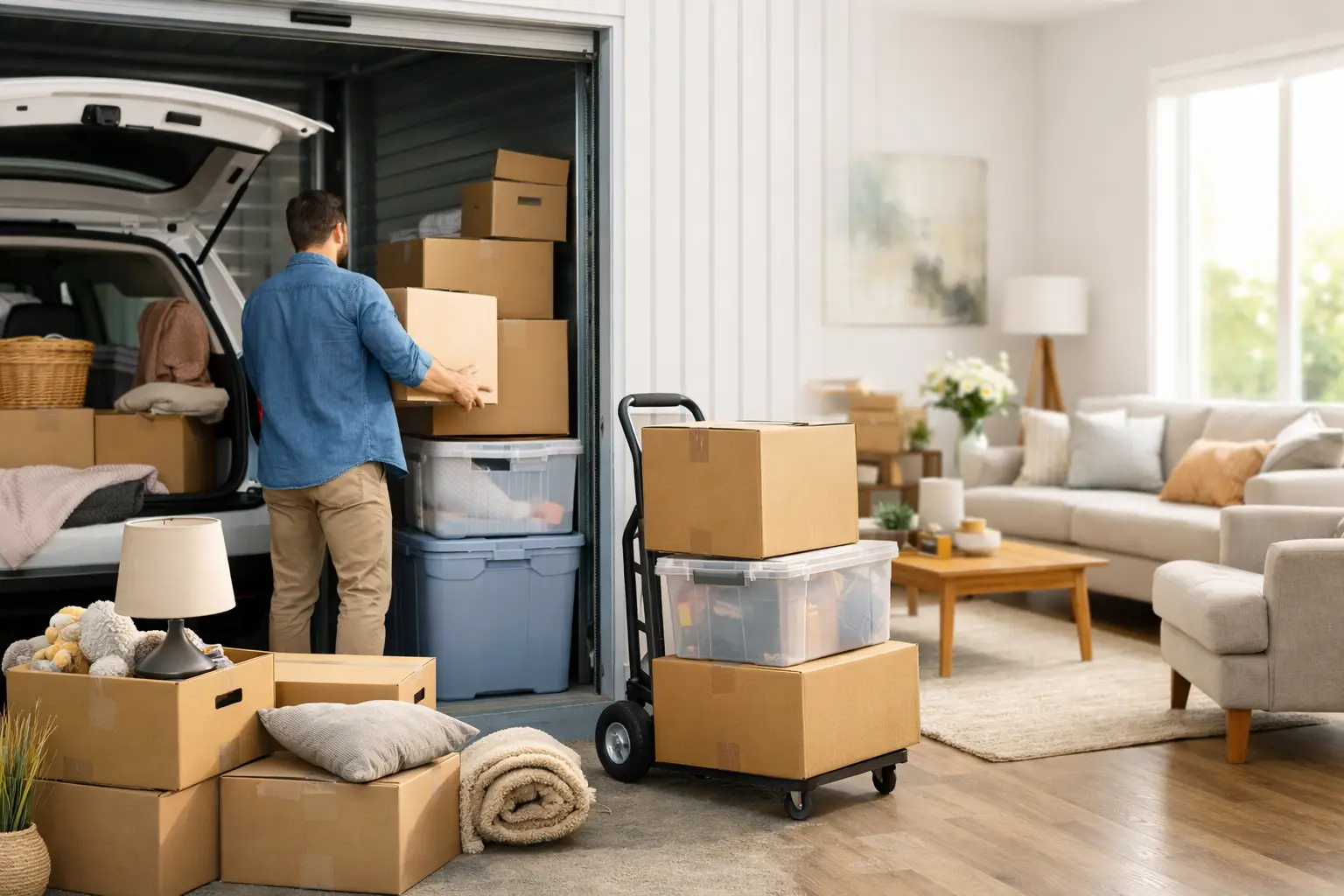
A portable storage container lets you clear furniture, decor, and extra belongings out of the house before listing photos, then keep it all secure until you move. Load it on your driveway, then have it moved to a secure yard during showings so the curb view stays clean. When the home sells, the same container goes to your next address.
Why Does Decluttering Matter When Selling a Home?
Buyers need to picture themselves in the space, and clutter gets in the way. In the National Association of REALTORS 2025 Profile of Home Staging, 83 percent of buyers’ agents said staging makes it easier for buyers to visualize a property as a future home. See the NAR staging summary.
Decluttering is the first step in almost every staging plan. In an earlier NAR staging survey, 95 percent of agents recommended decluttering before listing. The challenge is where to put everything while you still live in the house.
How Does a Storage Container Help With Staging?
| Staging Stage | How a MODS Container Helps |
| Before listing photos | Clear extra furniture and personal items quickly, steps from the door |
| During showings | Move the loaded container to a secure yard so the curb view stays clean |
| Under contract | Keep belongings stored until closing |
| Moving day | Deliver the same container to your next home, so you pack only once |
Compared with a self storage unit, you skip the truck rental and the double handling. See portable storage vs self storage.
It also helps with timing. Many sellers do not know exactly when the home will sell or when the next home will be ready. A container that can sit on the driveway, move to a yard, and then deliver to a new address covers every step of that uncertain window without a second moving day.
What Should I Remove From Each Room Before Photos?
Focus on the rooms buyers care about most. The 2025 NAR profile found the living room, primary bedroom, and dining room are the most commonly staged rooms.
| Room | Remove to Storage |
| Living room | Extra chairs, side tables, oversized sectionals, most decor, stacks of media |
| Primary bedroom | Extra dressers, exercise gear, half the closet, personal photos |
| Dining room | Table leaves, extra chairs, china cabinet contents |
| Kitchen | Small appliances, overflow pantry items, magnets and papers |
| Garage | Anything that blocks a clear view of the space |
| Closets | At least a third of contents so they look roomy |
| Patio | Worn furniture, toys, and yard clutter |
Tip: remove personal photos, collections, and anything that ties the home to your personal taste, so buyers focus on the space.
How Do I Decide What Stays and What Goes?
Keep what shows the room’s purpose and size; store what makes the room look smaller, busier, or more personal. A quick three-pile method works for most homes.
- Stay: one main furniture set per room, a few neutral decor pieces, and items needed for daily life.
- Store: extra furniture, collections, seasonal decor, bulky exercise gear, and anything personal.
- Donate or sell: things you would not move to the next home anyway. Staging is a good time to lighten the load.
Walk each room from the doorway, the way a buyer will see it in listing photos. If an item draws the eye away from the space itself, it probably belongs in the container. Many sellers find that living with less during the listing period also makes packing faster later.
Texas and Oklahoma Seasonal Tips
Summer listings in DFW and Oklahoma City benefit from clear, bright rooms and uncluttered patios, since outdoor living spaces show well in warm months. Winter listings in Amarillo and the Panhandle benefit from clear entryways and mudrooms. In every market, pack heat-sensitive items such as candles, photos, and electronics separately and keep them with you. See are portable storage containers climate controlled.
What Size Container Do I Need for Staging?
Size the container for what you are removing now, not your whole household. You can add a second container on moving day.
| Staging Scope | Suggested Size |
| Light declutter of a condo or small home | 8 foot |
| Clearing extra furniture from a three-bedroom home | 12 foot |
| Heavy declutter plus garage clean-out | 16 foot |
| Staging now and moving later from a large home | 16 foot, then add a second container on moving day if needed |
See storage container sizes explained.
Get Your Home Listing-Ready
Clear the clutter this week with a steel container on your driveway, then store it off site during showings.Call (817) 847-6637, Amarillo (806) 350-6637, OKC (405) 720-7344, or contact MODS online.
What Does a Staging Timeline With a Container Look Like?
| When | What to Do |
| Three to four weeks before listing | Walk through with your agent or stager and list what goes |
| Two to three weeks before | Container arrives; load extra furniture and boxed belongings |
| One to two weeks before | Deep clean, minor repairs, and final staging |
| Listing photos | Container moves to the MODS yard for a clean curb view |
| Showings | Belongings stay secure off site |
| Closing | Container delivered to your next home |
Local rules matter: Fort Worth limits residential containers to 30 days, and Southlake allows ten days with a permit. Moving the container to our yard keeps you within limits. Read do storage containers need permits.
Should the Container Stay on the Driveway During Showings?
Usually not. A clear driveway and front yard look better in photos and in person, so move the loaded container off site before the listing goes live. It also keeps your belongings away from open houses and lockbox traffic.
- Before photos: schedule pickup the day after you finish loading.
- During showings: your container waits locked at a MODS yard.
- Need something? Schedule a yard visit or a short redelivery.
- After closing: we deliver to your new address.
Read can you access your container while it is in storage.
How Do I Protect Staged Belongings in Storage?
- Wrap furniture in moving blankets and keep wood pieces off the floor.
- Use sealed bins for clothing, linens, and paper.
- Keep valuables and documents with you, not in the container.
- Lock the container with your own disc or shrouded padlock.
See are portable storage containers weatherproof and are portable storage containers secure.
What Should I Tell My Real Estate Agent?
Share your container plan early so it lines up with photos, open houses, and closing. Agents and stagers across DFW, Oklahoma City, and Amarillo can coordinate staging dates with MODS delivery and pickup.
- Share delivery and pickup dates so photos are not scheduled with a container in the driveway.
- Ask your stager for a list of items to remove before the container arrives.
- Confirm HOA rules on containers if your neighborhood has an association.
- Plan the final delivery date to your next home around your closing.
Home Staging Storage FAQs
1. How does a storage container help with home staging?
It gives you a place right on your driveway to clear furniture and belongings before listing photos, then keeps everything secure until you move.
2. Does staging really help sell a home?
In NAR’s 2025 Profile of Home Staging, 83 percent of buyers’ agents said staging makes it easier for buyers to visualize a home as their own.
3. What should I remove before listing photos?
Extra furniture, most decor, personal photos, small kitchen appliances, and about a third of closet contents, starting with the living room, primary bedroom, and dining room.
4. Should the container stay in the driveway during showings?
Usually not. Move it to a secure MODS yard before photos so the curb view is clean and belongings stay away from showing traffic.
5. What size container do I need for staging?
Light decluttering fits an 8 foot container; clearing extra furniture from a three-bedroom home usually fits a 12 foot.
6. Can I use the same container for my move after the sale?
Yes. MODS can deliver the same loaded container to your next home, so you only pack once.
7. How long can a staging container stay on my property?
It depends on your city and HOA. Fort Worth allows 30 days and Southlake ten days with a permit, so plan to move it off site if needed.
8. Is a container better than a self storage unit for staging?
For most sellers, yes. It skips the truck rental and extra handling, and it can go straight to your next home.
9. Can I get items out of the container during showings?
Yes. Schedule a yard visit or a short redelivery with your local MODS yard.
10. When should I book a container before listing?
Two to three weeks before your listing date, so you have time to load before photos.
Make Your Listing Shine
MODS Mobile On Demand Storage helps Texas and Oklahoma sellers declutter fast, stage with confidence, and move once. A steel container on your driveway, secure yard storage during showings, and delivery to your next home. Call (817) 847-6637, Amarillo (806) 350-6637, or OKC (405) 720-7344, or contact MODS online.