
How Portable Storage Delivery Works
A lot of moving stress comes from the clock. With a rental truck, you rush to load it, drive it, unload it, and return it before extra fees start stacking up. That is why so many people ask how portable storage delivery works. The short answer is simple: a storage container is delivered to your home, business, or job site, you load it on your own schedule, and then it is either moved to a new location or stored until you need it again.
That sounds straightforward because it is. But the details matter, especially if you are comparing portable storage to truck rental, traditional self-storage, or a full-service moving company. The real value is not just the container itself. It is the flexibility built into the process.
How portable storage delivery works from start to finish
The process usually starts with choosing the container size and setting a delivery date. For most customers, that means thinking through what needs to be stored or moved. A homeowner may need space during a remodel. A family may need a container while selling one house and waiting to close on another. A contractor may need secure on-site storage for tools and materials.
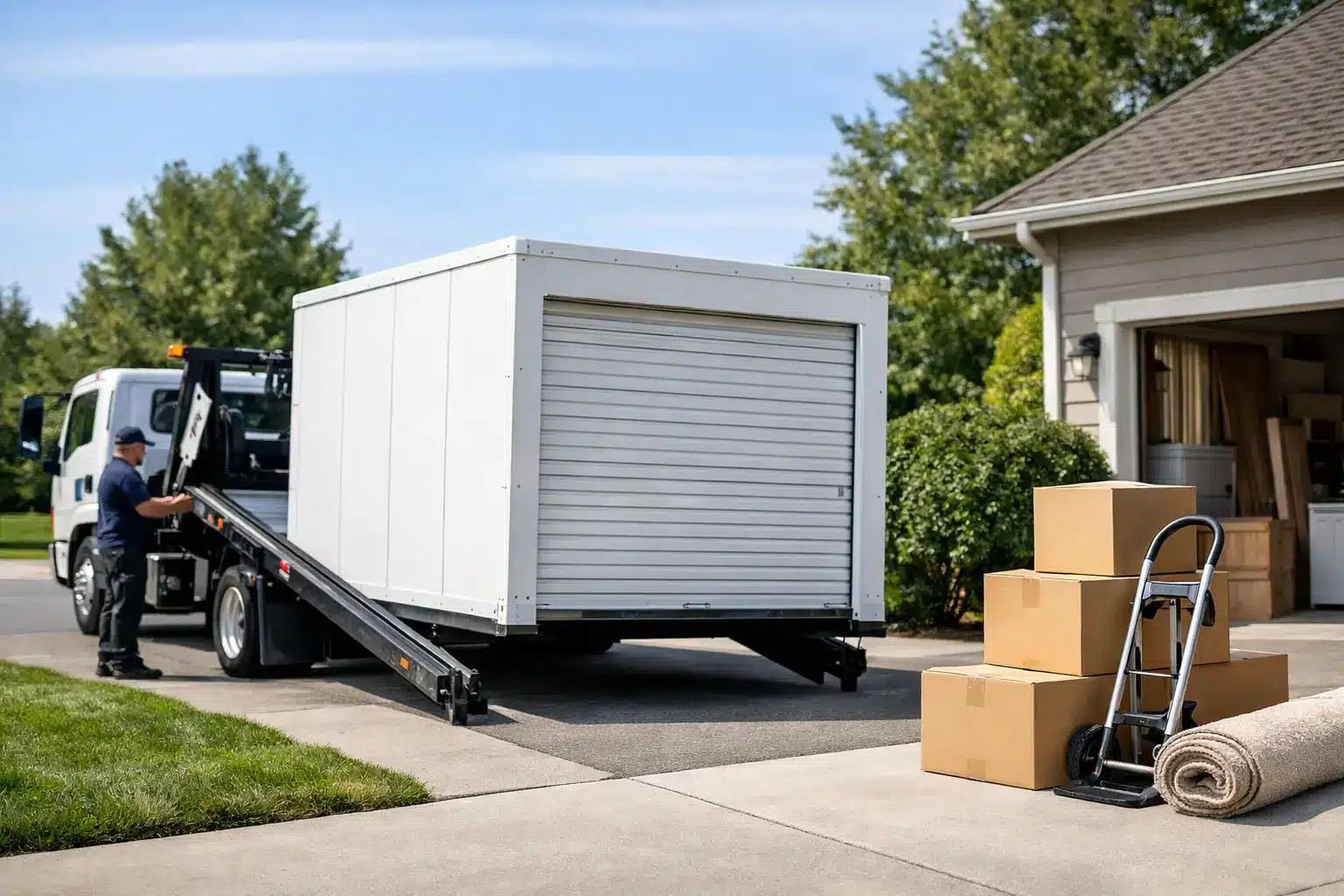
Once the container is scheduled, it is delivered directly to the address you specify. Unlike a self-storage unit, you do not have to drive back and forth across town. Unlike a moving truck, you do not have to pick anything up yourself. The container comes to you.
After delivery, the container stays on-site so you can load it at ground level. That point matters more than many first-time customers expect. Ground-level loading is easier on your back, easier on bulky furniture, and easier when you are moving over several days instead of in one exhausting push.
When you are done loading, you decide what happens next. If you are moving, the container can be transported to your new address. If you need extra time, it can remain on your property for continued access. If you do not have room to keep it on-site, it can be picked up and stored at a secure storage facility until you are ready for redelivery.
That is the basic answer to how portable storage delivery works, but each stage offers choices that make it fit real-life situations.
Delivery day: what to expect
On delivery day, the driver places the container in the agreed spot, assuming there is enough clearance and stable ground. That might be a driveway, a paved lot, or a job site with proper access. Planning the placement in advance helps avoid delays. You want enough room not only for the container itself, but also for the delivery equipment to safely maneuver.
A quality delivery system makes a difference here. If a container is tilted too much during drop-off or pickup, items inside can shift. That is one reason level delivery matters. Some providers use equipment designed to keep the container more even during transport and placement, which helps protect what you have packed.
For the customer, the main takeaway is this: delivery is not just about getting a box dropped off somewhere. It is about placing it where it is useful, accessible, and safe to load.
Loading on your schedule is the biggest advantage
This is where portable storage stands apart from most other options. You are not trying to finish everything in a single day because a truck is due back by evening. You are also not spending your weekend making repeated trips to a storage facility.
Instead, you pack and load as your schedule allows. That is helpful for families juggling work and school, homeowners dealing with renovation timelines, and businesses that need to keep operations running while they reorganize inventory or equipment.
It also gives you more control over how you pack. You can take time to protect furniture, stack boxes carefully, and leave yourself a walkway if you plan to access items again before pickup. That slower pace often means less damage and fewer moving-day mistakes.
There is a trade-off, though. Because you are loading the container yourself, portable storage works best for people who want flexibility and are comfortable handling the packing or arranging help. If you want a crew to do every part of the move for you, full-service movers may be a better fit.
What happens after pickup
Once the container is loaded, pickup is scheduled for the next step in your plan. That next step usually falls into one of two categories: moving or storage.
If you are relocating, the loaded container is transported to your new address. You unload there on your own timeline, much like you did at the starting point. This can make local and regional moves feel much more manageable because the pressure is spread out instead of concentrated into one long, expensive day.
If you need storage, the container is picked up and taken to a secure facility. This option is useful when you are between homes, staging a house for sale, downsizing, or clearing space during a renovation. It can also help businesses that need overflow storage but do not want a permanent warehouse commitment.
Some customers need both. They load the container, store it for a period of time, and then have it delivered later to a new location. That combination is common when closing dates do not line up or a construction schedule changes.
How portable storage delivery works for different situations
The process is simple, but the use cases vary.
For residential customers, portable storage often solves timing problems. Maybe you are painting, replacing floors, or getting your house ready to list. Maybe your move-out date and move-in date are a week apart. In those cases, having storage brought to your property removes a lot of the friction.
For renters, it can make apartment moves easier, especially when elevator access, parking, and building schedules complicate the day. You may still need to coordinate with your property manager, but the loading timeline is usually much easier than a truck rental.
For businesses, portable storage is often about access and control. Retail backstock, office furniture, documents, seasonal inventory, and job-site tools all need to be stored somewhere. Keeping a container nearby can be more practical than sending employees to an off-site unit every time something is needed.
Contractors and construction crews often value durability just as much as convenience. A weatherproof steel container with secure doors and ventilation is different from a basic shed or temporary trailer. The container needs to stand up to the environment while protecting what is inside.
Features that affect the experience
Not all portable storage containers are the same, and that affects how the service feels in practice.
Ground-level design is one of the biggest quality-of-life features because it reduces lifting and makes loading heavy items easier. Steel construction adds durability and better protection than lighter materials. Double-sealed doors help keep out weather, and ventilation helps reduce moisture buildup inside the container.
Delivery equipment also deserves attention. A container that is kept level during transport is less likely to jostle contents on the way to storage or a new address. That may not matter much for a load of empty shelving, but it matters plenty for furniture, business equipment, or boxed household goods.
Price structure matters too. Monthly rental terms usually work well for customers whose timelines may shift, but it is smart to ask how billing works, what transportation costs apply, and whether there are extra fees for redelivery or extended storage. Simplicity is one of the selling points of portable storage, so the pricing should be clear enough that you know what to expect.
Is portable storage the right fit?
It depends on what kind of problem you are trying to solve. If your main issue is speed and you have a small move that can be finished in a few hours, a truck rental may still work. If you want someone else to handle packing, carrying, transport, and unloading, full-service movers may make more sense.
But if you want breathing room, fewer trips, and a storage or moving plan that bends around your schedule instead of the other way around, portable storage is often the better option. That is especially true for people dealing with renovations, staged moves, temporary housing gaps, business overflow, or job-site storage needs.
For customers in places like Fort Worth, Amarillo, and Oklahoma City, local service can also make a practical difference. A regional provider often offers clearer communication, more responsive scheduling, and a better understanding of local moving and storage needs than a national brand working from a distance.
MODS keeps the process simple for exactly that reason. The container is delivered, you load at your pace, and then it is moved or stored based on your timeline.
If you have never used portable storage before, the best way to think about it is this: it gives you time where other moving options take it away. And when you are trying to coordinate a move, a renovation, or a busy job site, having more time usually makes every other part easier.