
Secure Off Site Storage Containers Explained
A lot can go wrong when your belongings are stuck between Point A and Point B. Maybe your closing date moved, your remodel is running long, or your business has more inventory than space. That is where secure off site storage containers make sense. They give you a way to pack on your schedule, keep everything in one place, and store it away from your property without making constant trips to a storage unit.
For many people, the biggest advantage is not just storage. It is control. Instead of rushing to load a truck in one day or trying to squeeze repeated self-storage runs into a busy week, you can have a container delivered, load it at ground level, and have it moved to a secure facility when you are ready. That changes the experience from stressful to manageable.
What secure off site storage containers actually are
Secure off site storage containers are portable steel containers delivered to your home, business, or job site, then transported to a storage facility when you want the contents stored away from your location. You pack the container yourself, on your own timeline, and the provider handles the transportation and facility storage.
That setup is different from traditional self-storage in a few important ways. With a regular storage unit, you have to rent or borrow a vehicle, load and unload multiple times, and work around the facility’s location and access rules. With portable off-site storage, you load once. The container comes to you first, which cuts down on labor, time, and the chance of damage from repeated handling.
It is also different from basic on-site storage. Keeping a container at your property can be useful for a short project, but not every homeowner, renter, or business wants a container sitting on site for weeks or months. Off-site storage solves that problem while keeping the convenience of portable loading.
Why people choose secure off site storage containers
Most customers are not looking for storage as a stand-alone service. They are trying to solve a real-life timing problem.
A family waiting for a new home may need their belongings stored after moving out but before moving in. A homeowner doing flooring, roofing, or a full renovation may need furniture out of the way without cluttering the garage. A small business may need room for seasonal inventory, records, equipment, or excess fixtures. Contractors may need a way to stage materials and then move them off site when the job shifts phases.
In each case, the appeal is the same. You get a practical storage solution without the usual scramble. You load once, store securely, and retrieve the container when you need it delivered back or moved to a new address.
What makes a storage container secure
Not all containers offer the same level of protection. If security matters, the physical build of the unit matters first.
Steel construction is a big part of that. A weatherproof steel container is more durable than lightweight alternatives and stands up better to normal wear, transport, and outdoor conditions. Secure doors matter too. Double-sealed doors help keep out moisture and dust, which is important if the container will be stored for more than a few weeks. Ventilation also plays a role because trapped heat and stale air can create problems for certain stored items.
Then there is transport. A container can be strong, but rough delivery can still cause shifting inside. A level delivery system helps keep the container stable while it is moved, which reduces the chances of your contents sliding or stacking pressure changing during transport.
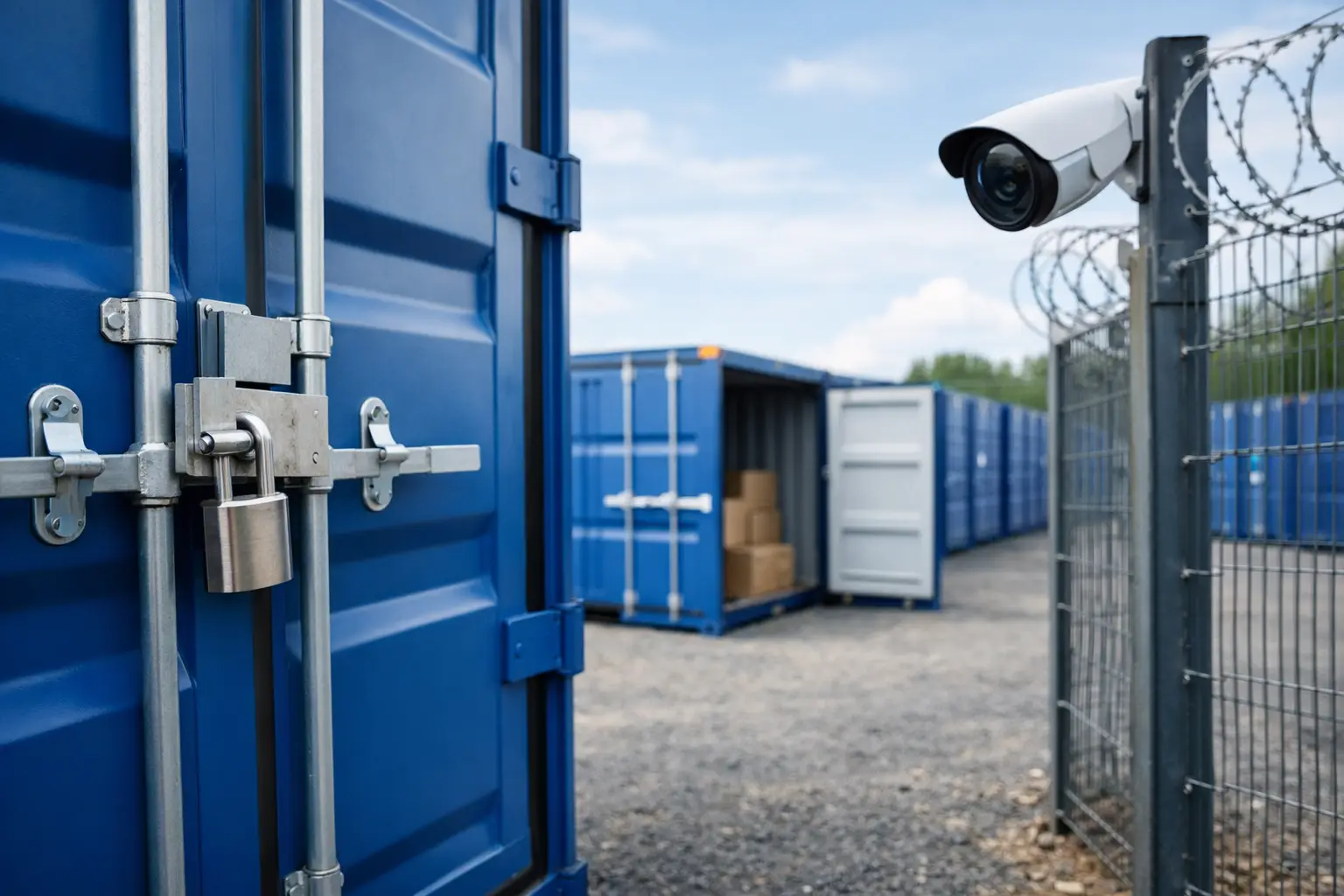
Facility security matters just as much as the container itself. A good off-site storage setup should mean your loaded container is stored in a controlled, professional environment rather than left in an unsecured yard. If you are comparing providers, ask direct questions about where containers are stored and how they are handled once they leave your property.
Who benefits most from secure off site storage containers
Homeowners and renters often get the most immediate benefit because moving rarely follows a clean timeline. Closings get delayed. Leases overlap awkwardly. Family schedules change. Portable off-site storage gives you breathing room without forcing everything into one moving day.
It also works well for renovation projects. If you are replacing floors, remodeling a kitchen, or repainting several rooms, having furniture and boxes removed from the house can speed up the work and protect your belongings at the same time.
For businesses, the value usually comes down to space and efficiency. Overflow inventory, archived files, equipment, promotional materials, and office furniture all take up room that could be used for operations. Off-site storage can free up square footage without locking you into a warehouse lease.
Construction and trade professionals often use containers differently. Sometimes they need short-term on-site access first, then secure off-site storage containers later when equipment or materials no longer need to sit at the job site. That flexibility matters when projects change week to week.
When off-site storage is better than self-storage
Self-storage still has a place. If you need frequent access to a few items and do not mind driving to a facility, a standard unit may work fine. But for full-house storage, business overflow, or anything tied to a move, portable off-site storage is often easier.
The biggest reason is reduced handling. You are not loading a truck, unloading into a unit, then loading again later for delivery or a move. Every extra touch increases labor and risk. Portable containers simplify that.
The second reason is time flexibility. Truck rentals and self-storage runs usually force you into a tighter schedule. Portable containers let you pack over days or weeks, which is a better fit for most households and many businesses.
The trade-off is access. Once a container is in off-site storage, grabbing a single box is not as simple as swinging by a local unit on the way home. That is why planning matters. If you may need certain items quickly, set those aside or ask how retrieval and redelivery work before you book.
How to pack for secure off site storage containers
Good packing makes a real difference in both protection and convenience later. Start with sturdy boxes, consistent labeling, and a clear plan for what you will want first when the container is returned. Heavy items should go on the bottom, lighter items on top, and breakables should be cushioned and kept away from shifting pressure.
Leave a small aisle if you think you may need access before final unloading. That is not always possible with a full container, but when space allows, it helps. Furniture should be covered, drawers should be secured, and mattresses should be wrapped. If you are storing for more than a short period, avoid packing anything that is temperature-sensitive, perishable, or prohibited by the provider.
It also helps to load with transport in mind. Even with careful delivery, contents can settle slightly. Tie-down points, balanced weight distribution, and tight stacking all reduce movement.
Choosing the right provider
This is where the details matter. Price matters, of course, but it should not be the only thing you compare.
Look at the container construction, how delivery works, whether loading is ground level, how monthly rentals are structured, and what happens if your timeline changes. Ask where the container will be stored and whether redelivery is simple if you need it back. Clear answers usually signal a company that handles storage every day and knows customers need flexibility.
Service also matters more than people expect. A moving or storage plan can change fast. Working with a local company that gives straightforward answers and adapts when dates shift can make a frustrating situation much easier. That is one reason many customers in Fort Worth, Amarillo, and Oklahoma City prefer a regional provider like MODS over a larger national option.
A practical option when life does not line up neatly
Secure off site storage containers work best when you need storage that fits real life instead of forcing real life to fit a storage facility. They give you time to pack properly, reduce the work of moving things twice, and keep your belongings protected until you are ready for the next step.
If your home, business, or job site is in transition, the right container setup can take a lot of pressure off. The best storage plan is usually the one that gives you fewer deadlines, fewer trips, and fewer chances for something to get damaged along the way.