
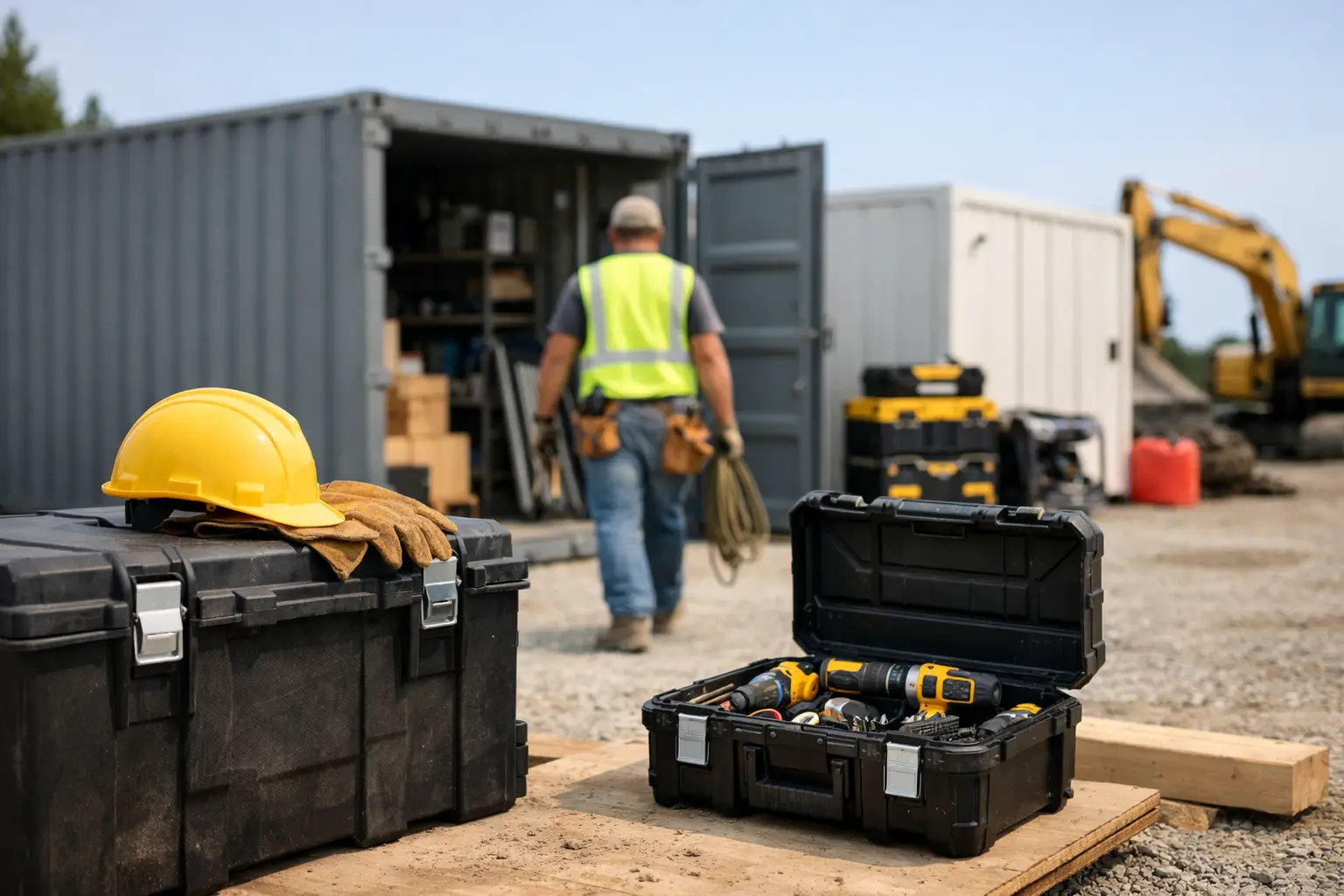
Portable Storage for Contractors That Works
A crew loses time fast when tools are scattered between trucks, materials are exposed to weather, and someone has to leave the job site for a part that should have been there. Portable storage for contractors puts the equipment, supplies, and job-site essentials in one secure place – right where the work is happening.
For remodelers, builders, roofers, restoration teams, and trade contractors, a portable storage container is not just extra space. It is a practical way to protect valuable equipment, reduce daily loading and unloading, and keep a project organized from the first delivery through the final walkthrough.
Why Portable Storage for Contractors Makes Sense
Traditional storage units can work for long-term inventory, but they are rarely convenient for an active job. They require a trip across town, access during facility hours, and another round of loading every time the crew needs materials. Keeping everything in work trucks creates a different problem: trucks get crowded, equipment is harder to find, and tools may be left exposed overnight.
A weatherproof steel container delivered to the job site solves the access problem. Your crew can load it once, retrieve what they need during the workday, and lock it up when the site is closed. That can be especially useful on projects that last several weeks or months, where materials and equipment need to stay available without filling a garage, trailer, or customer’s driveway.
The biggest benefit is control. Instead of working around a storage facility’s schedule or making repeated supply runs, you decide where the container sits and how long you need it.
Keep Tools, Materials, and Crews Organized
Every contractor has experienced the cost of disorganization. A missing saw blade, buried box of hardware, or misplaced finish material may only take a few minutes to locate, but those minutes add up across a crew and across a project.
A portable storage container gives you a dedicated place to set up a simple system. Place frequently used tools near the doors. Store larger equipment along the sides. Keep boxed materials, fasteners, paint supplies, and specialty items grouped by trade or phase of work. A clear path down the center makes it easier to reach what you need without unloading half the container.
The container also helps separate job-site materials from personal equipment and vehicle storage. That matters when multiple subcontractors are involved. With a defined storage area, it is easier to track what arrived, what has been used, and what still needs to be ordered.
A Better Fit for Changing Project Phases
Storage needs are not the same at every stage of construction. Early in a project, you may need room for demolition tools, framing equipment, or bulk materials. Later, the focus may shift to cabinets, flooring, fixtures, and finish work that needs protection before installation.
A monthly portable storage rental gives contractors room to adjust. Keep the container for as long as the project requires, then schedule pickup when the work is complete. If materials need to move to another location or be stored between projects, transportation and secure off-site storage may be more practical than finding a new place for everything on short notice.
Protect Equipment From Weather and Job-Site Exposure
Tools and materials are expensive, and weather does not wait for a convenient time. Rain, wind, dust, and extreme heat can damage equipment or packaging left under a tarp or in the back of an open trailer.
Steel storage containers provide a stronger layer of protection than temporary coverings. MODS containers are built with steel construction, double-sealed doors, and ventilation to help protect stored items during changing Texas and Oklahoma weather. The doors can be secured when the crew leaves, giving contractors a more dependable place to store equipment than an unlocked job-site corner.
Protection still depends on how you pack. Keep moisture-sensitive products elevated off the floor when possible. Do not place wet equipment inside until it has dried. Use shelving, pallets, or dunnage to prevent boxed materials from sitting directly on the container floor. For paint, adhesives, batteries, fuel, or other temperature-sensitive and regulated products, follow manufacturer instructions and confirm what can safely be stored.
A portable container is a useful tool-storage solution, but it is not a substitute for proper handling of hazardous, flammable, or prohibited materials.
Reduce Wasted Trips and Labor Time
The cost of a storage decision is not limited to the monthly rental price. Contractors also need to account for labor hours, fuel, vehicle wear, missed deliveries, and the time spent packing and unpacking tools each day.
On-site storage can cut down on those hidden costs. When equipment remains at the project, crews are not repeatedly loading trucks at the shop in the morning and unloading them again at night. That can make a real difference for jobs with larger tools, ladders, scaffolding components, compressors, or multiple boxes of materials.
It also makes deliveries easier to manage. If a supplier delivers ahead of schedule, there is a protected place to put materials until they are needed. If a customer is renovating an occupied home, the container can keep supplies outside the living space instead of turning a garage or spare room into a staging area.
There is a trade-off: a container needs a suitable delivery location and enough clearance for placement. Before scheduling delivery, consider the driveway, job-site access, overhead lines, gates, soft ground, and local site rules. A quick conversation before delivery can prevent avoidable delays.
Make Moving Between Job Sites Easier
Contractors do not always need storage in one place. A crew may finish a remodel in Fort Worth, wait for a new site to be ready, or need to relocate equipment after a storm-restoration project. Moving tools by truckload can mean extra labor, extra handling, and more chances for items to get lost or damaged.
With portable storage, the same container can be loaded at one location and transported when the next phase of work begins. MODS uses a Level Lift delivery system designed to keep the container level during transport, which helps reduce shifting inside. That is particularly helpful when the container holds carefully packed tools, boxed supplies, or equipment that is awkward to load more than once.
For contractors with a gap between projects, off-site storage can also be a useful option. Instead of crowding a shop or leaving a container at a completed site, you can keep the contents in a secure facility until you are ready for delivery at the next location.
Choose the Right Setup Before Delivery
Portable storage works best when the plan is clear before the container arrives. Start by estimating what you need to store, how often the crew will access it, and whether it will stay on one site or move later. A container used for daily tool access should be packed differently from one holding materials until the next project phase.
Think about placement from the crew’s perspective. The container should be close enough to save walking time but far enough from active work areas, delivery traffic, and customer access points. Make sure the doors can open fully and that the space in front of them stays clear. If the site has a homeowners association, property manager, or general contractor, verify any placement requirements before delivery day.
It is also smart to assign one person to keep the container organized. That does not need to be complicated. A basic check-in process for high-value tools and a consistent place for commonly used supplies can prevent confusion when several people share the same storage space.
A Storage Plan That Keeps Work Moving
The best job-site storage setup is the one that removes friction from the workday. It should protect the equipment your crew relies on, keep materials available when they are needed, and avoid adding another errand to an already full schedule.
For short renovations, long construction projects, or the space between one job and the next, a portable container gives contractors a practical place to keep the work moving – without forcing everything into a truck, a crowded shop, or an off-site storage unit.