
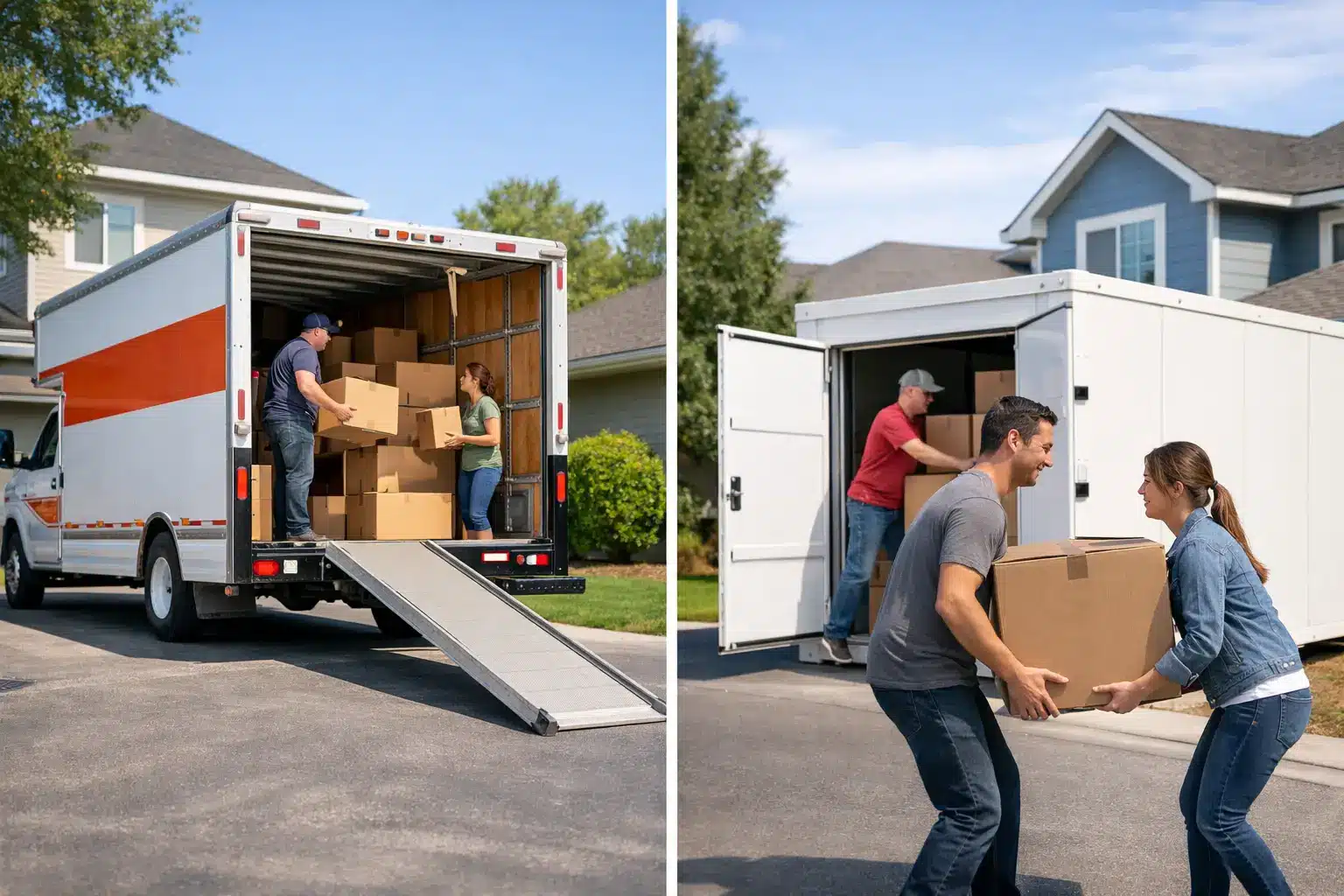
U-Haul Versus Moving Containers Compared
A truck rental can make a move feel like a single, high-pressure assignment: pick up the truck, load it, drive it, unload it, and return it on time. U-Haul versus moving containers is really a choice between that one-day push and a schedule with more breathing room. The right answer depends on how far you are moving, how much help you have, whether you need storage, and how firmly your dates are set.
For a small, local move with a reliable crew and a clear plan, a rental truck can be a practical choice. For a move that involves renovations, a delayed closing, downsizing, or several days of packing, a portable moving container often removes some of the pressure. Here is how to compare the options before you commit.
How U-Haul truck rentals work
With a U-Haul rental, you select a truck size, reserve it for a set period, pick it up, and drive it yourself. You handle the loading, transportation, unloading, fuel, and return. For local moves, the price commonly includes a daily rental charge plus mileage and fuel. One-way rentals are priced differently and may include a set number of miles.
The biggest advantage is direct control. If you can load in the morning, drive a short distance, and unload that afternoon, a truck gets the job done quickly. You also have the ability to make last-minute changes to your route or stop at more than one location.
That speed comes with responsibility. Someone in your group must be comfortable driving a large vehicle, backing it up, watching overhead clearance, and navigating traffic. You also need a driveway, parking area, or loading zone that works for a truck, plus enough people available at the same time to avoid paying for extra rental days.
A truck rental can be especially useful when your move is simple: a studio or small apartment, a short distance, and a team of friends or family ready to help. It may be less appealing when packing is still underway or when your new home is not ready on moving day.
How moving containers work
A moving container is delivered to your home, business, or job site at ground level. You load it on your own schedule, usually over several days or longer depending on your rental arrangement. When you are ready, the provider picks up the container and either moves it to your next address or stores it at a secure facility.
That process separates packing from transportation. Instead of trying to do everything during a truck rental window, you can pack room by room. You can load furniture first, keep daily essentials in the house until the end, and avoid making repeated trips to a self-storage unit.
For customers in Fort Worth, Amarillo, and Oklahoma City, MODS provides steel containers that can stay at your location for on-site storage, move to a new location, or be stored off-site. Ground-level loading means you do not have to carry heavy furniture up a steep truck ramp. Features such as double-sealed doors, ventilation, and level delivery are designed to help protect belongings while the container is loaded and transported.
Moving containers do require some planning. You need enough space for placement, and some neighborhoods, apartments, or commercial sites may have rules about where a container can sit and for how long. It is smart to check HOA rules, lease terms, city requirements, and site access before scheduling delivery.
U-Haul versus moving containers: the main differences
The clearest difference is who handles the driving. With a U-Haul truck, you drive your belongings to the destination. With a moving container, the company transports the loaded container for you. That can be a major benefit for people who do not want to drive a large truck, tow a vehicle, or manage a long-distance route.
Loading time is another major dividing line. A rental truck is built for a fast move, while a container is built for flexibility. If your move-out and move-in dates do not line up, a container can hold your belongings between homes. If you need the space cleared for new flooring, a kitchen remodel, or a commercial project, it can also serve as temporary storage right where you need it.
Storage is where containers usually have the stronger case. A truck is not a practical storage solution because it must be returned. With a portable container, you can keep belongings on-site or move them to off-site storage without unloading and reloading them into a separate unit. That reduces handling, which can reduce the chance of damage and save time.
Access matters, too. With a truck, you have everything with you until you unload. With a container placed at your home or job site, you can access what you need while it remains on-site. If the container moves to an off-site facility, ask about access procedures before reserving. Not every storage arrangement offers the same level of access or notice period.
Comparing the real cost, not just the quote
The lowest advertised price is not always the lowest total cost. A U-Haul quote may look attractive at first, especially for a nearby move. Add mileage, fuel, tolls, moving pads, a dolly, insurance coverage, extra rental time, and help for loading or unloading, and the final number can change.
Moving container pricing is typically based on delivery, pickup, transportation if you are moving, and monthly rental or storage charges. The exact cost depends on container size, distance, timing, and service area. A container may cost more than a quick local truck move, but it can be more cost-effective when it replaces a truck rental, fuel, a storage unit, and multiple loading sessions.
The best comparison uses your actual situation. Think about whether you can finish the move in one day, whether you will need temporary storage, and whether you are able to drive the truck yourself. Also consider the value of your time. Taking off work for a rushed move or asking friends to show up twice can carry a cost even when it does not appear on the invoice.
When a U-Haul is likely the better fit
A rental truck makes sense when you are moving locally, have a confirmed move-in date, and can complete the job in a tight window. It is often a good fit for smaller loads, especially if you already have experienced help and do not need storage. It can also work well when your destination is close enough that multiple short trips are realistic, though fuel and mileage should still be part of the math.
Choose this route only if you are comfortable with the driving portion. A fully loaded truck handles differently than a personal vehicle, and loading it correctly matters. Heavy items should be balanced and secured, not stacked wherever space is available.
When moving containers are likely the better fit
A container is usually the better fit when your timeline is uncertain or spread out. Maybe your house closes on Friday but your new place is not available until Monday. Maybe you need to clear out rooms before contractors arrive. Maybe you are downsizing and need time to decide what stays, sells, or goes to family.
Containers also work well for businesses and contractors that need secure, accessible storage near the work. Inventory overflow, tools, equipment, documents, and renovation materials are easier to manage when storage comes to the site instead of requiring constant trips across town.
There is a practical safety benefit as well. Loading at ground level can be easier on people moving heavy boxes, appliances, and furniture. You still need proper lifting techniques and a secure packing plan, but you are not working around a narrow ramp or trying to finish before a truck return deadline.
Ask these questions before choosing
Start with your timeline. Can you truly pack, load, drive, unload, and return a truck within the rental period? Then look at the gap between leaving your current space and gaining access to the new one. If there is any gap, storage becomes part of the decision rather than an afterthought.
Next, consider the people and property involved. Who will drive the truck? Who will load the heaviest items? Is there room to place a container or park a truck without blocking traffic, gates, or neighbors? Apartment buildings and busy commercial sites may require advance permission, so confirm that early.
Finally, compare written estimates line by line. Make sure you understand what is included, what could create additional charges, and how long you may keep the container or truck. A clear quote is easier to trust than a low starting number with unanswered questions.
Moving does not always follow a clean one-day schedule. Pick the option that gives you enough time to pack carefully, protects your belongings, and fits the way your move is actually likely to unfold.