
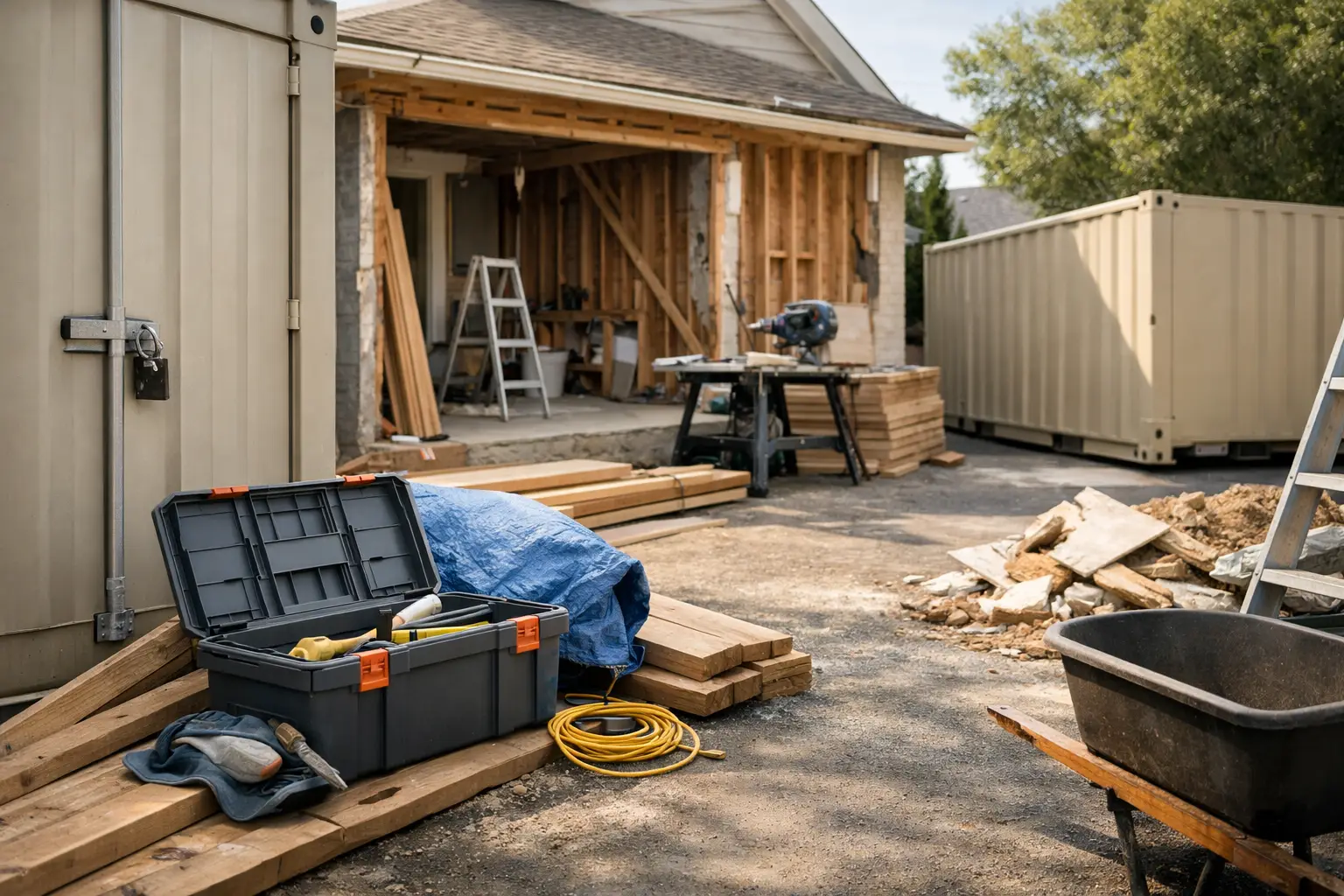
Onsite Storage for Home Renovation: What Works
A renovation gets messy before it gets better. One day your kitchen is functional, and the next day your cabinets are out, your floors are covered, and half your house is stacked with boxes you keep moving from room to room. That is exactly where onsite storage for home renovation makes a real difference. It gives you a place to put furniture, appliances, tools, and household items without clogging up the parts of the home you still need to live in.
For most homeowners, the problem is not just where to store things. It is how to keep the project moving without turning daily life into a constant shuffle. A portable storage container on your property can solve that, but it is not a one-size-fits-all answer. The best setup depends on the scope of the renovation, how long the work will last, and how often you need access to what you store.
Why onsite storage for home renovation helps
The main advantage is simple: your belongings stay close by. If you are remodeling a bathroom, updating flooring, or doing a full kitchen renovation, there is usually a stretch of time when you need a room emptied fast. Putting everything in a container outside lets contractors work without stepping around your furniture and boxed household items.
That convenience matters more than people expect. If your belongings are stored off-site, every forgotten item becomes another trip across town. With onsite storage, you can grab dishes, seasonal clothes, or extra supplies when you need them. That is especially useful during projects that take longer than planned, which is common in remodeling.
There is also a protection angle. Renovation dust gets everywhere, and even careful crews can only control so much of it. Paint splatter, drywall dust, foot traffic, and tool movement all increase the risk to your belongings. Moving them out of the work zone helps reduce damage and keeps the house safer and easier to manage.
When it makes the most sense
Not every project needs a container in the driveway, but many do. If you are renovating one room at a time and have a large, empty garage, you may be able to make do with space you already have. On the other hand, if the garage is full, the attic is hard to access, and every spare bedroom is about to become a temporary holding area, onsite storage usually saves time and frustration.
It makes the most sense for medium to large projects, especially when furniture has to come out completely. Kitchen remodels are a common example because cabinets, pantry items, small appliances, and dining furniture all need a place to go. Flooring projects are another. If new floors are going through multiple rooms, shifting furniture from one side of the house to the other is rarely efficient.
It can also be the better option if you are living in the home during construction. Families need a clear path through the house. Parents need rooms that still function. Contractors need access. A container gives each group more breathing room.
What to store in a portable container
The best candidates are the items that take up space but do not need daily handling. That often includes couches, dining tables, bookshelves, rugs, boxed decor, lamps, artwork, seasonal items, and packed kitchen goods. During a larger remodel, some homeowners also store washer and dryer units, spare mattresses, or office furniture.
What you should not do is treat the container like a catch-all with no plan. If you pack it randomly, the things you need most often will end up buried. It helps to separate your items into three categories: things you will not need until the job is done, things you may need occasionally, and things that should stay in the house with you.
Place the least-needed items in first and the occasional-access items near the doors. Label boxes clearly and leave a narrow walkway if you expect to open the container during the project. That little bit of planning can save a lot of digging later.
What to look for in onsite storage for home renovation
Not all storage options are built the same, and renovation projects put real demands on them. Ground-level loading is one of the first things to look for because it is easier and safer when you are moving heavy furniture, stacks of boxes, or appliances. You do not want to wrestle a couch up a steep ramp after a long day of clearing out rooms.
Container construction matters too. Weatherproof steel offers stronger protection than lighter materials, especially if the container will sit outside for weeks or months. Double-sealed doors and ventilation help protect contents from the mix of rain, heat, and humidity that can show up over the course of a project.
Delivery also deserves more attention than it usually gets. A container that is placed unevenly can make loading harder and may shift contents during transport if you later decide to move it or store it off-site. That is one reason some homeowners prefer a company with a level delivery system rather than a basic drop-off approach.
The trade-offs to think through
Onsite storage is convenient, but it does require space. Before renting a container, make sure your driveway or placement area is large enough and accessible. You also want to think about HOA rules, neighborhood street clearance, and whether the container placement will block daily traffic or garage access.
There is also the question of duration. If your renovation is small and only lasts a few days, the setup may be more than you need. But for projects measured in weeks or months, the flexibility usually pays off. Monthly rental terms are often a better fit than trying to rush a project just to match a strict storage timeline.
Cost is another factor, although it should be compared fairly. A traditional storage unit may look cheaper at first, but repeated trips, truck rental, fuel, and time can add up fast. If your goal is to keep the project simpler and protect your schedule, an onsite option can be the more practical value.
How to make the container work with your remodel
Start by placing the container as close as possible to the main work area without getting in the contractor’s way. If the kitchen is being renovated, a nearby driveway spot usually makes more sense than a far corner of the property. The easier the path, the faster you can clear rooms and access stored items.
Pack with the renovation timeline in mind. If the first phase is flooring and the second is painting, group your stored items around when they will return to the house. Keep hardware, curtains, shelf parts, and room-specific pieces together so reassembly is easier later.
It also helps to protect your belongings before they go in. Use moving blankets for wood furniture, wrap glass and framed items well, and avoid overpacking boxes. A container provides protection, but the condition of your items still depends on how they are packed.
If your renovation expands, and many do, flexibility becomes even more valuable. Some homeowners start with onsite storage and later choose to have the container moved to a secure storage facility while work continues. That kind of option can be useful if the project grows beyond the original timeline or if the job site needs more open space.
A better fit than constantly moving things around
One of the biggest mistakes during a renovation is underestimating how disruptive clutter can be. People often assume they can stack items in the garage, then move them to a bedroom, then shift them again when the next phase starts. That approach works for about a day. After that, it slows down the job and wears everyone out.
A portable container avoids the domino effect. Your things go out once, stay protected, and come back when the space is ready. That is easier on homeowners, easier on contractors, and usually better for the condition of your belongings.
For homeowners in places like Fort Worth, Amarillo, and Oklahoma City, where weather can shift and schedules can stretch, a durable portable storage setup offers practical breathing room during renovation. MODS is one example of the kind of local provider homeowners look to when they want straightforward service, flexible timing, and a container built to hold up through the project.
If your renovation is about making your home work better, your storage plan should do the same. The right setup gives you space to breathe, room to work, and one less problem to solve while the dust settles.