
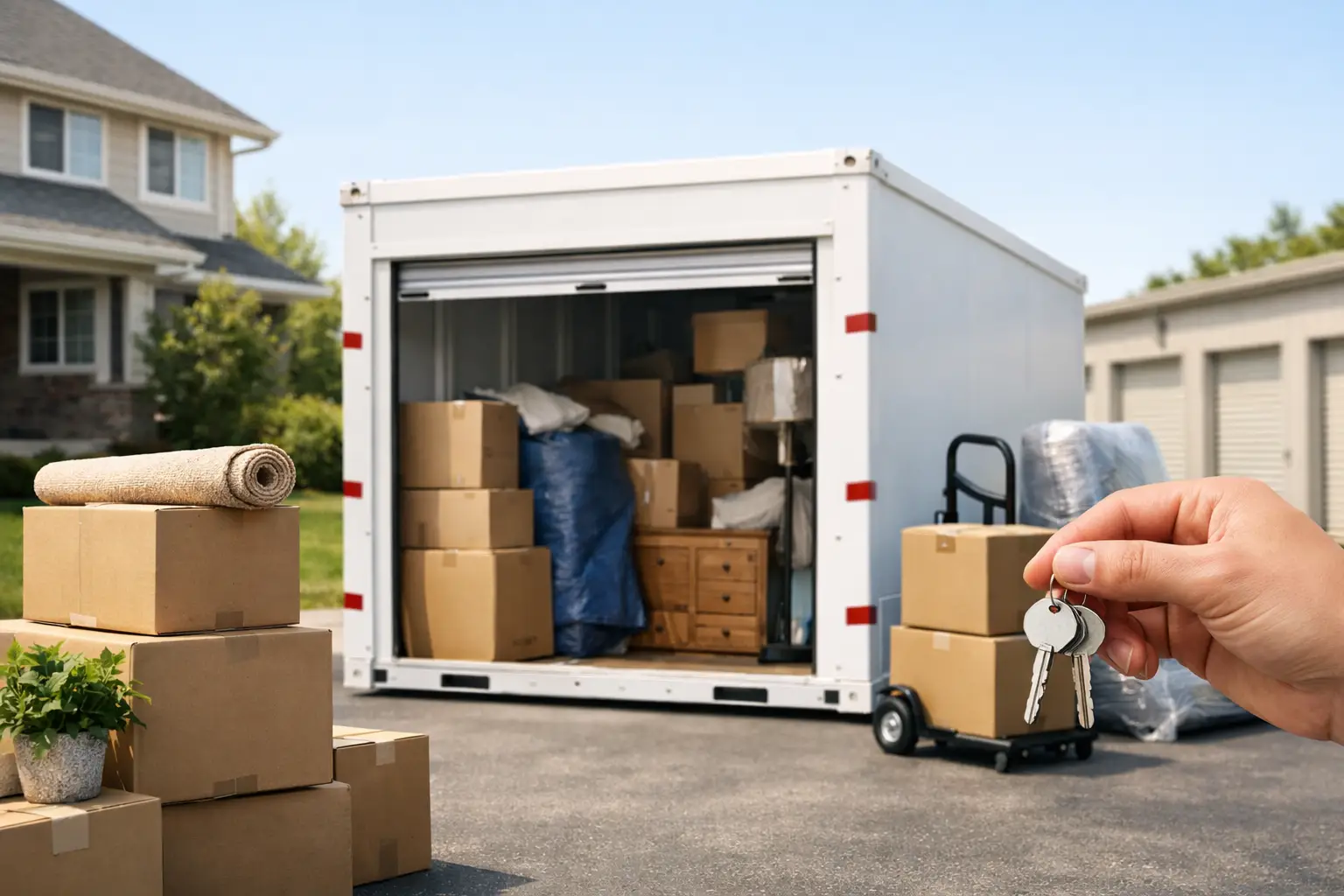
Are Pods Right for Your Move or Storage?
If you’re searching for pods, you’re probably not looking for a history lesson. You want to know whether a portable container will actually make your move, renovation, or storage project easier – and whether it’s worth the cost compared with a truck rental or a traditional storage unit.
That depends on what kind of problem you’re trying to solve. For some people, pods are the simplest way to move without the pressure of loading and driving a truck in one day. For others, they work best as temporary storage during a remodel, home sale, or business transition. The real value is flexibility. You load on your schedule, keep the container on-site if needed, or have it moved or stored when you’re ready.
What people mean when they search for pods
A lot of people use the word “pods” as shorthand for portable storage containers in general, even when they’re not asking about one specific national company. Usually, they’re looking for a container delivered to their home, business, or job site, with the option to keep it there or move it somewhere else later.
That broad search intent matters because not all portable container services work the same way. Delivery methods, container build quality, pricing, service area, and customer support can vary quite a bit. So the better question isn’t just “Should I get pods?” It’s “What kind of portable storage service fits my timeline, budget, and location?”
How pods work for moving and storage
The basic process is simple. A company delivers a container to your property. You load your belongings at ground level instead of climbing a truck ramp. Once you’re finished, the container can stay on-site, be picked up and transported to a new address, or go into secure off-site storage.
That setup solves a lot of the usual moving headaches. You don’t have to rush through loading because a truck is due back by 5 p.m. You don’t have to make repeated trips to a self-storage facility. And you don’t have to figure out how to drive a large rental truck through traffic, apartment complexes, or narrow neighborhood streets.
For homeowners, this is especially useful during staggered moves. Maybe closing dates don’t line up. Maybe the new place isn’t ready. Maybe you’re clearing rooms before listing the house. A portable container gives you breathing room.
For businesses and contractors, the appeal is different but just as practical. Portable storage can keep tools, equipment, documents, or inventory close by without taking up interior space. On a job site, that can mean fewer delays and easier access during the workday.
When pods make the most sense
Portable containers are a strong fit when timing is uncertain. If your move is spread out over several days or weeks, a container is usually more realistic than a truck rental. The same goes for renovation projects where furniture needs to be out of the way but still easy to access.
They’re also useful when convenience matters more than shaving every possible dollar off the project. A traditional self-storage unit can look cheaper at first, but the real cost often includes truck rental, fuel, extra labor, and your time. If you’re making multiple trips across town, that convenience gap gets expensive fast.
Families often choose portable storage because it cuts down on chaos. You can pack one room at a time, keep the container close to home, and avoid piling boxes into every corner of the house. Small businesses like the same setup because it reduces disruption. The container comes to them, not the other way around.
The trade-offs to consider with pods
Portable storage is convenient, but it isn’t perfect for every situation. If you only need to store a handful of items and you live very close to a low-cost storage facility, a standard unit may be enough. If your property has limited access, steep slopes, or HOA restrictions, container placement may take more planning.
Long-distance moves can also vary a lot depending on the provider. Transit timing, service coverage, and pricing structures aren’t identical from one company to the next. That’s why it’s smart to ask specific questions before booking instead of assuming every portable container service operates the same way.
Weather is another factor people sometimes overlook. A good container should be built to protect contents from rain, dust, and temperature swings as much as possible. The materials and door seals matter. So does ventilation. A low price doesn’t help much if the container itself isn’t built well.
Comparing pods with truck rentals
Truck rentals still have their place. If you’re moving in one day, have plenty of help, and don’t mind driving, a truck can work. It may even be the cheaper option for a short local move with a tight schedule.
But truck rentals come with pressure. You pick it up, load it quickly, drive it, unload it, refuel it, and return it on time. If anything gets delayed, the whole day gets harder. That model works best when everything goes according to plan, which is not how many moves actually go.
Portable containers remove the driving and compress less of the work into one high-stress day. That’s a major advantage for older adults, busy families, and anyone trying to juggle work, kids, closing dates, or renovation schedules at the same time.
Comparing pods with self-storage units
Self-storage is fine when you don’t need transportation and don’t mind making the trips yourself. If you’re storing a few seasonal items for the long term, a traditional unit may be perfectly practical.
The problem shows up when access and logistics become part of the project. Loading everything into a truck, driving it to the facility, unloading it into a unit, and then reversing the process later is a lot of extra handling. Every extra move adds time, labor, and risk of damage.
Portable storage cuts those steps down. You load once. If the container is going into storage, the provider handles the transport. If it’s headed to a new address, the same container can often make that trip without your items being unloaded and reloaded in between.
What to look for beyond the name
When people compare pods, they sometimes focus only on brand recognition. That’s understandable, but it can cause them to miss the details that affect the actual experience.
Start with the container itself. Steel construction tends to hold up better than lighter materials. Ground-level loading matters more than many people expect because it makes heavy furniture and appliances easier to move safely. Double-sealed doors help protect contents from weather, and ventilation can reduce moisture issues.
Then ask about delivery. A level delivery system helps keep the container more stable during drop-off and pickup, which can reduce shifting inside. That matters if you’re storing furniture, equipment, or boxed household goods for any length of time.
Service matters too. With a local company, it’s often easier to get straightforward answers, clearer scheduling, and support from people who understand the area. In Texas and Oklahoma, where weather, road conditions, and site access can vary, local experience is not a small thing. MODS has built its service around that kind of flexibility, with weatherproof steel containers, ground-level loading, and local support that keeps the process simple.
How pricing on pods usually works
Most portable container rentals are priced around a few main pieces: delivery, monthly rental time, transportation if you’re moving the container, and storage if it goes to a facility. The exact numbers depend on distance, container size, rental length, and local availability.
The mistake people make is comparing only the first quote they see. A lower base rate can still end up costing more if fees stack up or if the service doesn’t match your timeline. It’s better to look at the full picture: how long you’ll need the container, whether it will stay on-site or go into storage, and how many steps you can avoid compared with truck rental or self-storage.
If your project has unknowns, flexibility has real value. Paying a little more for a setup that lets you adjust without blowing up your whole schedule can save money in the long run.
Are pods the right choice for you?
If you want a rigid, one-day move with no lingering tasks, a truck may still be enough. If you need long-term storage for a small amount of stuff and don’t mind hauling it yourself, a storage unit may do the job.
But if your priority is reducing stress, keeping your schedule flexible, and avoiding unnecessary trips or truck driving, pods are often the better fit. They’re especially useful for local moves, renovations, downsizing, staging, business overflow, and job-site storage where convenience and timing matter just as much as price.
The best choice usually comes down to a simple question: do you want to force your project into a fixed schedule, or do you want a storage and moving option that can adjust to real life? If the second answer sounds more realistic, a portable container is probably worth a serious look.
The easiest move or storage plan is usually the one that gives you room to handle the unexpected without turning every delay into a bigger problem.