
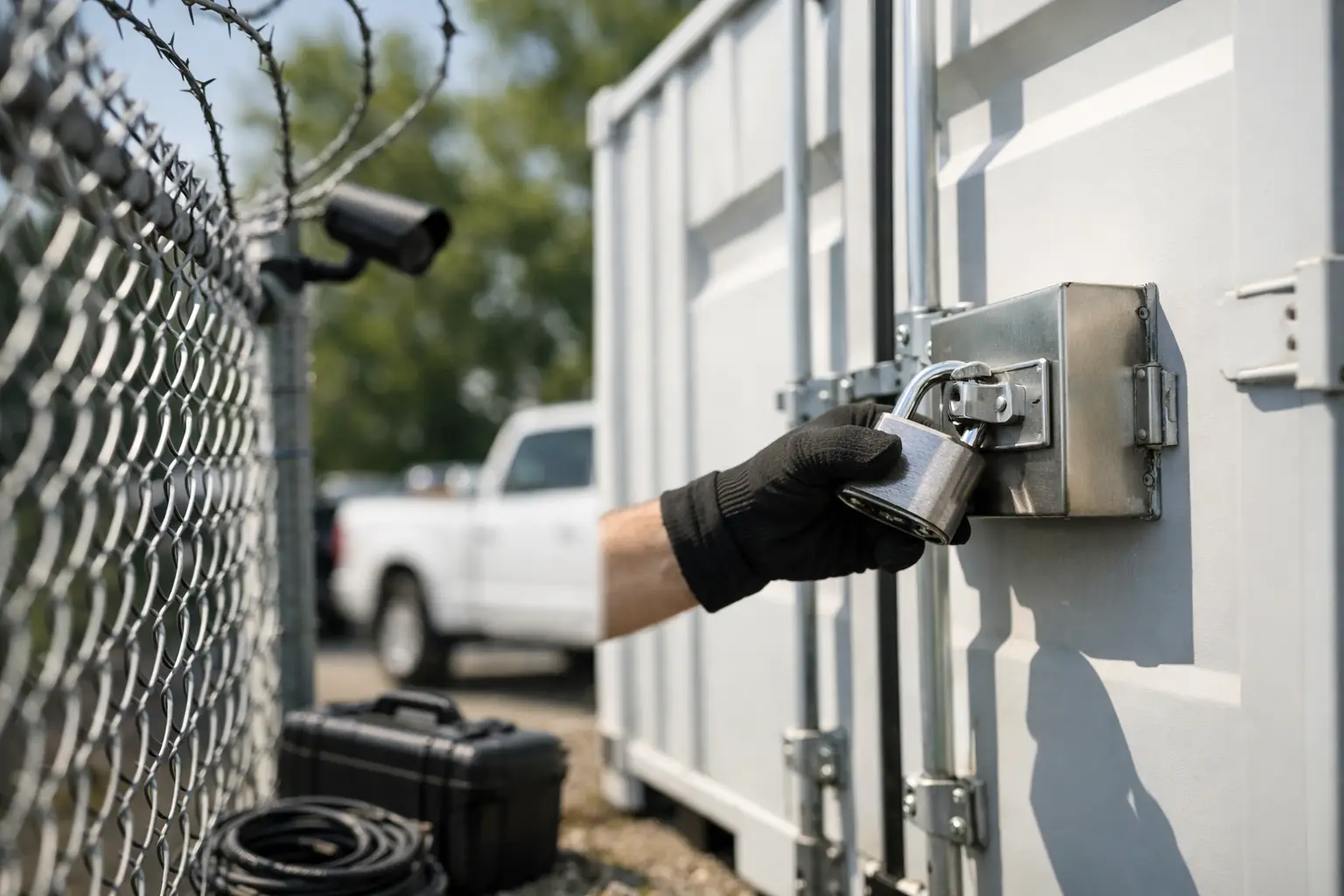
Are Portable Storage Containers Secure? Locks, Theft Prevention, and Yard Storage
Yes. A steel portable storage container with a quality lock is a secure way to store belongings, whether it sits on your driveway or in a monitored yard. Security depends on three things: the container’s construction, the lock you choose, and where the container is placed. MODS containers are all-steel, and you use your own lock, so only you hold the key.
What Makes a Portable Storage Container Secure?
Construction, the lock, and placement. Each one matters, and together they make a container a poor target.
| Factor | Why It Matters | What to Look For |
| Construction | Steel resists cutting and prying far better than composite panels or wood | All-steel walls, roof, and doors |
| Lock | The lock is the most common point of attack | A disc lock or shrouded padlock with a hardened shackle |
| Placement | Visible, well-lit containers are less attractive to thieves | Near the house, facing a window, doors toward the home |
| Storage location | A monitored yard adds a layer of protection | Company-operated, monitored storage |
MODS containers are all-steel and are stored at monitored yards in Fort Worth, Amarillo, and Oklahoma City when not on site. See safe and secure storage.
What Is the Best Lock for a Storage Container?
A disc lock or a shrouded padlock with a hardened steel shackle is the best choice for most containers. Both leave very little exposed shackle for bolt cutters to grab.
- Disc locks: round body with a mostly hidden shackle; widely used on storage units and containers.
- Shrouded padlocks: a steel shroud protects the shackle from cutting and prying.
- Avoid: thin-shackle luggage or gym locks, and combination locks with short shackles.
- Keys: keep a spare key somewhere safe and away from the container.
With MODS, you supply your own lock, so no one else holds a key to your container.
Buy the lock before delivery day so the container is never left unlocked, and test the key and fit on the container hasp as soon as it arrives.
Do Portable Storage Containers Get Broken Into?
Break-ins are uncommon when a steel container is locked well and placed thoughtfully, but no storage is theft-proof. Most problems involve weak locks, containers left unlocked during loading, or containers placed out of sight.
- Lock the container every time you walk away, even for a quick break during loading.
- Place it where neighbors and cameras can see it, close to the house and facing a window if possible.
- Turn the doors toward the house so they are not facing an alley or open lot.
- Add lighting: a motion light or porch light makes the container less appealing at night.
- Avoid advertising contents: do not leave boxes labeled electronics or jewelry visible when doors are open.
- Tell a neighbor you have a container and ask them to keep an eye out.
What Should I Do During Loading Days to Stay Secure?
Loading days are when containers are most exposed, because doors are open, boxes are visible, and people come and go. A few habits close most of the gaps.
- Load in daylight when possible and finish before dark.
- Keep the doors closed between trips, not just at the end of the day.
- Load valuable items last and deep inside, behind furniture, rather than near the doors.
- Break down and bag boxes from electronics or appliances instead of leaving them at the curb.
- Watch the container when helpers leave and lock it as soon as the last person steps away.
- Photograph the load before closing the doors at the end of each day.
If you are moving out and the house will be empty for a while before the container leaves, schedule pickup right after your last loading day or have us move the container to a MODS yard. Read how to organize container loading.
Is It Safer to Store My Container at Home or at a MODS Yard?
Short on-site stays are fine for most moves and remodels, while a monitored MODS yard adds protection for longer storage or when you are away.
| Situation | Better Choice | Why |
| Loading over a week or two | At home | You are around, and you need access |
| Long vacation or out-of-town work | MODS yard | No one home to watch the container |
| Gap between homes lasting months | MODS yard | Monitored storage without a driveway to watch |
| Remodel with daily crew traffic | At home, locked when crews leave | Convenient access for you and the crew |
| Vacant home on the market | MODS yard | Vacant properties draw more attention |
Read how to store between homes and can you access your container while it is in storage.
Store Securely With MODS
All-steel containers, your own lock, and monitored yards in Fort Worth, Amarillo, and Oklahoma City.Call (817) 847-6637, Amarillo (806) 350-6637, OKC (405) 720-7344, or contact MODS online.
What Should I Never Store in a Portable Container?
Keep irreplaceable and high-risk items with you, no matter how secure the container.
- Valuables: cash, jewelry, passports, birth certificates, and titles.
- Data: laptops, hard drives, and family photos without a backup.
- Hazards: fuel, propane, fireworks, ammunition, and flammable chemicals.
- Perishables: food, plants, and anything that attracts pests.
- Medications and anything you need day to day.
Are Portable Containers Safe for Moving?
Yes. Moving in a locked steel container is one of the safer ways to move because your belongings stay behind your lock from loading to unloading. With a rental truck or some moving services, items may be handled or transferred several times.
- One lock the whole way: only you open the container at each end.
- Fewer transfers: with MODS, your container stays with one company between our Fort Worth, Amarillo, and Oklahoma City yards.
- Load tightly and strap sections so nothing shifts in transit.
- Keep valuables with you: jewelry, documents, medications, and hard drives.
For general moving consumer protections, see the U.S. Department of Transportation’s Protect Your Move resource. For MODS moves, see moving containers in Fort Worth.
How Do I Keep a Job Site Container Secure?
Job sites need extra care because containers often hold high-value tools and materials and sit on unoccupied property overnight.
- Use a high-security lock and lock up at the end of every work day.
- Place the container inside site fencing or near a lit area.
- Keep an inventory of tools and deliveries.
- Face doors toward the building rather than the street.
- Remove the most valuable tools at night when possible.
Read job site storage containers in Fort Worth.
Should I Insure Belongings in a Storage Container?
Check your homeowner or renter insurance before you store, because coverage for belongings off premises or in a container varies.
- Ask whether your policy covers items stored in a portable container on your property.
- Ask whether it covers items stored off site at a storage yard.
- Ask about limits for jewelry, electronics, and collectibles.
- Take photos and keep an inventory before loading.
The Insurance Information Institute’s renters insurance overview explains common off-premises coverage questions.
Container Security FAQs
1. Are portable storage containers secure?
Yes. A steel container with a quality lock, placed thoughtfully or stored in a monitored yard, is a secure way to store belongings.
2. Do portable storage containers get broken into?
Break-ins are uncommon with a strong lock and good placement, but no storage is theft-proof. Weak locks and unlocked doors cause most problems.
3. What is the best lock for a storage container?
A disc lock or shrouded padlock with a hardened steel shackle, because little shackle is exposed to cutting tools.
4. Who has a key to my MODS container?
Only you. MODS customers use their own lock, so no one else holds a key.
5. Is it safer to keep my container at home or at a yard?
Home works well for short loading periods when you are around. A monitored MODS yard is better for long storage, vacations, or vacant homes.
6. Are portable containers safe for moving?
Yes. Your belongings stay behind your own lock from loading to unloading, with fewer transfers than many other moving methods.
7. How do I make my driveway container less of a target?
Lock it every time you step away, place it near the house and in view of windows or cameras, face the doors toward the home, and add lighting.
8. How do I secure a container on a job site?
Use a high-security lock, place it inside site fencing or near lighting, keep an inventory, and remove the most valuable tools at night.
9. Does homeowner insurance cover items in a storage container?
It depends on your policy. Ask your insurer about on-site and off-site container storage and any limits for valuables.
10. Are MODS containers made of steel?
Yes. MODS containers are all-steel, weatherproof, and ventilated.
Secure Storage in Texas and Oklahoma
MODS Mobile On Demand Storage pairs all-steel containers with your own lock and monitored yards in Fort Worth, Amarillo, and Oklahoma City. Keep your container at home while you load, then store it with us when you need extra peace of mind. Call (817) 847-6637, Amarillo (806) 350-6637, or OKC (405) 720-7344, or contact MODS online.