
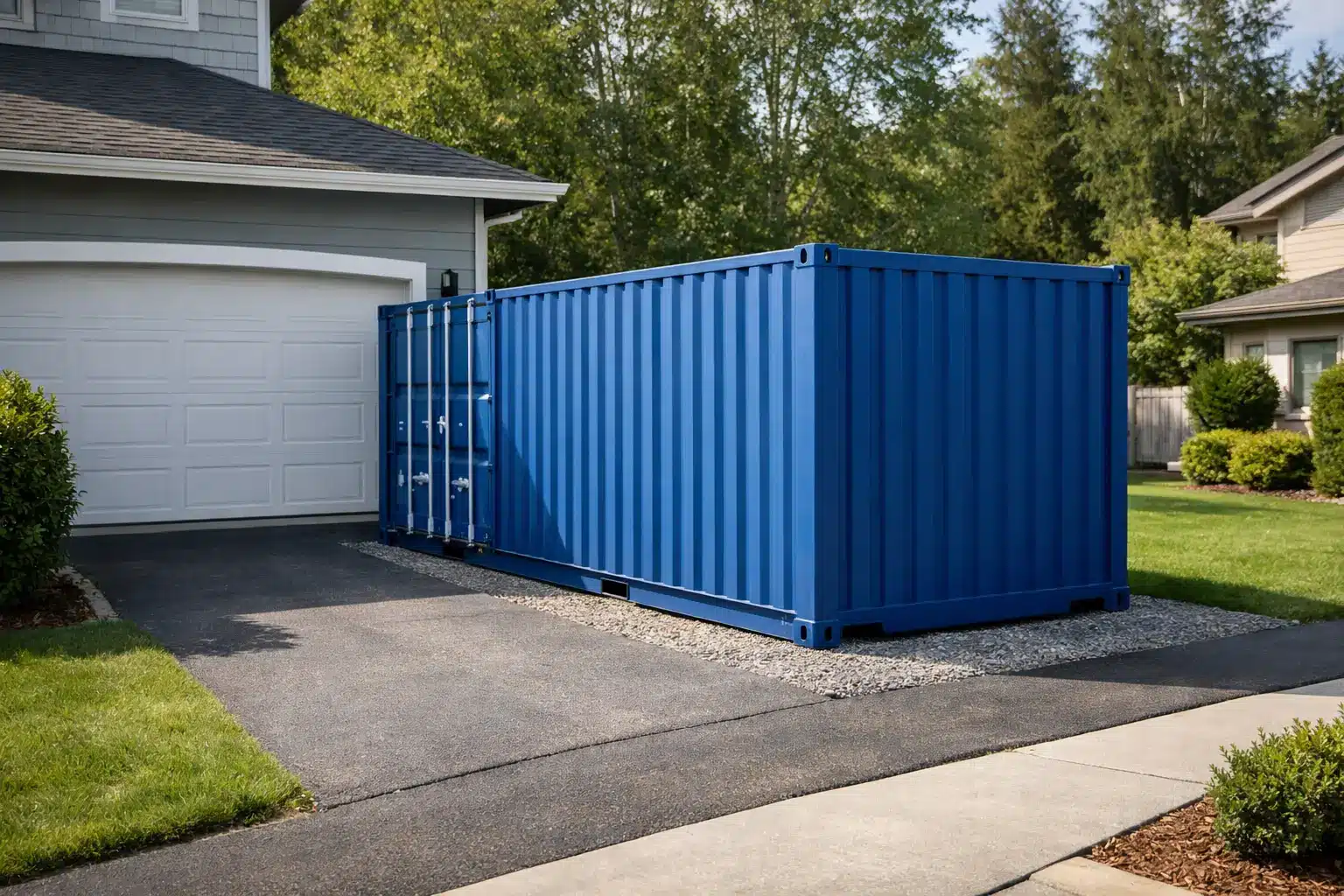
Can Containers Fit Driveway Spaces? Check First
A portable storage container can save a moving day from becoming a rushed, truck-rental marathon. But before scheduling delivery, homeowners often ask: can containers fit driveway spaces? In many cases, yes. The answer depends less on the size of the house and more on the usable space around it – including access from the street, driveway length and width, overhead clearance, and the condition of the surface.
A quick look at the driveway is not always enough. Delivery equipment needs room to safely enter, position the container, and leave without blocking traffic, damaging landscaping, or creating a problem for your neighbors. A few careful measurements before delivery can prevent delays and help you choose the best place for your container.
Can containers fit driveway spaces at your home?
Most residential driveways can accommodate a portable storage container when there is a clear, reasonably level placement area and a workable path from the street. That does not mean every driveway is a fit. A narrow gate, sharp turn, low-hanging tree limb, steep slope, or crowded cul-de-sac can change what is possible.
The container itself needs a designated footprint, but delivery requires more than that footprint. The driver needs enough clear space to bring the container off the truck and set it down safely. With a level delivery system, the container can remain level during transport and placement, which helps protect packed belongings from unnecessary shifting. Still, the route and final location must be assessed before delivery day.
For many homes in Fort Worth, Amarillo, and Oklahoma City, the driveway is the most convenient location. It keeps the container close to the front door, garage, or work area, making it easier to load a few boxes at a time. For others, a side drive, parking pad, or approved area at a job site may make more sense.
Start with the usable driveway area
Measure the area where the container will sit, not just the driveway at its widest point. Parked cars, basketball goals, edging, retaining walls, utility boxes, and landscaping can reduce usable space quickly.
Measure the length and width of the flat, open area. Then consider whether you will still need access to your garage, a second vehicle, or a walkway while the container is on site. A container may physically fit but still leave the household with an inconvenient daily setup. Planning for real life matters, especially when you expect to keep it for several weeks during a renovation, move, or cleanup project.
Also measure the route from the street to the placement area. A long driveway can be a great location, but only if the delivery truck can approach it safely. A tight turn around a mailbox or a narrow entrance between brick columns may be more limiting than the driveway itself.
Check the approach from the street
Look at the street in front of your property and picture a delivery truck arriving with a container. Is there space to stop without blocking a busy road? Are there parked cars, streetlights, fire hydrants, drainage ditches, or utility poles near the entrance?
Cul-de-sacs deserve extra attention. They can be easy for a passenger vehicle but difficult for large equipment if cars are parked along the curb or the turning circle is tight. If possible, keep curbside parking clear around the scheduled delivery window.
If your home sits on a narrow street or your driveway has an unusual approach, share that information when arranging service. Clear details and a few photos can help the delivery team identify concerns before the truck arrives.
Look up before you measure across
Overhead obstacles are one of the most common issues with container delivery. Check for low tree branches, power lines, cable lines, roof overhangs, carports, and garage eaves along the entire delivery path and above the final placement location.
Do not trim or move anything near electrical lines yourself. Utility lines require proper clearance and should be handled with care. For tree limbs and other non-electrical obstacles, arrange trimming well before delivery if needed. A route that looks open at eye level may not be clear enough for delivery equipment overhead.
Driveway condition matters as much as dimensions
A solid concrete or asphalt driveway is usually the preferred surface for a portable storage container. It provides stable support, keeps the container accessible in wet weather, and reduces the chance of uneven settling.
Gravel, compacted dirt, and rural properties can work in some situations, but they need a closer look. Soft ground can rut under the truck or shift after rain. Fresh asphalt may be vulnerable in hot weather, and older concrete can have cracks or weak edges that deserve consideration. A steep driveway also introduces safety and placement concerns.
Avoid placing a container on a visibly unstable surface, near a drainage channel, or where standing water collects after a storm. A weatherproof steel container protects what is inside, but a level, stable location makes loading safer and keeps the doors operating properly.
If you are storing heavy equipment, dense materials, or large quantities of inventory, tell the provider. The load inside the container and the condition of the surface both affect the best placement plan.
Do not forget gates, slopes, and turning space
A driveway can look wide enough from the house while being too restricted at the entrance. Measure gates, fence openings, and the space between posts or walls. Check whether a sharp turn is required immediately after entering the property.
Slopes deserve the same level of attention. A gentle grade may be manageable, while a steep incline, sudden dip, or crowned driveway can complicate delivery and loading. You also want a placement location where the container doors can open fully and where you can carry boxes without walking uphill on loose gravel.
For commercial properties and job sites, the same principles apply on a larger scale. Verify that equipment, material stacks, temporary fencing, and active work zones will be moved before delivery. A container placed near the crew can make daily work easier, but it must not block emergency access, deliveries, or safe vehicle movement.
Check local rules before delivery day
Some neighborhoods, apartment communities, and commercial properties have rules about temporary storage containers. Homeowners associations may limit how long a container can stay in a driveway, require prior approval, or specify where it may be placed. Cities can also have regulations related to street placement, right-of-way use, or permits.
Do not assume a container can be placed in the street because there is no room in the driveway. Street placement may require approval and can create traffic, access, and liability concerns. If the driveway is tight, ask about other on-property options first.
Renters should check with the property owner or manager. Business tenants should confirm rules with the property manager as well. Getting approval in writing is a practical way to avoid a last-minute change after delivery has already been scheduled.
A simple way to prepare for container delivery
Before booking, take photos from the street, driveway entrance, and planned placement area. Include any gates, trees, overhead lines, slopes, or tight corners. Measure the available area and make a note of obstacles that can be moved, such as vehicles, trash bins, patio furniture, or portable basketball goals.
Then discuss the site honestly with your storage provider. MODS can help customers think through delivery access before the container arrives, rather than leaving them to solve a space problem on moving day. If the preferred location will not work, a small adjustment to the plan may open up a better option.
On delivery day, clear the route, move vehicles, keep pets inside, and make sure an adult who knows the plan is available if needed. Once the container is placed, check that both doors open easily before the driver leaves. This gives you a practical, ground-level place to load on your own schedule without repeated trips to a storage unit.
A driveway does not need to be perfect to support portable storage. It needs to be accessible, stable, and clear enough for safe delivery. Measure the real space, look for the obstacles people miss, and choose the location that makes loading easier for the weeks ahead.