Construction Job Site Storage Containers
When a crew loses 20 minutes hunting for a box of fasteners, that delay rarely stays at 20 minutes. It slows the next task, leaves equipment sitting idle, and creates the kind of job site frustration that adds up by the end of the week. Construction job site storage containers help prevent that problem by giving tools, materials, and supplies a secure place to stay close to the work.
For contractors, site supervisors, and project managers, storage is not a side issue. It affects labor efficiency, material protection, scheduling, and theft prevention. A good container keeps the site cleaner and easier to manage, but it also supports the pace of the project. When crews know where things are, when materials stay dry, and when access is simple, the whole site runs better.
Why construction job site storage containers matter
A construction site changes fast. One week you need space for rough framing tools and electrical supplies. The next, you need room for flooring, fixtures, or finish materials that cannot be left exposed. Temporary fencing and tarps can only do so much. Open-bed trucks are even less reliable. They are vulnerable to weather, harder to organize, and far more tempting to thieves.
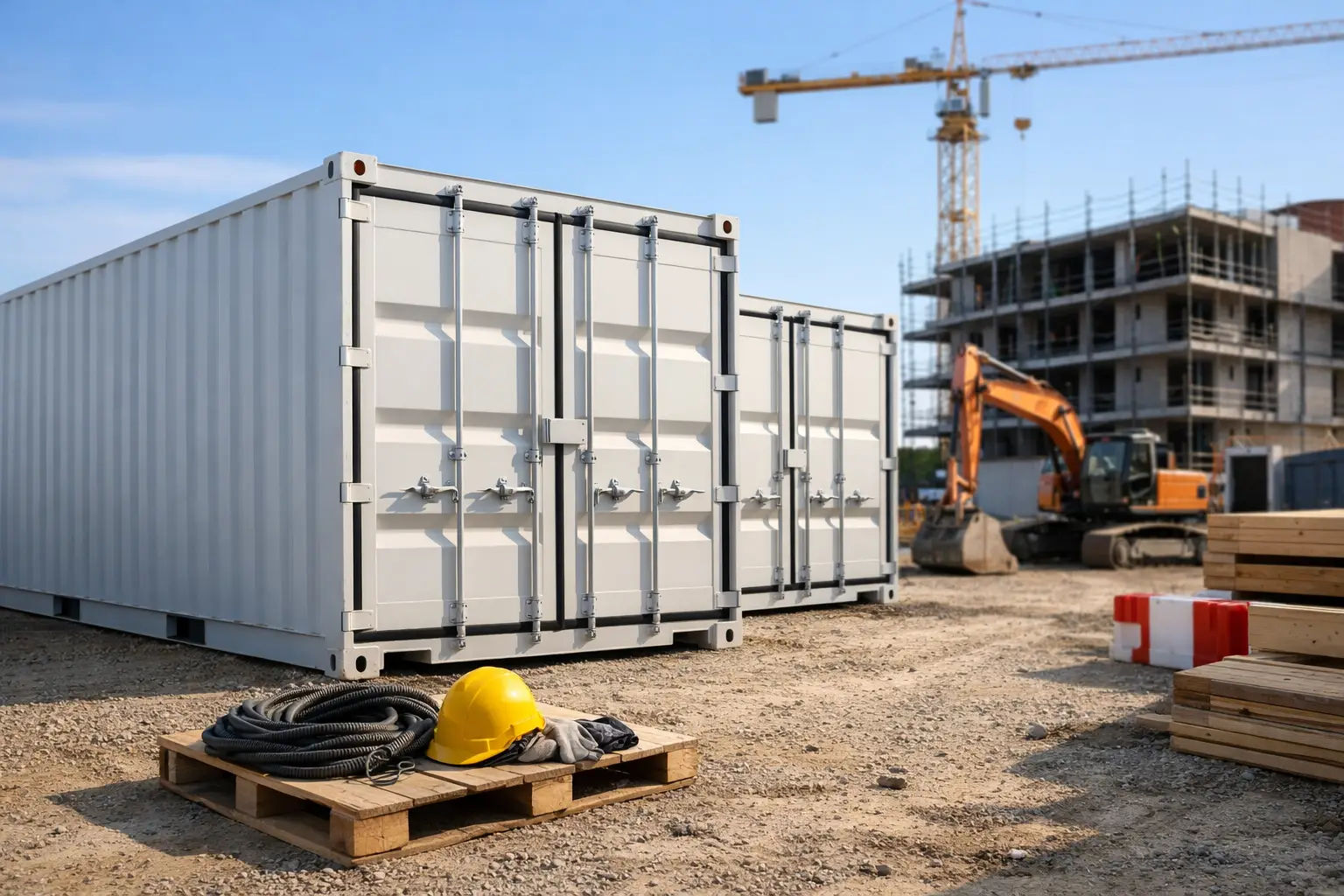
Construction job site storage containers solve a practical problem: they create controlled storage on an active site without requiring a permanent building. That matters on new builds, remodels, municipal work, commercial build-outs, and storm restoration jobs. If the job lasts a few weeks or several months, having on-site storage reduces daily loading and unloading and cuts down on unnecessary trips.
There is also a cost angle that should not be ignored. Replacing stolen tools, damaged materials, or missing equipment is expensive, but the bigger hit often comes from downtime. If a crew cannot work because the right materials are missing or wet, labor costs continue while progress stalls.
What to look for in a storage container on a job site
Not every container setup works well for construction. The basic idea is simple, but the details affect how useful the unit will be day to day.
Steel construction is a big one. Job sites are hard on equipment, and lightweight options usually show it quickly. Durable steel holds up better against impacts, weather, and repeated use by multiple crews. Door design matters too. Wide, easy-opening doors save time when workers need to move larger equipment or stacked materials in and out.
Ground-level loading is another feature that tends to matter more in practice than it does on paper. If the container sits low to the ground, crews can move items directly in without dealing with a steep ramp or awkward lifting. That reduces strain and speeds up loading, especially for heavy tools, generators, saws, compressors, and boxed materials.
Weather protection is just as important. A good unit should be sealed well enough to keep out rain and normal site debris, while ventilation helps reduce heat and moisture buildup inside. That is especially helpful for boxed products, adhesives, trim, and materials that do not handle moisture well.
Security is about more than a lock
Most contractors think about locks first, and they should. But container security works best when the whole setup supports it. Strong steel walls, solid doors, limited pry points, and a placement strategy that keeps the unit visible all help reduce risk.
It also helps to think about what is actually being stored. High-value tools and smaller equipment should not be buried under loose materials where they are harder to track. Organizing the interior with shelves, labeled zones, or designated sections for each trade can improve both security and accountability. If everyone knows where items belong, it becomes easier to notice when something is missing.
On larger sites, one container may not be enough. It may make more sense to separate tools from consumables or keep expensive specialty equipment in its own secured unit. The right answer depends on crew size, number of trades, and how often materials are being delivered.
How containers help with scheduling and workflow
Job site storage is often treated as a protection issue, but workflow may be the bigger benefit. When materials arrive early and have a safe place to stay, scheduling gets easier. You are not forced to coordinate every delivery down to the exact hour crews need it. That flexibility can be valuable when suppliers run late, weather shifts the timeline, or another phase of the project takes longer than expected.
On-site containers also reduce clutter. Materials stacked in hallways, under temporary cover, or around the perimeter of a site create access problems and safety issues. A designated storage container keeps the site more organized and makes it easier for crews to move freely.
This is especially useful on renovation projects where access is limited and space is tight. In those situations, every square foot matters. A single weatherproof container outside the active work zone can keep the interior cleaner and help trades avoid working around each other’s materials.
Renting vs. building temporary storage
Some contractors try to solve storage needs with makeshift sheds, trailers, or pieced-together enclosures. That can work on certain long-term sites, but it is usually less efficient than it sounds. Building temporary storage takes labor, materials, and time. Moving it later is another issue. Trailers can be useful, but they are not always ideal for organized storage, and they often require more careful loading because of height.
A portable storage container rental is usually the simpler choice when the goal is speed and flexibility. It arrives ready to use, stays on-site for the length of the job, and can be removed when the project wraps up. For contractors managing multiple jobs at once, that flexibility matters. You can add storage where it is needed without creating another asset to maintain.
Monthly rental terms also make sense for construction because project timelines move. Some jobs finish early. Others drag on because of inspections, change orders, or supply delays. A rental approach is easier to adjust than a fixed storage setup built around a best-case schedule.
When delivery and pickup make the biggest difference
The container itself matters, but delivery matters too. If a unit is dropped unevenly or placed poorly, daily use becomes harder from the start. Doors may be more difficult to open, loading may feel less safe, and materials inside can shift during transport.
That is why contractors should pay attention to how the container is delivered and set in place. A level placement makes loading easier and protects what is inside. It also helps to work with a provider that understands access constraints on active sites and can coordinate around crew schedules.
In places like Fort Worth, Amarillo, and Oklahoma City, job conditions can vary quite a bit from one site to the next. A residential infill build, a suburban commercial project, and a rural construction site all have different access and staging concerns. Local service tends to make those logistics easier because the provider is more familiar with the area and can respond faster if plans change.
Choosing the right size and setup
Bigger is not always better. An oversized container takes up space you may not have and can encourage poor organization. Too small, though, and the unit becomes cluttered fast, which defeats the point.
Think about what will actually live inside the container week to week. If you are storing mostly hand tools, boxed supplies, and a few pieces of equipment, one size may be enough. If the site needs room for palletized materials, staging for multiple trades, or overflow during several phases of the job, you may need more capacity or more than one unit.
It is also smart to consider access frequency. A container used once a day for supply pickup can be packed more tightly than one crews open constantly. High-access containers need clear pathways inside, predictable organization, and enough room for safe movement.
A provider like MODS can be a practical fit when a contractor wants weatherproof steel storage, ground-level loading, and a delivery system that keeps the container level in transit. Those details sound small until a site is busy and the container gets used all day.
The best storage setup is the one that supports the way your crew actually works. If it keeps tools protected, materials dry, and the site easier to manage, it is doing more than holding equipment. It is helping the project stay on track.