
A Contractor Storage Example for Busy Jobs
A contractor storage example is easiest to understand when you picture a real job site: a remodeling crew is replacing cabinets, flooring, and fixtures in an occupied home. The team needs secure access to saws, ladders, fasteners, paint, and boxed materials every day. Leaving those items scattered in a garage slows the crew down. Hauling them away every evening wastes time. A portable storage container placed near the work area gives the crew one protected, organized place to start and finish each day.
For contractors, storage is not just about finding extra square footage. It is about keeping valuable equipment available, protecting materials from weather, and reducing the back-and-forth that eats into billable hours. The right setup also helps maintain a cleaner site for customers, employees, and subcontractors.
A Contractor Storage Example in Practice
Consider a small general contractor handling a six-week kitchen and living room renovation. Before demolition begins, the contractor has a portable steel storage container delivered to the driveway or another approved location on the property. The container becomes the job site’s supply room.
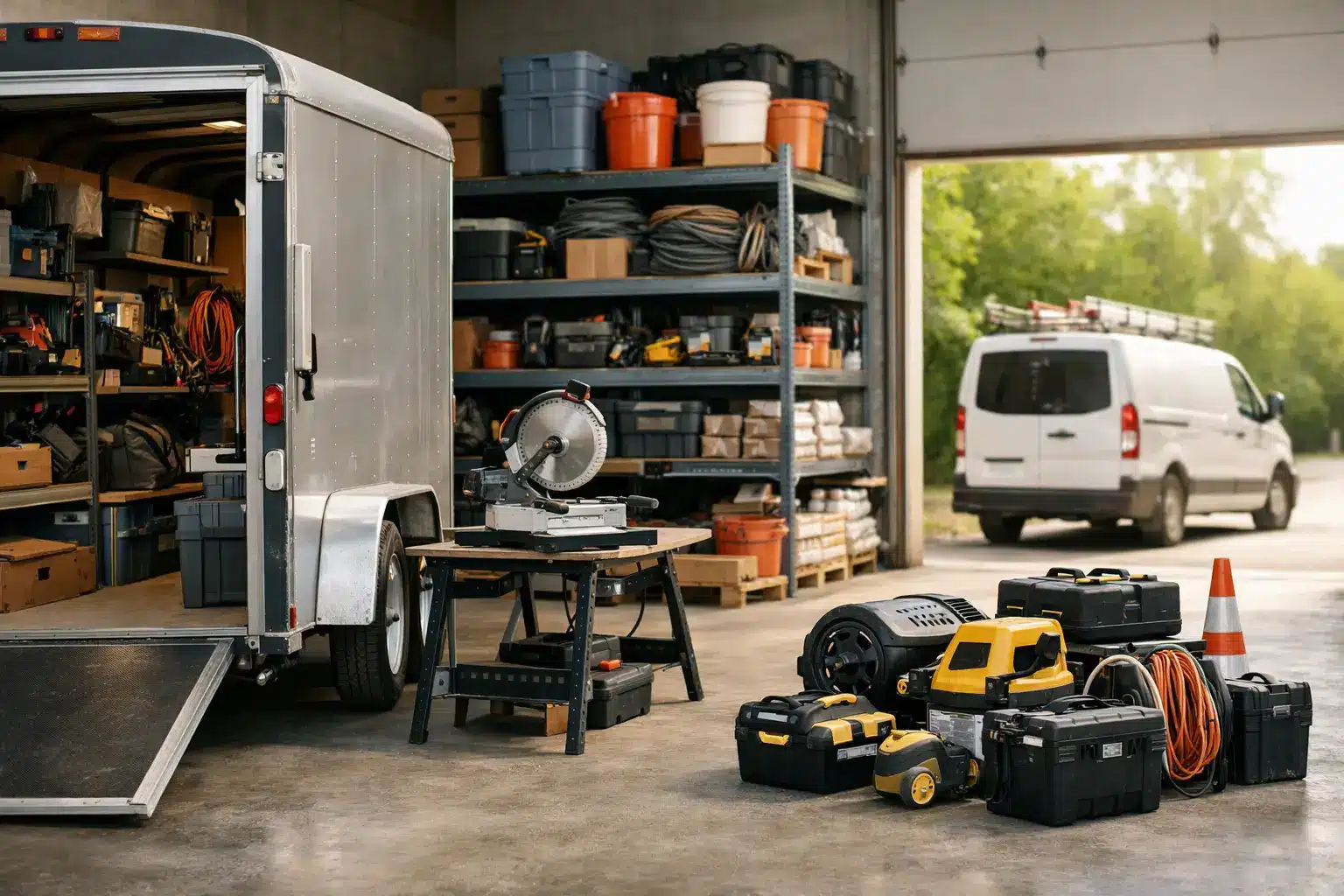
The crew keeps large tools on one side, including table saws, compressors, extension cords, and shop vacuums. Shelving or sturdy job boxes hold smaller tools, safety gear, and hardware. New cabinetry, flooring, trim, and fixtures stay boxed and off the floor until installation day. At the end of each shift, the crew sweeps up, returns equipment to the container, and locks the doors.
That arrangement solves several problems at once. The homeowner does not have to give workers access to a garage or living area for tool storage. The crew is not loading every item into trucks each evening. Materials are close enough to use when needed but are not stacked in the middle of the active work area.
A weatherproof steel container is especially useful when the job runs through rain, wind, dust, or temperature swings. Double-sealed doors and ventilation help protect stored items from the elements while allowing air to circulate. That does not replace proper handling for moisture-sensitive products, but it gives contractors a much better option than tarps, open trailers, or an unsecured porch.
Why On-Site Storage Helps a Job Move Faster
A contractor’s time is often lost in small increments. Ten minutes spent finding a tool, fifteen minutes spent making a supply run, and thirty minutes spent loading trucks at the end of the day add up quickly. On-site storage reduces those interruptions.
It also gives the foreman more control over inventory. Instead of guessing whether a subcontractor moved a box of tile or whether a tool was left at another project, the team has a designated location for job-specific items. A simple labeling system can make a major difference: one area for tools, one for materials, and one for items waiting to be installed.
For projects with several trades, the container can support better coordination. The electrician can store approved materials until rough-in work begins. The flooring crew can keep products protected until the space is ready. The painter can avoid bringing all equipment on day one. This works best when the general contractor sets clear rules about access and organization.
There is a trade-off. A container cannot solve poor scheduling or over-ordering. If materials arrive too early, sit for months, or require climate-controlled conditions, the contractor may need a different plan. Still, for standard construction tools and durable building materials, having secure storage at the site can remove a lot of daily friction.
Choosing the Right Storage Setup for the Work
The best contractor storage plan depends on the project, the available space, and the type of materials involved. A short bathroom renovation may only require room for a few tools and cartons of tile. A commercial tenant build-out may need a larger storage plan, scheduled deliveries, and a separate place for debris.
Before arranging delivery, measure the proposed placement area and the route the delivery truck will use. Account for gates, overhead lines, parked vehicles, low branches, and the turning space needed to place the container safely. The unit should be close enough for convenient loading without blocking customer access, emergency routes, or active work zones.
It is also smart to confirm property-owner approval and any local site requirements. A container placed in a residential driveway may be appropriate for one project, while a commercial property may require a specific placement area. Planning this before the container arrives prevents avoidable delays.
Ground-level loading is a practical advantage for contractors moving heavy equipment. Rolling a tool chest, hand truck, or boxed appliances into a container is generally easier than lifting them into a truck bed. When it is time to move the container, a level delivery system helps keep contents steadier during transport, which can reduce shifting when the load has been packed correctly.
Pack the Container Like a Working Supply Room
A storage container works best when it is treated as part of the job site, not as a place to throw everything at the end of the day. Start by placing heavier equipment low and toward the front or sides, where it can be secured and reached easily. Keep frequently used items near the doors. Store less-used replacement materials farther inside.
Avoid stacking fragile materials under heavy tools or placing loose items where they can slide. Use straps, shelving, bins, and job boxes where appropriate. Keep a clear walkway through the unit so workers can reach what they need without unloading half the container.
For a multiweek project, designate one person to check inventory. This does not need to be complicated. A clipboard list, marked bins, or a simple digital inventory can help track high-value tools and remaining materials. The goal is to prevent duplicate purchases and reduce the chance that an item disappears into a truck or another job site.
Security still requires good habits. Lock the container whenever the crew is away, limit key or code access, and avoid storing flammable, hazardous, or prohibited materials unless the storage provider and applicable rules allow it. Contractors should also confirm that their business insurance covers the equipment and materials they keep on-site.
When Off-Site Storage Makes More Sense
Not every project has room for a container. A downtown commercial site, a narrow lot, or a property with strict access rules may make on-site storage impractical. In those cases, a portable container can still be useful if it is loaded at the contractor’s yard or another location and stored at a secure facility until the next phase of work.
Off-site storage is also helpful between projects. A contractor can keep seasonal equipment, surplus fixtures, staging materials, or tools that do not need to ride in a truck every day. When the next job starts, the container can be delivered where it is needed. This approach can be more efficient than paying for a large warehouse or repeatedly moving supplies between self-storage units.
For contractors in Fort Worth, Amarillo, and Oklahoma City, MODS can deliver a steel storage container to a job site, leave it for the rental period, and transport it or store it at a secure facility when plans change. That flexibility matters when project timelines move, materials arrive early, or a customer asks for a cleaner work area.
The practical value of contractor storage comes down to fewer unnecessary trips, better protection for equipment, and a job site that stays easier to manage. Set up the container with a clear purpose, keep it organized, and it can become one of the most useful tools on the project.