
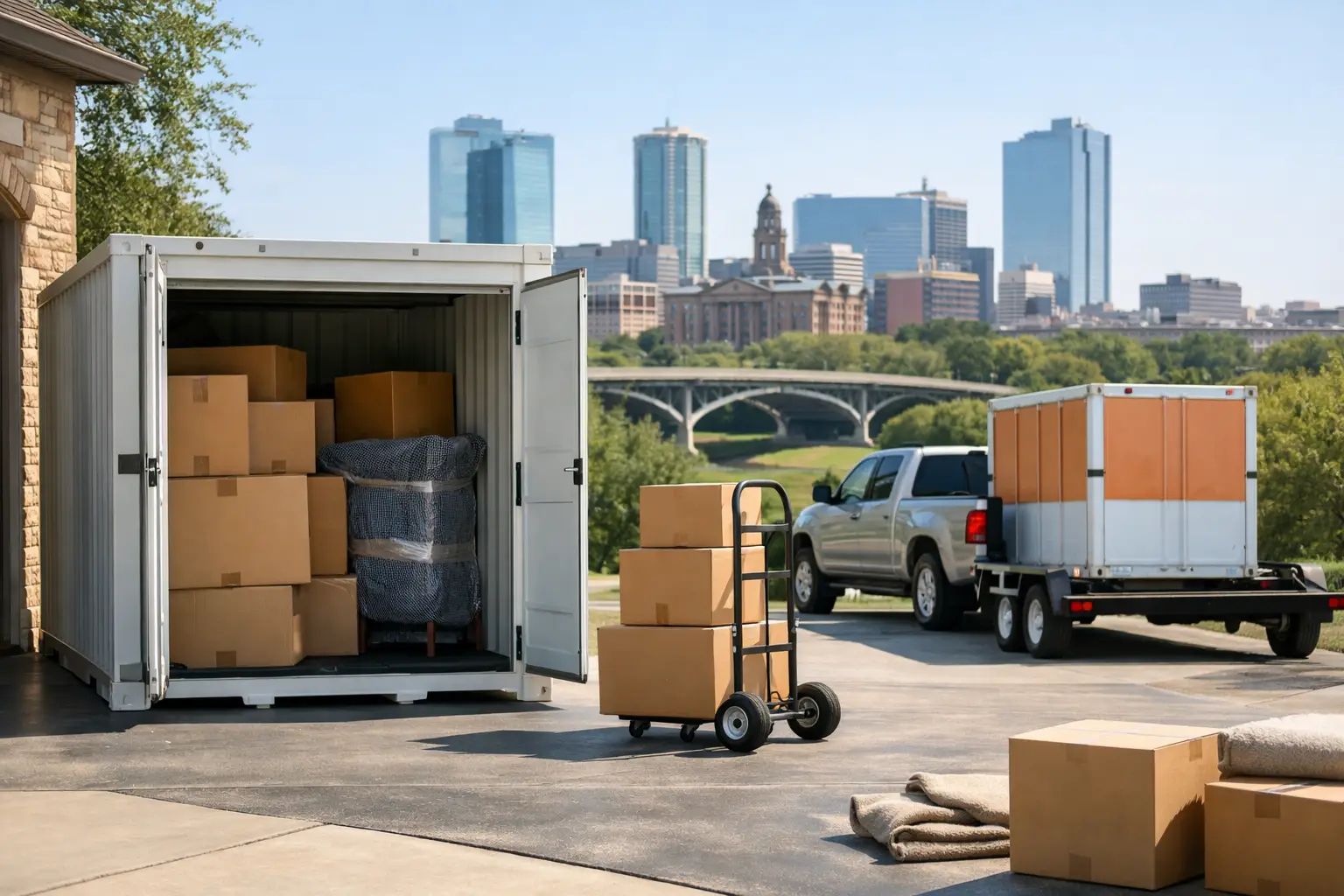
Moving Container Fort Worth Options That Fit
A move can fall apart fast when the truck has to be back by 5 p.m. and half the house is still in the garage. A moving container Fort Worth residents can keep at home changes that schedule. Instead of loading everything in one exhausting day, you can pack room by room, protect what matters, and decide later whether the container needs to move or stay put.
That flexibility is useful for more than a traditional move. Homeowners use portable containers during renovations, renters use them when lease dates do not line up, and businesses use them to manage overflow without constantly driving to a storage unit. The best choice depends on where you need the container, how long you need it, and whether your belongings will stay on-site, move across town, or go into secure storage.
How a Moving Container in Fort Worth Works
The process is straightforward. A portable steel container is delivered to your home, business, or job site. You load it at ground level on your own timeline, which means no carrying furniture up a truck ramp and no pressure to finish before a rental clock runs out.
Once you are packed, you choose the next step. The container can remain at your location for on-site storage, be transported to your new address, or be stored at a secure facility until you are ready for it. This gives you one place for your belongings instead of juggling a truck rental, a self-storage unit, and multiple loading days.
For a local Fort Worth move, the ability to load before moving day can make a major difference. You can box up items you do not use every day, such as seasonal décor, books, guest-room furniture, and garage tools, while leaving daily essentials inside until the final days. When it is time to move, much of the work is already done.
When a Container Makes More Sense Than a Truck
A rental truck can still be the right option for a small, simple move. If you have a studio apartment, a few helpers, a firm move date, and everything can be loaded and unloaded in a single day, a truck may be enough. It is usually most practical when there is no need for storage between locations.
A moving container is often a better fit when timing is uncertain or the job is spread across several days. Fort Worth households frequently run into overlapping closing dates, construction delays, weather interruptions, or a gap between move-out and move-in dates. A container gives you room to adjust without unloading your belongings into a temporary storage unit and loading them again a few days later.
It can also reduce the strain of repeated trips. Traditional self-storage requires you to load a vehicle, drive to the facility, unload, then repeat the process when you need your things back. With a container at your property, the storage space is where the work is happening.
For businesses and contractors, the same advantage applies. Equipment, inventory, materials, and tools can stay close to the job rather than being hauled back and forth each day. The right container can support a remodel, a retail reset, a seasonal inventory increase, or a construction project that needs secure on-site space.
What to Look for in the Container Itself
Not all portable storage containers are built the same. A low price may look appealing, but the condition and design of the container matter when you are trusting it with furniture, business records, tools, or materials that cannot be replaced easily.
Start with construction. A weatherproof steel container offers better protection from the elements and everyday job-site wear than a lightweight alternative. Double-sealed doors help keep moisture and dust out, while ventilation helps reduce stale air inside the container. These features are especially helpful during a longer rental, when belongings may be stored through changing North Texas weather.
Ground-level loading is another practical feature. It is easier to walk large furniture, appliances, and heavy boxes into a container than it is to carry them up a narrow ramp. That does not eliminate the need for safe lifting, but it can make loading more manageable for families, older adults, and crews handling bulky items.
Transport is worth asking about, too. When a loaded container is moved, a level delivery system can help reduce shifting along the way. MODS uses a Level Lift system that keeps the container level during delivery and transport, helping protect carefully packed belongings from unnecessary movement.
Plan Your Delivery Space Before the Container Arrives
Portable storage is convenient, but it does require a realistic place to set the container. Before scheduling delivery, look at your driveway, parking area, business lot, or job site. You need enough clear space for the container and the delivery equipment to maneuver safely.
Pay attention to low tree limbs, overhead wires, parked vehicles, gates, tight turns, and soft ground. A level, hard surface is generally the best placement area. If your driveway slopes sharply or access is narrow, discuss the site in advance so you can choose the safest workable location.
Neighborhood and property rules can also affect your plans. Some homeowners associations, apartment communities, and commercial properties have requirements about where a container may be placed or how long it can remain on-site. Check before delivery, especially if you expect to keep the container for several weeks.
If you are renting, ask your landlord for approval. If you are managing a job site, make sure the container placement will not block deliveries, customer parking, fire lanes, or crew access. A few minutes of planning can prevent a frustrating reschedule later.
Pack for Protection and Easy Unloading
Packing a container well is less about filling every inch and more about building stable layers. Put heavier items on the floor and distribute the weight across the container instead of concentrating it on one side. Appliances and large furniture should be secured, while mattresses, blankets, or moving pads can protect wood and upholstered pieces from rubbing together.
Keep fragile boxes toward the top, not under heavy items. Label boxes on more than one side so you can identify them after the container is unloaded or placed in storage. If you will need certain things before the rest of the load, place them near the doors. This might include work tools, cleaning supplies, basic kitchen items, or the boxes you plan to unpack first.
For an extended storage period, avoid packing damp items. Let outdoor equipment, rugs, and patio furniture dry completely before loading. Moisture trapped in any storage space can create problems over time, so clean, dry packing is one of the simplest ways to protect your belongings.
Choose the Storage Plan That Matches Your Timeline
The right rental length is not always obvious at the beginning. A renovation may take longer than expected. A sale may close late. A business may need temporary inventory space through a busy season. Monthly container rentals give you more control than a single-day truck reservation because your plan can adapt as the situation changes.
On-site storage works well when you need regular access. It keeps renovation supplies, household contents, or job-site materials nearby. Off-site storage is useful when you need the container out of the way but are not ready to unload it into a permanent location. For a move, transportation to the next address can eliminate an extra loading and unloading cycle.
The key is to choose based on access, timing, and cost, not just square footage. If you will need items every few days, keeping the container at your property may be worth it. If space is limited or the container needs to be cleared from the site, secure facility storage may be the better answer.
A good moving plan does not force you to predict every delay before it happens. Set aside time to sort what you are taking, reserve a container with enough room for a safe load, and give yourself permission to pack at a reasonable pace. Moving is still work, but it does not have to be one long day of rushing from a truck to a storage unit and back again.