
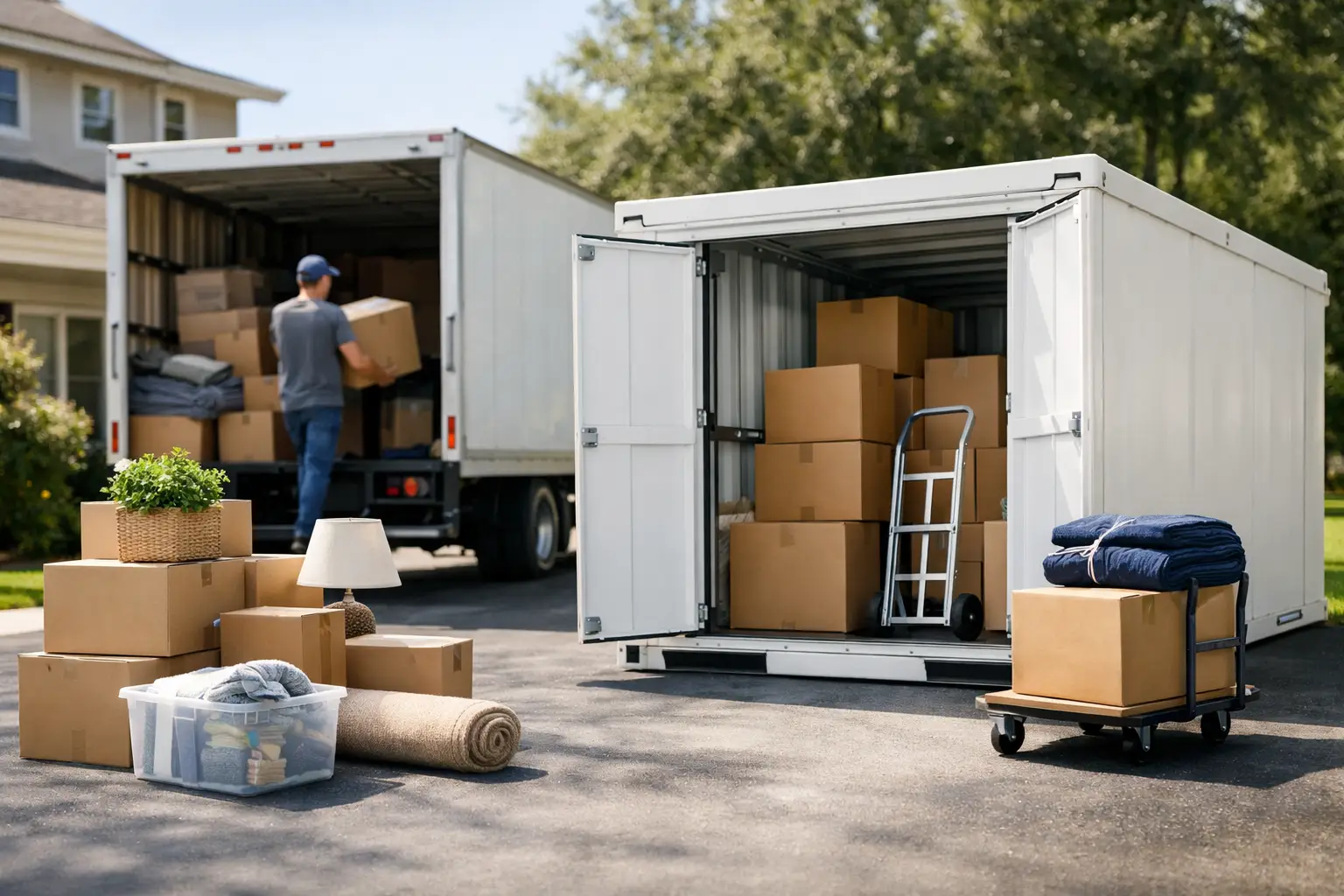
Portable Storage for Moving: What to Know
Moving gets harder the moment everything has to happen in one day. The truck has to be picked up on time, the elevator has to be reserved, friends have to show up, and somehow every box has to be loaded before the rental clock starts costing more. Portable storage for moving changes that equation. Instead of forcing your schedule around a truck or a storage facility, it brings the container to you and lets you load when it makes sense.
That difference matters more than most people expect. A portable container is not just a box dropped in a driveway. It is a way to spread out the work, protect your belongings, and cut out a lot of the stress that comes with traditional moving methods. For families, renters, small businesses, and contractors, that flexibility is often the real value.
How portable storage for moving works
The process is straightforward. A storage container is delivered to your home, business, or job site. You load it on your own timeline instead of racing through a same-day truck rental. Once you are ready, the container can be picked up and moved to your new location or stored at a secure facility until you need it.
For many people, that means one less deadline to manage. You can pack a little each evening after work, load larger furniture over the weekend, and avoid the pressure of doing everything in a single stretch. If your closing date changes or your new place is not quite ready, you still have options.
This is also why portable storage works well beyond household moves. Contractors use it for tools and materials on-site. Businesses use it during renovations or office transitions. Homeowners use it when staging a property, remodeling a kitchen, or clearing space before flooring work starts.
Why people choose portable storage over a truck
A truck rental still makes sense in some situations. If you are moving a small apartment across town and have help lined up for one day, a truck might be the cheapest path. But low sticker price does not always mean lower overall cost or lower stress.
With a truck, you usually deal with a narrow pickup window, fuel costs, mileage, and the pressure to load and unload quickly. If anything runs late, those delays start stacking up. You also have to drive the truck, park it, and often return it on time.
Portable storage removes a lot of that friction. Ground-level loading is easier on your back than walking items up a ramp. You are not rushing to beat a deadline. You are not making repeated trips to a storage unit. And if storage is part of the plan, you do not have to unload once into a unit and again into your new place.
That said, it depends on your move. If access is tight, if your building has strict placement rules, or if you only need to move a handful of items, another option may fit better. The right choice comes down to timeline, volume, access, and how much flexibility you need.
When portable storage for moving makes the most sense
The best use cases usually involve some kind of gap, complication, or need for breathing room. A few common examples come up again and again.
If you are waiting on a closing date, portable storage gives you a buffer. If you are downsizing, it lets you sort without making snap decisions. If you are remodeling before moving in, it keeps furniture out of the way but still accessible. And if you are managing a business move, it can reduce disruption by letting teams pack in stages.
This is especially useful in places like Fort Worth, Amarillo, and Oklahoma City, where moves often involve driveways, job sites, or suburban properties with enough space for easy container placement. In those situations, having the container delivered directly to the property can simplify logistics in a big way.
What to look for in a container
Not all portable storage units are built the same, and this is where details matter. If you are trusting your belongings to a container for days or weeks, construction quality should not be an afterthought.
Steel containers offer stronger protection than lighter alternatives. Weather resistance matters, especially when your move does not line up with perfect conditions. Double-sealed doors help keep out moisture and dust. Ventilation helps reduce heat buildup and stale air inside the unit.
Delivery also matters more than people realize. A container that stays level during drop-off and pickup can help reduce shifting inside. That is a small operational detail, but it affects how secure your items stay in transit.
In practical terms, you want a provider that can explain how the container is delivered, what it is made from, how it handles weather, and what happens if you need storage longer than expected. Clear answers usually signal a company that knows its process and respects your time.
Packing on your schedule has real value
One of the biggest advantages of portable storage is not dramatic. It is simply the ability to work at a normal pace.
You can start with what you do not use every day, leave essentials accessible, and load room by room instead of creating instant chaos across the whole house. Families with kids benefit from this because they can keep daily life functioning while the move happens in phases. Older adults benefit because they can avoid the physical strain of one intense moving day. Business owners benefit because operations do not have to stop all at once.
That flexibility also tends to produce a better-packed container. When people are rushed, they stack poorly, skip padding, and waste space. When they have time, they usually do a cleaner, safer job.
Common concerns and honest trade-offs
Portable storage is convenient, but it is not magic. The container needs a practical place to sit, and some neighborhoods or commercial sites may have restrictions. Apartment moves can be trickier if there is limited parking or no approved placement area. If access is extremely tight, delivery options may be limited.
There is also the question of timing. Portable storage works best when you want flexibility. If your move is simple, immediate, and very small, the extra convenience may not outweigh the cost compared with borrowing a trailer or renting a small truck.
The key is to look at the full picture. Time, labor, fuel, schedule changes, storage needs, and stress all have a cost. For many moves, paying for flexibility ends up saving money in other places.
How to decide if it fits your move
Start with three questions. First, do you need more than one day to pack and load? Second, is storage part of your plan, even temporarily? Third, do you want to avoid driving a rental truck or making multiple trips to a storage facility?
If the answer is yes to even one of those, portable storage is worth serious consideration. If the answer is yes to all three, it is usually one of the most practical moving options available.
It also helps to think about who is doing the work. If you are handling the move yourself, extra time is valuable. If you are coordinating family schedules, extra time is valuable. If your move may shift because of contractors, weather, or closing delays, extra time is valuable. Portable storage is really about buying that time in a useful, controlled way.
Companies like MODS have built their service around that idea – deliver the container, let you load at ground level, then move or store it based on your timeline. That approach is simple, but for a lot of customers, simple is exactly what makes the move manageable.
A good move is not always the fastest one. More often, it is the one with fewer surprises, fewer rushed decisions, and fewer chances for something to go wrong. If portable storage gives you that kind of control, it is doing more than holding boxes. It is giving your move room to work the way real life works.