
10 Best Job Site Storage Ideas That Work
A job site gets messy fast. One delivery shows up early, one subcontractor leaves gear in the wrong place, and suddenly your crew is wasting time hunting for tools, moving materials twice, or dealing with weather damage that could have been avoided. The best job site storage ideas do more than keep things tidy. They protect materials, reduce downtime, and help the whole site run smoother.
If you manage construction, remodeling, roofing, concrete, or commercial build-outs, storage is not a side issue. It affects labor efficiency, theft risk, scheduling, and cost control. The right setup depends on the size of the site, how long the project will last, and what you need to keep close at hand versus what should stay locked up.
Best job site storage ideas start with access
A lot of storage problems come from one basic mistake: putting everything in one place without thinking through who needs it and when. If your electricians, framers, and finish crews all have to open the same packed container to find what they need, that container turns into a bottleneck.
Start by separating storage into daily access, weekly access, and backup inventory. Daily access items should be easy to reach without unloading half the space. That usually includes core tools, fasteners, safety gear, layout equipment, and smaller materials used across multiple trades. Weekly access items can go deeper into the storage area, while backup inventory can be stacked and secured for longer-term holding.
This sounds simple, but it saves real time. When crews can grab what they need quickly and put it back in a clear spot, you cut down on delays that add up over the course of a project.
Use zones instead of one catch-all area
The best-performing sites usually have designated storage zones. One area may hold tools and lockable equipment. Another may be set aside for weather-sensitive materials. A third may be used for bulk supplies waiting for the next phase.
Zoning works especially well when you are dealing with multiple trades and a changing project schedule. It gives everyone a clearer system and makes it easier to track what has arrived, what has been used, and what needs to be reordered.
Portable containers are one of the best job site storage ideas
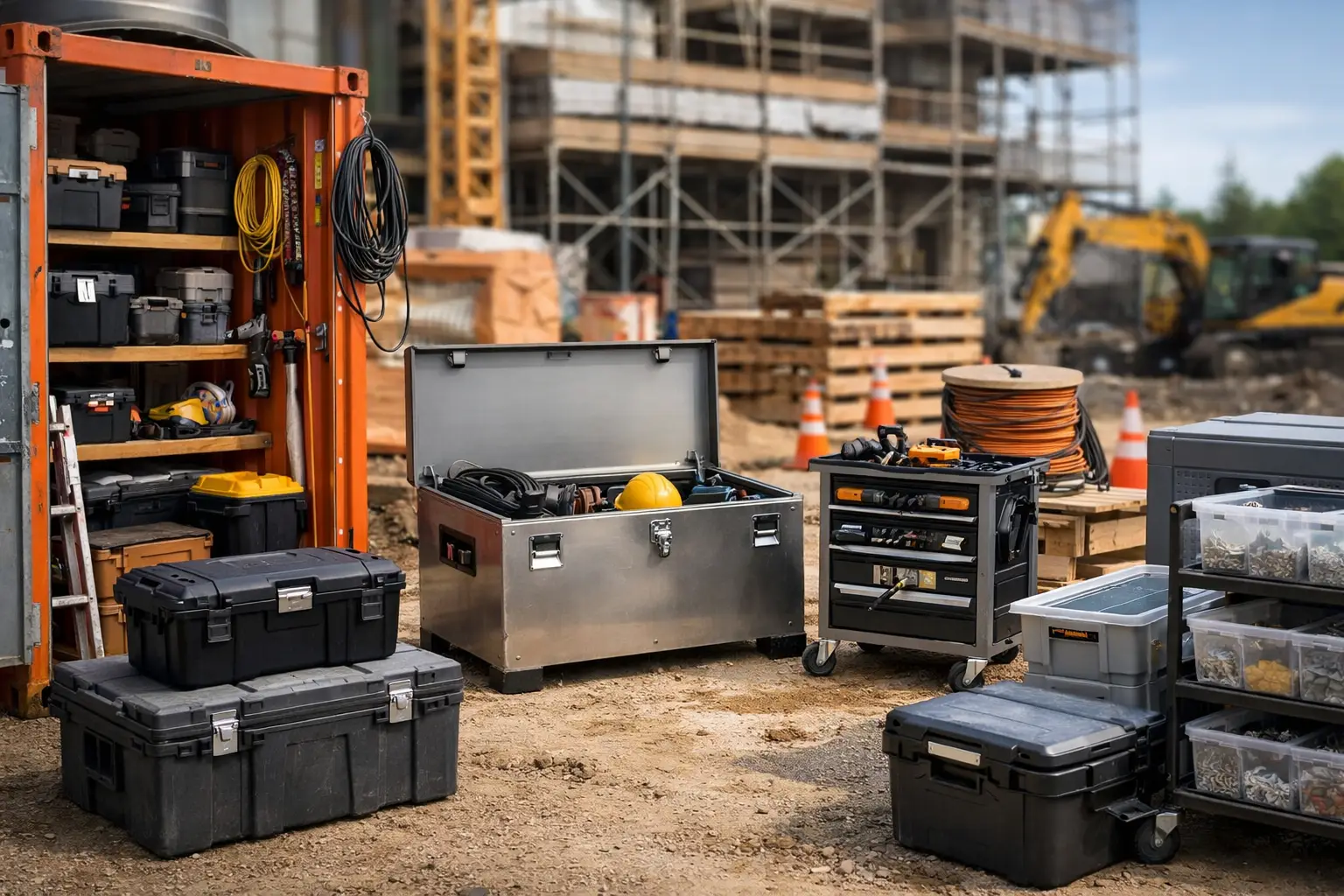
For many contractors, a portable storage container is the most practical answer because it combines security, flexibility, and on-site access. Instead of sending workers off-site to a storage unit or leaving materials exposed under tarps, you have one protected space delivered directly to the project.
That matters on active sites where time is tight. Ground-level loading makes heavy items easier to move in and out. Steel construction holds up better than makeshift storage setups. Weather-resistant features help protect tools, fixtures, and materials from rain, wind, and dust.
A container also gives you options. You can keep it on-site for day-to-day access, use it during a renovation when interior storage is limited, or move it when the project shifts to a new location. For contractors working across Fort Worth, Amarillo, or Oklahoma City, that flexibility can make logistics a lot easier.
When a container makes the most sense
Portable storage is especially useful when the site lacks a permanent structure, the project lasts more than a few weeks, or theft is a concern. It is also a smart option when materials need to arrive before installation dates. Instead of crowding the work area, you can stage items securely until the crew is ready.
The trade-off is space planning. A container needs a practical drop location with enough clearance for delivery and access. But on most residential and commercial sites, that planning is easier than dealing with daily trips to an off-site facility.
Protect high-value tools separately
Not everything on a job site should be stored the same way. Expensive laser levels, power tools, testing equipment, and specialty gear deserve tighter control than general supplies.
One of the smartest job site storage ideas is using a layered system. Store high-value tools inside a locked gang box, cage, or designated lockable section within a larger storage container. That way, even if several people need access to the main storage area, your most costly items stay under tighter supervision.
This also helps with accountability. Assign responsibility for certain tool groups to a foreman or lead, and keep a simple checkout routine for shared equipment. It does not need to be complicated. A clipboard, whiteboard, or digital note can prevent a lot of finger-pointing later.
Keep weather-sensitive materials off the floor
Contractors know that moisture damage is expensive, but it still happens all the time because materials get stacked directly on concrete, dirt, or the floor of an overloaded trailer. Drywall, flooring, trim, adhesives, paint, insulation, and boxed fixtures all need better handling than that.
Use pallets, shelves, or dunnage to keep these items raised and ventilated. Give them space around the edges instead of packing everything wall to wall. Good airflow matters, especially during humid stretches or temperature swings.
If your site is exposed and the schedule is unpredictable, enclosed storage is worth it. Weatherproof portable containers are often a better choice than temporary tents, sheds, or tarped piles because they provide more consistent protection and better security at the same time.
Build a simple inventory system
Storage gets expensive when crews do not know what they already have. Duplicate purchases, missing boxes, and partial material counts can quietly eat into a job budget.
You do not need warehouse software to fix that. One of the best job site storage ideas is just giving every storage area a basic inventory process. Label shelves or sections clearly. Group materials by trade or phase. Track deliveries as they arrive. Mark open boxes so crews use partial stock before starting new bundles.
If the project is large, create a quick map of the storage layout and post it inside the container door. That may sound overly organized for a construction site, but it saves time when multiple people are pulling from the same stock.
Label by phase, not just by product
This is where many sites can improve. Instead of labeling materials only by type, label them by where or when they will be used. Kitchen cabinets for phase two. Plumbing trim for unit 4. Electrical rough-in for the west side.
That approach cuts down on confusion and keeps early-phase work from disrupting materials meant for later stages.
Set up a clean return point for daily tools
At the end of a long day, tools get dropped wherever there is space. Then the next morning starts with ten minutes of searching, borrowing, and asking around. Repeat that across a crew for weeks, and the cost is obvious.
Create one return point for daily tools inside your main storage area. Keep chargers, batteries, hand tools, and commonly used gear in predictable spots. Use wall racks, bins, and shelving if the layout allows. The goal is not perfection. It is making the right thing easy enough that crews will actually stick with it.
A clean return point also helps supervisors spot missing items before they become bigger problems.
Use separate storage for hazardous or regulated items
Fuel, solvents, adhesives, paints, and other regulated materials should not be mixed casually with general tools and finish products. Aside from safety concerns, spills and fumes can ruin nearby materials.
Depending on the job and local requirements, these items may need dedicated storage cabinets or clearly separated containment. This is one area where convenience should not override compliance. The best system is the one that keeps crews safe and avoids preventable damage or citations.
Match storage to the project timeline
Short jobs and long jobs do not need the same setup. A three-week roofing project may only need secure tool storage and covered space for fast-moving materials. A six-month renovation or commercial build usually benefits from a more structured system with overflow storage, inventory control, and room for phased deliveries.
That is why the best job site storage ideas are rarely one-size-fits-all. If the project will evolve, your storage plan should too. Start with what the crew needs right now, but leave room for changing access patterns, material deliveries, and trade sequencing.
For example, a portable container can start as a tool hub early in the project and shift into fixture and finish-material storage later. That kind of flexibility is often more useful than a fixed setup that only solves one stage of the job.
Think beyond security and focus on workflow
A lot of contractors think about storage only when something gets stolen or damaged. But the bigger value is often workflow. Good storage keeps paths clear, reduces rehandling, supports cleaner staging, and helps each trade work with fewer interruptions.
That is where a dependable on-site container setup can pull extra weight. A portable storage company like MODS can give contractors a straightforward way to add secure, weather-protected storage without sending crews off-site or forcing materials into whatever corner is available. When the delivery, loading height, and container construction are built for real-world use, storage becomes one less thing to fight with.
The best setup is the one your crew will actually use consistently. Keep it secure, keep it accessible, and keep it tied to how the job really works day to day. When storage supports the work instead of slowing it down, the whole site feels more under control.