
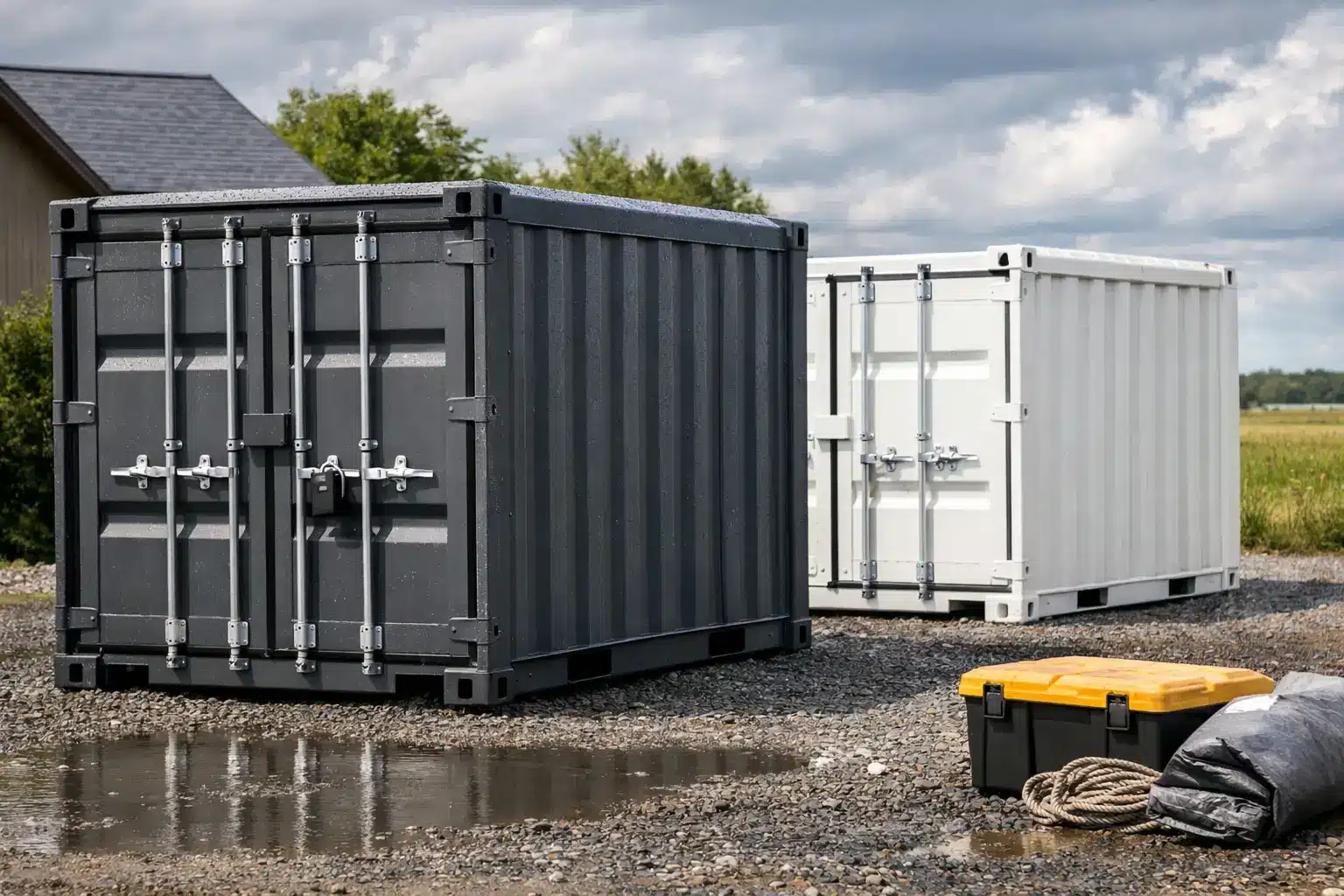
Are Portable Storage Containers Weatherproof? Hail, Wind, Rain, and Heat in Texas and Oklahoma
Yes, a well-built steel portable storage container is weatherproof: it keeps out rain, wind, hail, and dust under normal conditions. It is not waterproof in a flood, and any sealed metal box can collect condensation if it is packed wet or left without airflow. MODS containers are all-steel, weatherproof, and ventilated for Texas and Oklahoma weather.
What Does Weatherproof Actually Mean for a Storage Container?
Weatherproof means the container resists everyday weather such as rain, wind, hail, sun, and dust. It does not mean the container is sealed against standing water or immune to humidity. That difference matters when you choose a container and when you pack it.
| Condition | Steel Weatherproof Container | What You Should Still Do |
| Rain and wind-driven rain | Keeps water out through sealed doors and a solid roof | Keep doors closed and locked between loads |
| Hail | Steel walls resist impact far better than composite or wood | Nothing extra for normal hail |
| High wind | Heavy steel resists wind | Place on level ground; do not leave doors open |
| Dust | Sealed doors keep most dust out | Wrap upholstery and mattresses |
| Flooding | Not designed to stay dry underwater | Avoid low spots; move the container if flooding is forecast |
| Humidity and condensation | Ventilation helps but cannot remove moisture you pack in | Pack only dry items and allow airflow |
How Do Steel, Composite, and Wood-Framed Containers Compare in Bad Weather?
Steel handles hail and wind best, composite panels can crack or dent, and wood-framed boxes depend on coatings and covers. Construction is the single biggest factor in weather protection.
| Construction | Hail | Wind | Rain | Long-Term Outdoor Storage |
| All-steel (MODS) | Strong resistance | Heavy and stable | Sealed roof and doors | Well suited |
| Steel frame with composite panels | Panels can crack or dent | Moderate | Depends on seals | Moderate |
| Wood-framed or plywood | Vulnerable to punctures | Lighter | Depends on coating | Best indoors |
See how MODS compares on construction in MODS vs PODS® and MODS vs U-Haul for moving and storage. MODS is not affiliated with PODS Enterprises or U-Haul.
Can Storage Containers Handle Texas Hail?
All-steel containers handle normal hail well, which is why construction matters so much in North Texas. Texas ranks among the leading states for major hail events according to the Insurance Information Institute, and spring storms regularly hit DFW and the Panhandle. You can research past storms near you in the NOAA Storm Events Database.
Steel walls and roofs resist the impacts that crack composite panels or puncture thin wood. After a big storm, look over the container for dents near the door seals, and call MODS if anything looks off.
If a storm is in the forecast while you are loading, pause, close and lock the doors, and wait it out inside. Open doors are the main way hail and wind-driven rain reach your belongings.
What About Panhandle Wind and Dust?
Heavy steel containers stay put in high wind, and sealed doors keep most blowing dust out, as long as the doors stay closed. Amarillo and the Panhandle see frequent strong winds and dust events, and the National Weather Service office in Amarillo issues regular high wind alerts.
- Close and lock doors whenever you step away, even for a few minutes.
- Hold doors firmly when opening on gusty days.
- Wrap mattresses, sofas, and electronics so fine dust cannot settle in.
- Place the container on level ground so doors seal evenly.
Are Storage Containers Safe in Oklahoma Storm Season?
Steel containers protect contents from typical severe thunderstorms, heavy rain, and hail, but no portable container should be considered storm-proof in the most extreme events. Central Oklahoma sees severe weather most springs; follow alerts from the National Weather Service in Norman and the Oklahoma Mesonet.
Practical steps: keep the container locked, keep valuables and irreplaceable documents with you, and if you are storing long term, consider moving the container to a MODS yard. If severe weather is forecast while your container is on site, call MODS to discuss moving it to a yard.
Do Storage Containers Leak?
A well-maintained steel container with good door seals should not leak in normal rain. Most water problems come from three causes: doors left open, a container placed in a low spot where water pools, or moisture packed inside.
- Pick a high, level spot so rainwater drains away from the doors.
- Close the doors fully and lock them after every loading session.
- Check the seals when the container arrives and tell us if anything looks damaged.
- Never pack wet items such as damp rugs, freshly cleaned furniture, or outdoor gear.
How Do I Prevent Moisture and Mildew in a Stored Container?
Pack only dry items, leave room for air to move, and keep the container off low ground. Texas and Oklahoma summers are hot and humid, and warm, damp air trapped with belongings is what leads to mildew. The EPA’s guidance on mold explains why controlling moisture matters.
- Dry everything first, including appliances you drained and furniture you cleaned.
- Use pallets or plastic sheeting under items stored for months.
- Leave a small gap between items and the walls for airflow.
- Use sealed plastic bins for clothing, linens, and paper.
- Add moisture absorbers for long storage.
- Avoid storing food or open liquids.
For more, read how to protect items in storage.
Store in All-Steel Containers Built for Texas and Oklahoma
MODS containers are all-steel, weatherproof, and ventilated, with yards in Fort Worth, Amarillo, and Oklahoma City for secure off-site storage.Call (817) 847-6637, Amarillo (806) 350-6637, OKC (405) 720-7344, or contact MODS online.
How Hot Does a Storage Container Get Inside?
A steel container in direct sun gets much hotter inside than the outdoor air on a summer afternoon, so plan what you store accordingly. Ventilation helps, but it does not make a container climate controlled.
- Safe to store: furniture, boxed household goods, tools, clothing in sealed bins.
- Store with care: wood furniture and instruments for short periods only; wrap and elevate.
- Keep with you: candles, vinyl records, photos, medications, aerosols, and anything flammable or heat-sensitive.
Placing the container in shade when possible and loading heat-sensitive items last helps. For more, see how to store furniture during a renovation.
Where Should a Storage Container Sit to Stay Dry?
Placement is the easiest weather protection you control: choose high, level, firm ground with good drainage and doors facing away from prevailing wind.
- Avoid low spots at the bottom of a sloped driveway or near a drainage ditch.
- Choose a hard surface such as concrete or asphalt; wet clay and gravel can shift after heavy rain.
- Keep doors out of the wind where possible; in the Panhandle, facing doors away from strong southwest winds helps.
- Check overhead for tree limbs that could drop in a storm.
- Stay off grass that holds moisture under the container floor.
MODS drivers use the level lift system to set the container flat, which keeps doors sealing evenly. If your only spot is questionable, talk to us about yard storage instead. See can containers fit driveway spaces and how to prepare for storage delivery.
Weatherproof Storage Container FAQs
1. Are portable storage containers weatherproof?
Steel portable storage containers are weatherproof against rain, wind, hail, and dust under normal conditions. MODS containers are all-steel, weatherproof, and ventilated.
2. Are portable storage containers waterproof?
Not in the sense of flood-proof. A steel container keeps rain out, but it is not designed to stay dry if it sits in standing water.
3. Do storage containers leak?
A well-maintained steel container should not leak in normal rain. Most water problems come from open doors, low placement where water pools, or moisture packed inside.
4. Can a storage container survive Texas hail?
All-steel containers resist normal hail far better than composite or wood-framed containers.
5. Will high winds move a storage container?
Heavy steel containers are very stable in normal high winds. Keep the doors closed and place the container on level ground.
6. How do I prevent mildew in a stored container?
Pack only dry items, use sealed bins, leave airflow gaps, elevate items stored long term, and add moisture absorbers.
7. Is a portable storage container climate controlled?
No. Ventilation helps with airflow, but a steel container gets hot in summer sun. Keep heat-sensitive items with you.
8. What should I not store in a container in Texas summer heat?
Candles, vinyl records, photos, medications, aerosols, open liquids, and anything flammable or heat-sensitive.
9. Do containers keep out Panhandle dust?
Sealed doors keep most dust out when closed. Wrap upholstery and mattresses and keep doors shut between loads.
10. Are MODS containers weatherproof?
Yes. MODS containers are all-steel, weatherproof, and ventilated, built for hail, wind, and heat in Texas and Oklahoma.
Choose a Container Built for Your Weather
In Texas and Oklahoma, construction is what keeps your belongings safe. MODS Mobile On Demand Storage uses all-steel, weatherproof, ventilated containers, delivered to your driveway or stored at our Fort Worth, Amarillo, or Oklahoma City yard. Call (817) 847-6637, Amarillo (806) 350-6637, or OKC (405) 720-7344, or contact MODS online for a flat quote.