
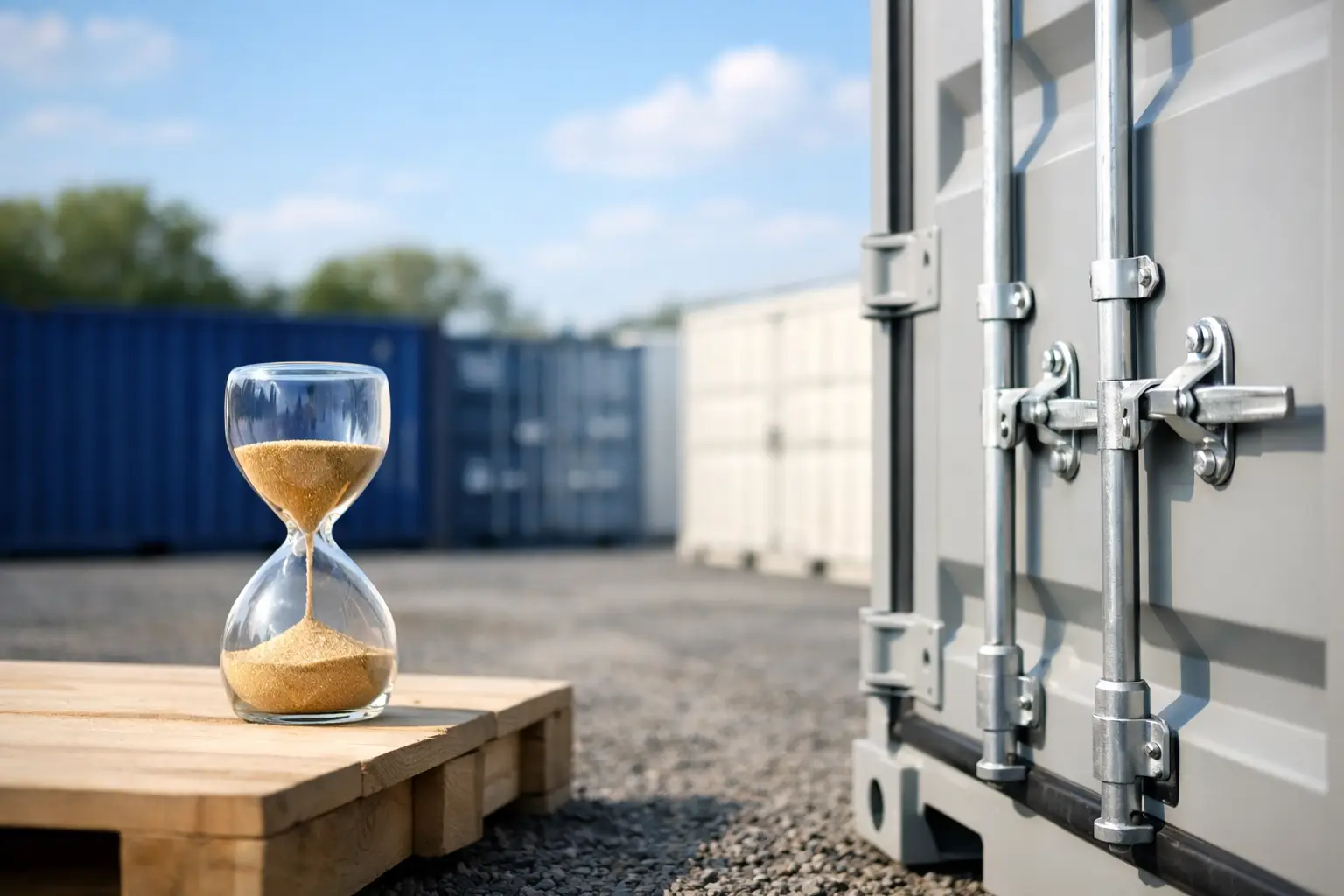
How Long Can You Rent Storage Containers?
A one-day move rarely stays a one-day move. Closings get pushed back, contractors run behind, and business inventory has a way of taking up space longer than expected. If you’re asking how long can you rent storage containers, the short answer is this: usually as long as you need them, as long as the company offers flexible month-to-month terms.
That simple answer helps, but it does not tell you much about what actually happens in real life. Portable storage is built around changing timelines. Some customers need a container for a single month during a fast local move. Others keep one on-site for several months during a renovation, a remodel, or a long construction project. The best rental terms are the ones that let you adjust without turning every schedule change into a new problem.
How long can you rent storage containers in real life?
Most portable storage container companies rent by the month, not by the day or week. That matters because it gives you room to work at a realistic pace. You can pack over time, keep the container at your property while life settles down, and then decide whether it should stay on-site, be moved to a new address, or go into secure off-site storage.
For many customers, one month is the minimum practical rental period. From there, rentals can often continue month to month for as long as needed. If your home sale is delayed by two weeks, you are not forced into a rushed unload. If your business is waiting on build-out completion, you may be able to keep the container through the next billing cycle and beyond.
The key detail is not just the maximum rental length. It is whether the company makes extensions straightforward. A portable storage service should fit your schedule, not punish you for having a schedule that changes.
What affects how long you can rent a storage container?
The biggest factor is the provider’s rental model. Some companies are set up for true flexible monthly use, while others may have tighter scheduling based on container availability, delivery demand, or local market conditions. Before you book, ask how extensions work, whether the rental renews monthly, and how much notice is needed when you are ready for pickup or transport.
Your use case also affects the timeline. A residential move tends to be shorter than a commercial renovation, but not always. Families downsizing between homes may need extra time. Contractors may need on-site storage for the full length of a job. Retail businesses dealing with seasonal overflow may want a container for a predictable quarter and then remove it once inventory levels drop.
Location can matter too. In busy markets or peak moving seasons, availability may be tighter, so it helps to communicate your likely timeline early. In service areas like Fort Worth, Amarillo, and Oklahoma City, where customers may need containers for moving, remodeling, or job-site storage, flexible monthly planning is often more useful than trying to guess an exact end date on day one.
Short-term vs. long-term container rentals
A short-term rental usually means one to two months. This works well when you already have a move date, a renovation schedule, or a clear plan for unloading. You get the benefit of ground-level access and on-site convenience without committing beyond what you need.
Long-term rental usually means several months or more. That is common when timelines are less predictable. Maybe you are waiting on a new build, managing an estate cleanout, storing furniture during major repairs, or keeping equipment and materials near a project site. In those cases, a weatherproof steel container can function as working storage, not just temporary overflow.
There is a trade-off here. A longer rental gives you more breathing room, but the monthly cost continues as long as you keep the container. If your timeline is open-ended, flexibility is valuable. If your plan is firm, it may make sense to schedule transport or pickup as soon as you know the container is no longer needed.
When a longer rental makes sense
For homeowners, longer rentals are often less about storage and more about reducing pressure. You may want to pack one room at a time instead of turning a whole move into a single exhausting weekend. If you are staging a home for sale, you might need furniture and boxes out of the way until the property closes. If you are renovating, keeping a container on-site can protect belongings while still keeping them close.
For businesses, long-term use can be even more practical. A company with limited backroom space may need temporary inventory storage during peak season. An office relocation may happen in phases. A contractor may need tools, materials, or records stored at a job site for the duration of a project. In these situations, the rental length should support the work instead of creating more coordination.
This is where container quality matters. If the unit is going to stay on your property for a while, you want durable steel construction, secure doors, and ventilation that helps protect contents over time. The longer the rental, the more those details count.
Questions to ask before you rent
If you want a clear answer to how long can you rent storage containers, ask more than just the headline question. Start with the billing structure. Is the rental month to month? Is there a minimum term? What happens if you need a few extra weeks?
Then ask about next steps. Can the company move the loaded container to a new address? Can it be stored at a secure facility if your driveway or job site is no longer the right place for it? How much notice is needed for pickup, redelivery, or transport?
You should also ask about access during the rental period. If the container is stored off-site, can you arrange to access your belongings? If it stays on your property, are there placement requirements or space limitations to think through in advance? A good provider will answer these questions plainly and help you avoid surprises.
Why flexible monthly rentals usually work best
Most people do not need a complicated contract. They need a simple setup that matches real life. Monthly rentals tend to work best because they give you enough time to load carefully, manage delays, and adjust your plan without the cost and hassle of renting a truck multiple times or driving back and forth to a self-storage facility.
That is especially true when the container can serve more than one purpose. You might start by using it for on-site storage during packing, then have it moved to your new home, and later keep it a little longer while you unpack. Or you may load a container at your business, send it to secure storage, and bring it back when space opens up again. One container, one loading process, several stages of use.
A company like MODS is built around that kind of flexibility, with monthly rentals, local delivery, and the option to keep the container on-site or move it into secure storage. For customers who want fewer deadlines and less running around, that setup makes the rental length much easier to manage.
The best rental length is the one that matches your timeline
There is no single right answer for everyone. Some people only need a container for a month. Others need several months because moving, remodeling, and business operations rarely stick to the original plan. What matters most is choosing a provider that offers clear monthly terms, easy extensions, and practical options once your next step becomes clear.
If your schedule is still shifting, that is not a reason to wait. It is a reason to choose a storage solution that gives you room to adapt without adding more stress.