
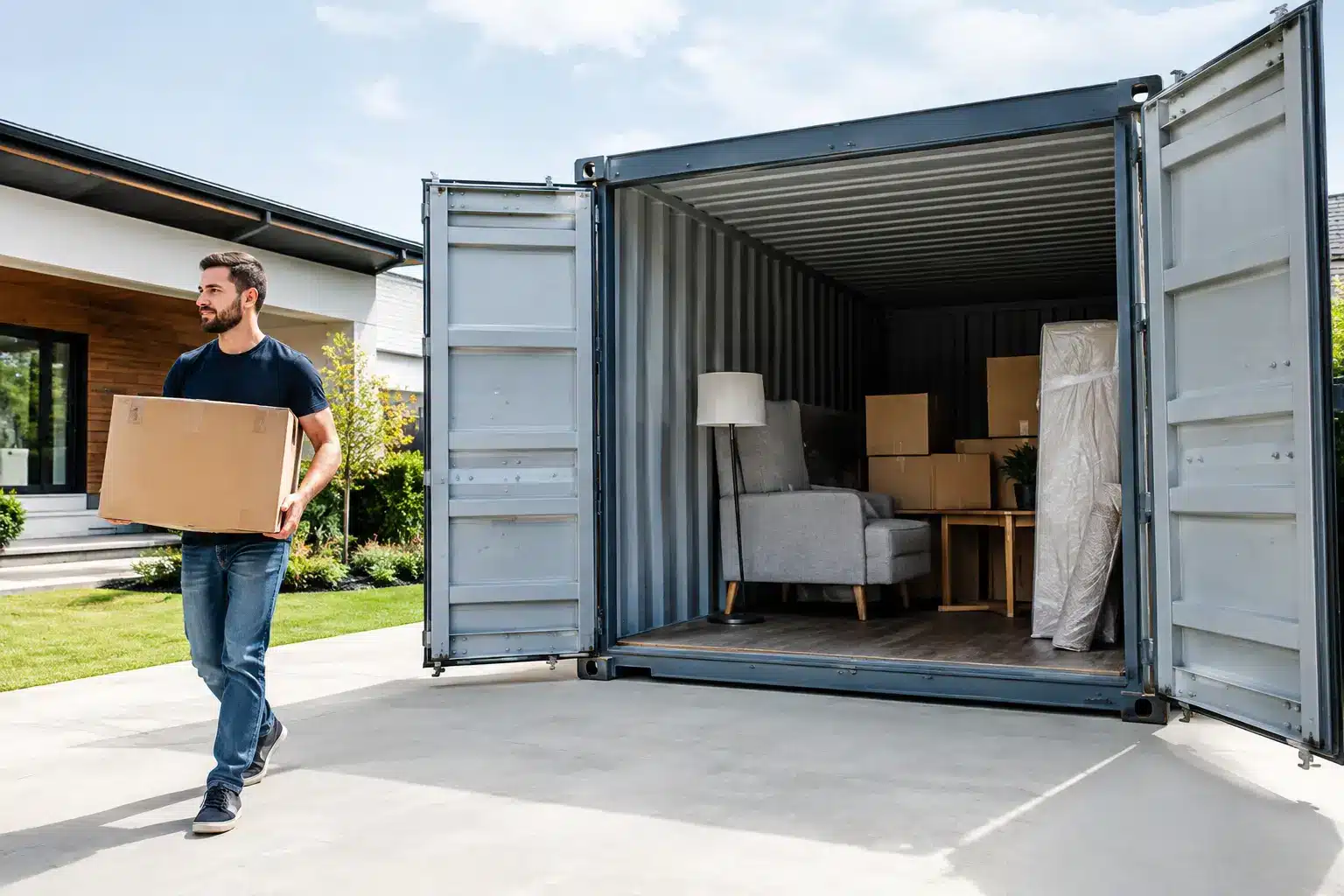
A steel storage container review should answer a practical question: will this container keep your belongings protected while making your move, renovation, or job-site project easier? Steel matters, but the thickness of the walls is only part of the decision. Door seals, floor condition, delivery method, ventilation, and the company handling your container all affect the experience.
For families sorting out a move, contractors protecting tools, or businesses clearing space during a remodel, portable storage can remove much of the pressure that comes with a truck rental. The right container arrives where you need it, sits at ground level for loading, and stays available until you are ready for the next step.
What a Steel Storage Container Should Do
A portable storage container has one basic job: protect your items where they are most convenient for you. That could be in your driveway during a home renovation, behind a business during an inventory change, or at a job site where crews need secure access to materials.
Steel is a strong fit for that job because it holds up better than lighter temporary storage options. A well-built steel container resists everyday bumps, discourages break-ins, and creates a solid barrier against wind, rain, and dust. That is particularly useful in Texas and Oklahoma, where a calm morning can turn into a stormy afternoon without much warning.
Still, “steel” alone is not a quality guarantee. Look at how the container is finished, whether the doors close evenly, and how it is maintained between rentals. A dent in an exterior panel may be cosmetic. A damaged door frame or worn seal is more serious because it can affect access and weather protection.
Steel Storage Container Review: Features That Matter
The best way to compare portable storage is to focus on the features you will use, not just a long list of specifications. A few details have an outsized effect on how safely and easily you can store your property.
Weather protection starts at the doors
Container doors are a common weak point on poorly maintained units. They should open without excessive force, latch securely, and close with a tight seal. Double-sealed doors add another layer of protection by helping keep out wind-driven rain, dust, and pests.
Ask how the company inspects its containers. A provider that routinely checks door hardware, seals, floors, and exterior condition is more likely to deliver a unit that is ready for your belongings. If you are storing furniture, files, electronics, or finished construction materials, this question is worth asking before delivery day.
Ventilation matters, too. A sealed metal box can trap heat and humidity changes. Proper vents allow air movement while keeping the container protected from the elements. Ventilation does not make a container climate-controlled, and it should not be presented that way. But it can help reduce stale, trapped air during normal storage conditions.
Ground-level loading is easier on people and belongings
A traditional moving truck requires you to carry items up a ramp. A steel portable storage container sits at ground level, so you can walk straight in with a dolly, hand truck, or furniture slider. That is simpler when loading appliances, packed book boxes, tools, or heavy furniture.
Ground-level access also lets you spread loading across several days. Instead of rushing to return a rental truck before the clock runs out, you can pack room by room. That flexibility is often the real value of portable storage, especially when closing dates change, a renovation runs long, or help from friends and family is only available on weekends.
Delivery quality affects what happens inside
A container can be made of steel and still provide a poor experience if it is moved carelessly. Sudden tilting during delivery or pickup can shift stacked boxes, furniture, and equipment. Ask how containers are loaded and transported.
MODS uses a Level Lift delivery system designed to keep the container level during transport. For customers who have spent time packing carefully, that detail is more than a selling point. It helps reduce the chance that belongings shift when the container is being placed or picked up.
No delivery system can prevent movement from loosely packed items. Load heavy boxes on the floor, keep weight balanced from front to back, and use tie-downs or straps when available. Fill gaps with lighter items, moving blankets, or sturdy boxes so furniture and stacks cannot slide around.
Security Is More Than a Lock
A steel container gives you a more secure starting point than a tarp-covered trailer or an open job-site storage area. Its steel walls and locking doors create a physical barrier, but security also depends on where it is kept and who has access.
For on-site storage, choose a quality lock that fits the door hardware correctly. Keep the key or combination limited to the people who need it. If the container will sit in a driveway, business lot, or job site for an extended period, consider lighting, visibility, and local access rules.
For off-site storage, ask about the facility itself. You want to know how containers are monitored, whether the site is gated, and how pickup or access is scheduled. Off-site storage can be a good option when you need your driveway back, have HOA restrictions, or are between homes. On-site storage is usually better when you need regular access to tools, inventory, or renovation supplies.
Size, Access, and Timing Change the Right Choice
There is no single best container size for every project. A smaller unit may work well for a one-room renovation, seasonal business supplies, or a partial move. A larger container can make sense for a full household, a multi-room remodel, or commercial equipment. The useful question is not only, “How much can fit?” It is, “Can I load it safely and still reach the things I may need?”
If you will access the container during storage, create a center aisle or place frequently used items near the doors. Label boxes on more than one side. For a move where the doors may stay shut until arrival, you can load more densely, with heavier belongings positioned low and toward the front.
Timing deserves the same attention. Monthly portable storage rentals can work well when the schedule is uncertain. You may need a few extra weeks after selling a home, more time before a renovation is finished, or a temporary place for business contents during construction. A flexible rental period is often more useful than a low initial price with strict deadlines or extra fees.
Cost Comparison: Look Beyond the First Quote
Portable storage is not always the lowest-cost choice for a very small load that can be moved in one afternoon. In that case, a pickup truck, a short truck rental, or a small local storage unit may be enough. But comparing only the advertised rental rate can hide the real cost of a rushed move.
With a traditional truck rental, you may need to pay for the truck, fuel, mileage, insurance, a storage unit, and more than one trip. You also have to load and unload your belongings multiple times. With a portable steel container, you load once, then choose on-site storage, transportation to a new address, or storage at a secure facility.
Before reserving, get clear answers about delivery, pickup, transportation, monthly rental, and facility storage charges. Ask whether there are fees for a narrow driveway, extended distance, rescheduling, or access at an off-site facility. Straight answers make it easier to compare providers fairly.
When Steel Portable Storage Is the Better Fit
Steel portable storage is especially useful when your timeline is not fixed. It gives homeowners room to pack without turning moving day into a race. It gives small businesses a place to keep inventory, fixtures, or records during a transition. It gives contractors a protected, accessible space for job-site materials without repeated trips to a warehouse.
The trade-off is that a container needs a suitable delivery space. Measure the placement area, account for overhead clearance, and check local or HOA rules before scheduling. If your property has a steep grade, very tight access, or limited curb space, discuss it with the provider early. A good local team can explain what is workable before the truck arrives.
The right steel container is not simply the one with the lowest monthly price. Choose one that is clean, weather-protected, easy to load, delivered carefully, and supported by a company that explains the process plainly. When the container fits both your belongings and your schedule, moving or storing becomes a manageable task instead of a deadline-driven scramble.