
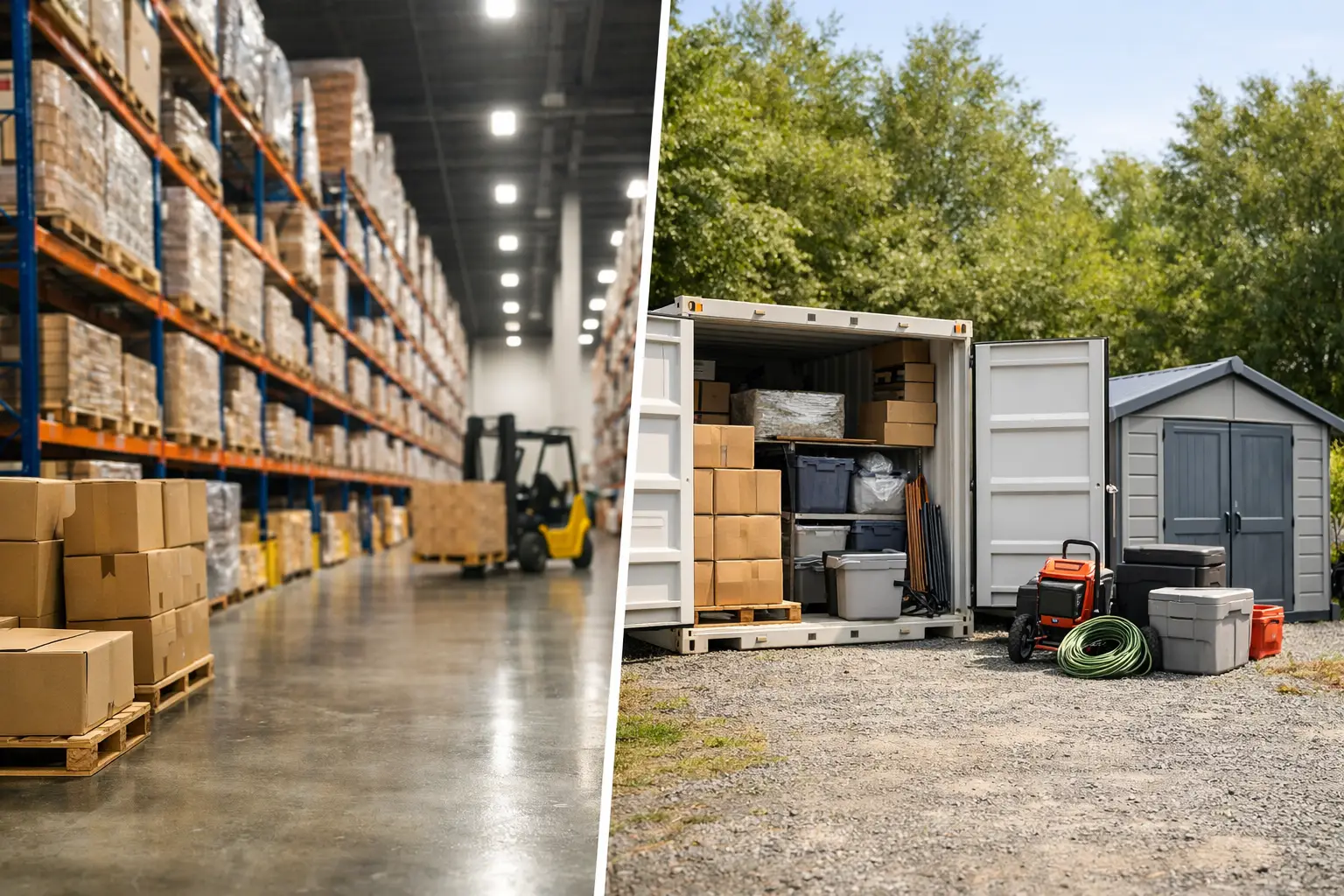
Warehouse Versus Onsite Storage Choices
A renovation crew needs the tile, tools, and fixtures close by at 7 a.m. A family preparing for a move may need packed boxes out of the living room but still available next weekend. Those are different storage problems, which is why warehouse versus onsite storage is more than a question of square footage. The right choice depends on how often you need your belongings, how long you need space, and whether moving items back and forth will create more work.
Warehouse storage keeps belongings at an off-site facility. Onsite storage places a container at your home, business, or job site, where you can access it without a separate trip. Both can protect your property and free up valuable space, but they work best in different situations.
Warehouse Versus Onsite Storage: The Main Difference
The biggest difference is access. With warehouse storage, your items are stored away from the property where you live or work. That can be a strong fit for belongings you do not need regularly, such as furniture between moves, seasonal inventory, archived files, or equipment that will be idle for several months.
With onsite storage, the container stays where the work is happening. You load at ground level and can retrieve what you need when you need it. For a homeowner repainting several rooms, that means furniture can stay protected just steps away. For a contractor, it means fewer supply runs and less time spent waiting on materials.
Neither option is automatically better. Warehouse storage is often the cleaner choice when access is occasional and you want the container off your property. Onsite storage is usually more practical when frequent access matters or when loading and unloading several times would be a hassle.
When Warehouse Storage Makes More Sense
Off-site warehouse storage works well when the goal is to put belongings away, not keep them in daily rotation. If you are between homes, downsizing, or clearing out a property before listing it for sale, you may not need access to every box every week. Keeping those items at a secure storage facility can give you back your driveway, garage, or job-site footprint.
It can also make sense for businesses with surplus furnishings, records, display materials, or inventory that does not need to be immediately available. Instead of allowing unused items to take over a back room or office, a business can move them off-site and keep the working area organized.
There is a trade-off. Every time you need something, you need to travel to the storage location. That may be perfectly reasonable for a stack of family heirlooms or excess desks. It becomes less convenient when you are repeatedly retrieving tools, materials, or products during a busy workweek.
Warehouse storage is also a good option after you have finished loading an onsite container. A portable storage container can be delivered to your property, loaded on your own schedule, and then transported to a secure facility. This approach avoids loading a truck, unloading at a storage unit, and handling the same items again.
When Onsite Storage Is the Better Fit
Onsite storage solves problems that require regular access. During a home remodel, keeping furniture in a weatherproof container outside can protect it from dust, paint, and foot traffic while leaving it available if plans change. You are not working around packed boxes in the dining room, and you are not making repeated trips to a storage facility.
For moving, onsite storage creates breathing room. You can pack over several days or weeks instead of trying to finish everything during a short truck-rental window. When you are ready, the container can be transported to the new address. That is especially helpful when closing dates shift, repairs take longer than expected, or you need temporary storage between homes.
Contractors and small businesses often benefit from keeping equipment and materials close to the job. A steel storage container can hold tools, fixtures, supplies, and equipment in one place. That reduces clutter inside the work area and can help crews start the day with what they need nearby.
Onsite storage does require an appropriate delivery location. You need enough clear, reasonably level space for the container and delivery truck, along with any required approval from a property owner, homeowners association, or local authority. It is worth checking those details before scheduling delivery rather than discovering a restriction after plans are underway.
Compare the Real Costs, Not Just the Monthly Rate
A monthly storage price is only one part of the decision. The true cost includes time, transportation, labor, and the risk of having to move belongings more than once.
A traditional warehouse or self-storage arrangement may look less expensive at first, but consider what it takes to get your belongings there. You may need a truck rental, fuel, loading help, and multiple trips. Then, when you move or need the items again, the process starts over.
Onsite portable storage can reduce those extra steps. The container comes to you, so you can load at your own pace. If you later need off-site storage, the loaded container can be picked up and stored rather than unpacked and reloaded into another space. For many households and businesses, fewer handling steps also mean fewer chances for damage or misplaced items.
That said, onsite storage is not always the lowest-cost choice for long-term items you will never access. If you need to store a small amount of property for an extended period and do not have space for a container, off-site storage may be more practical. The value of onsite storage rises when convenience, frequent access, and moving flexibility are part of the need.
Protection Matters in Both Options
Wherever belongings are stored, the container or facility should provide real protection from weather and unauthorized access. This is particularly important in North Texas and Oklahoma, where wind, heat, rain, and sudden weather changes can be hard on poorly protected items.
A portable container should be built for outdoor use, not treated like a temporary shed. Steel construction, secure doors, weather seals, and ventilation help protect furniture, tools, documents, and business supplies while the container is on your property. Ground-level loading also makes it easier to move heavy items safely without carrying them up a steep ramp.
Transport matters, too. Items can shift when a loaded container is lifted or moved unevenly. MODS uses a Level Lift delivery system designed to keep the container level during transport, helping reduce movement inside. Packing carefully still matters, but stable handling gives stored belongings an added layer of protection.
For warehouse storage, ask how access is managed and whether the facility is suitable for the type of items you plan to store. Sensitive items, expensive tools, and important records deserve more consideration than spare patio furniture. The best storage choice protects the property itself while also fitting the way you will use it.
A Simple Way to Decide
Start with your access needs. If you expect to retrieve items often, onsite storage will usually save time and frustration. If the items can stay packed away for months, warehouse storage may keep your property clearer.
Next, consider your timeline. A fixed, short project may only require an onsite container for a month or two. An uncertain move, renovation, or business transition may call for flexible monthly storage that can remain onsite now and move off-site later.
Finally, think through the handling. If your plan involves loading belongings into a truck, unloading them into a warehouse unit, then repeating the process later, portable storage can simplify the work. If the items are already packed and ready for long-term storage, a warehouse option may be all you need.
The best choice is the one that removes pressure from your schedule. Before committing, picture the next 30 days: how many times will you need access, how many times will you handle each item, and where will the storage space create the least disruption? Those answers usually point to the right solution.