
What Can Fit in a Storage Container for a Move?
A portable storage container can hold far more than a few boxes from the garage. If you are asking what can fit in storage container rentals, think in terms of rooms, large furniture, and how well you pack instead of trying to guess by box count alone. The right container can handle a major portion of a household move, a renovation project, or a business storage need without the rushed schedule of a rental truck.
The exact amount depends on the container size, the shape of your belongings, and how carefully everything is loaded. A house with lots of bulky sectional furniture will use space differently than a home filled with stacked moving boxes. Before delivery day, make a quick inventory of your biggest items and decide what needs to stay accessible. That simple step helps you choose the right setup and avoid loading surprises.
What Can Fit in a Storage Container?
For many customers, a portable storage container is a practical fit for the contents of a small home, apartment, several rooms of furniture, or a larger partial move. It can also be useful when you only need to clear certain areas of a house for flooring, painting, staging, or remodeling.
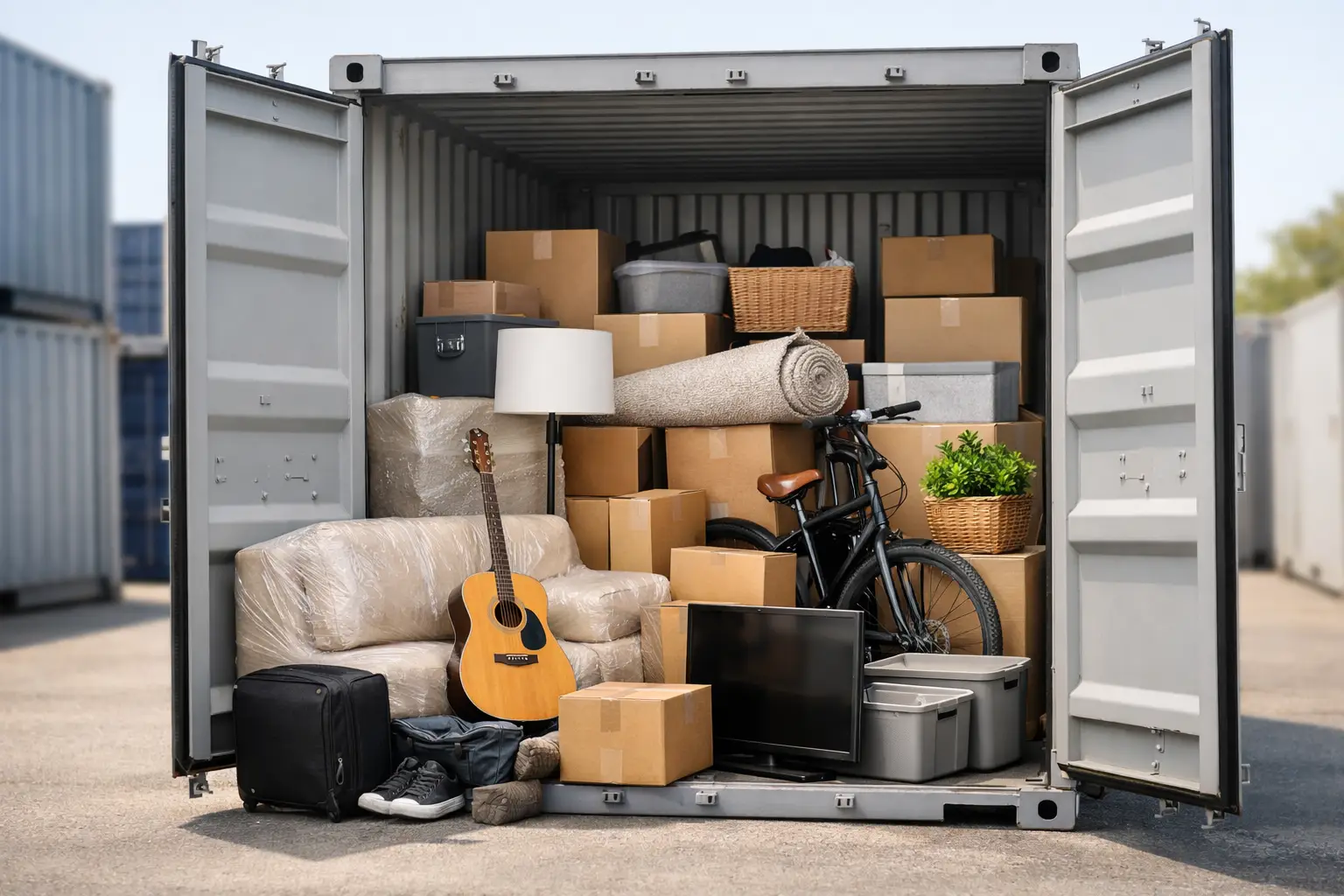
Common household items that fit well include living room furniture, dining tables and chairs, bedroom sets, mattresses, dressers, appliances, bicycles, lawn equipment, and packed boxes. You can usually store seasonal decor, tools, garage items, books, kitchenware, and clothing along with larger pieces if you build the load from the floor up.
The key is understanding that usable space is not just about total square footage. A sofa may take up a large footprint but leave vertical space above it. Boxes can be stacked efficiently, while loose bags and odd-shaped items create gaps. Planning the load is what turns a container from a convenient place to put things into an efficient moving or storage solution.
A one-bedroom apartment or small home
A one-bedroom apartment is often a straightforward container load. Typical contents may include a couch, chair, TV stand, queen mattress, bed frame, dresser, small dining set, office furniture, kitchen boxes, and personal belongings. If you are moving from a small home, garage tools and patio furniture may fit as well, depending on their size.
Start with the heaviest furniture against the walls and toward the front of the container. Put mattresses upright in protective covers, then use the space around them for boxes, chairs, and lighter items. Keep a narrow walkway only if you will need regular access during a renovation or longer on-site storage period.
Two or three rooms of furniture
For a partial household move, a container can hold furniture from several rooms when it is packed with intention. This is a common choice for families replacing floors, remodeling a kitchen, or decluttering before listing a home for sale.
A load might include a living room set, two bedroom sets, a dining table, chairs, several bookcases, and dozens of boxes. Disassemble bed frames, remove table legs when possible, and place hardware in labeled bags taped to the related furniture. Smaller pieces should fill open spaces under tables and between larger items instead of being loaded at the end.
A container is especially helpful when the project timeline is uncertain. You can clear the rooms first, keep the belongings protected, and bring them back inside when the work is actually complete rather than trying to coordinate everything around one moving day.
Larger homes and full-house moves
A larger home may require more than one container or a combination of storage and a separate plan for items you need immediately. The number of bedrooms matters, but so do garages, oversized furniture, home offices, outdoor equipment, and the amount of boxed household goods you have accumulated over the years.
Do not assume every item from a three- or four-bedroom house will fit in one container. Instead, separate belongings into three groups: items moving right away, items going into storage, and items that can be sold, donated, or discarded. This reduces the volume you pay to move and makes unpacking much easier at the new home.
If you are unsure, measure your largest items first. Sectional sofas, large armoires, oversized dining tables, gym equipment, and riding lawn mowers can change the plan quickly. A local storage provider can help you compare your inventory to the available container options before delivery.
Business Items That Fit in a Storage Container
Portable storage is not only for household moves. Small businesses use containers to manage inventory, office furniture, records, fixtures, supplies, and equipment without making repeated trips to a self-storage facility.
A retail shop might store seasonal displays, shelving, boxed merchandise, and extra point-of-sale materials. An office can clear desks, filing cabinets, chairs, and conference room furniture during a remodel or relocation. Restaurants and event businesses can use temporary storage for tables, chairs, decor, and nonperishable supplies.
For contractors, a weatherproof steel container can keep job-site materials, tools, ladders, and equipment close to where the work is happening. That saves time compared with loading everything into a truck at the end of each day. Still, store materials in a way that allows workers to safely retrieve what they need, and never overload the floor or block the doors with unstable items.
What Should Not Go in a Storage Container
Storage containers are built to protect ordinary household and business belongings, but not everything belongs inside. Avoid storing hazardous, flammable, illegal, or perishable items. Gasoline, propane tanks, paint thinner, fireworks, ammunition, chemicals, and leaking batteries can create safety risks. Food can attract pests, while plants and pets should never be left in a container.
You should also be careful with items that are highly sensitive to heat, cold, or humidity. Electronics, vinyl records, photographs, antiques, artwork, and important documents may need climate-controlled storage or another protected location. If an item is irreplaceable, consider whether a non-climate-controlled environment is the right choice before packing it away.
Check your rental agreement for a complete list of prohibited items. Rules may vary based on whether the container stays at your property, moves to a new address, or is stored at a secure facility.
Pack to Get More Space and Better Protection
The best way to fit more inside is not to cram things in. It is to build a stable load. Put heavy boxes and appliances on the floor, distribute weight from side to side, and keep lighter boxes on top. Use moving blankets, cardboard, or furniture pads between wood, glass, and finished surfaces to prevent rubbing during transport.
Fill drawers with lightweight linens or pillows, but remove anything heavy enough to make the furniture difficult to carry. Label boxes on more than one side so you can identify them after stacking. If the container will be transported, secure furniture and tall stacks with straps so they cannot shift.
Load items you will need first near the doors. That might include tools for a renovation, boxes marked “open first,” work files, or seasonal inventory. If you are using on-site storage for several months, leave room to reach those essentials without unloading half the container.
MODS containers are loaded at ground level, which makes it easier to move heavy furniture and boxes without carrying them up a ramp. Their steel construction, double-sealed doors, ventilation, and level delivery process are designed to help keep your belongings protected while you pack on your schedule.
A storage container works best when it follows your real timeline, whether you are clearing one room or moving an entire household in stages. Measure the large pieces, pack the heavy items first, and leave yourself access to what matters most. That gives you a calmer move and a storage plan that does not force everything into one exhausting day.