
How to Store Office Furniture Without Damage
A temporary office move can turn a working space into a pile of desks, chairs, files, and cords faster than most teams expect. Knowing how to store office furniture properly protects the investment you have already made and makes reopening, relocating, or renovating far less stressful. The goal is not just to fit everything into a storage space. It is to keep every item clean, stable, labeled, and ready to use when the time comes.
Start With a Storage Plan, Not a Loading Day
Before anyone picks up a desk, decide what needs to be stored, what should be sold or donated, and what employees still need access to. This is especially useful during a renovation or phased office move, when some equipment may stay in use while other areas are cleared.
Make a basic inventory by room or department. Include desks, conference tables, task chairs, filing cabinets, shelves, reception furniture, monitors, printers, and boxed supplies. Take photos of higher-value pieces and note any existing scratches, loose hardware, or damage. Those photos help with reassembly and give you a clear record of each item’s condition.
Your storage timeline also affects the plan. Furniture stored for a few weeks may need simple protection and easy access. Furniture stored for several months deserves more careful cleaning, moisture control, and stacking. If your business expects to retrieve certain items often, load those items near the container doors instead of burying them behind heavy desks.
Choose a Storage Space That Fits the Job
Office furniture needs a clean, dry space with enough room to load safely. A weatherproof portable storage container can work well for businesses that want to pack on-site, avoid truck rental deadlines, and keep furniture close during a remodel or temporary relocation.
Measure your largest pieces before scheduling storage. Conference tables, reception desks, tall bookcases, and lateral filing cabinets can take up more space than expected. Measure doorways, elevators, hallways, and the path from the office to the loading area, too. A furniture piece that fits in storage is not helpful if it cannot safely get there.
For offices in Fort Worth, Amarillo, or Oklahoma City, outdoor temperature changes can be significant. A steel container provides strong weather protection, but it is not the same as climate-controlled indoor storage. Sensitive items such as original artwork, antique wood furniture, leather furnishings, paper archives, and electronics may need climate-controlled storage or additional precautions. Match the storage environment to what you are storing and how long it will stay there.
Clean and Dry Everything Before Storage
Furniture should never go into storage dirty or damp. Dust, food crumbs, and moisture can cause stains, odors, mildew, or pest problems over time. Cleaning also prevents dirt from rubbing into upholstery or scratching finished surfaces during the move.
Wipe hard surfaces with the cleaner recommended for their material, then allow them to dry completely. Pay attention to desk drawers, chair bases, cabinet interiors, and the undersides of tables. Vacuum upholstered chairs and fabric panels. Leather should be cleaned with a leather-safe product and fully dried before being covered.
Empty every desk, cabinet, and pedestal drawer. Leaving items inside may seem efficient, but drawers can shift during transport, hardware can break, and heavy cabinets become harder to handle. Keep confidential records in clearly labeled, sealed boxes and follow your company’s document-retention and privacy requirements.
Do not store food, beverages, live plants, cleaning chemicals, aerosol cans, or anything that can leak, spoil, or create odors. These items can damage nearby furniture and create problems in an enclosed storage space.
Disassemble Furniture the Smart Way
Disassembly saves space and lowers the risk of damage, but only when it is done methodically. Remove table legs when possible, take apart modular workstations, and separate shelves from bookcases. Large desks may break into a desktop, return, hutch, and drawer pedestal.
Place screws, bolts, brackets, and small hardware from each piece in a labeled bag. Tape the bag securely to the furniture frame or place it in one clearly marked hardware box. Avoid taping directly onto finished wood, veneer, leather, or fabric, where adhesive can leave residue or pull off a finish.
Label each furniture component with the room, item name, and destination. For example, a label reading “Sales – Desk 4 – New Office” is much more useful than “Desk Parts.” Take a quick photo before taking complicated furniture apart, especially cubicles, sit-stand desks, and conference tables with built-in power connections.
Protect Surfaces, Corners, and Upholstery
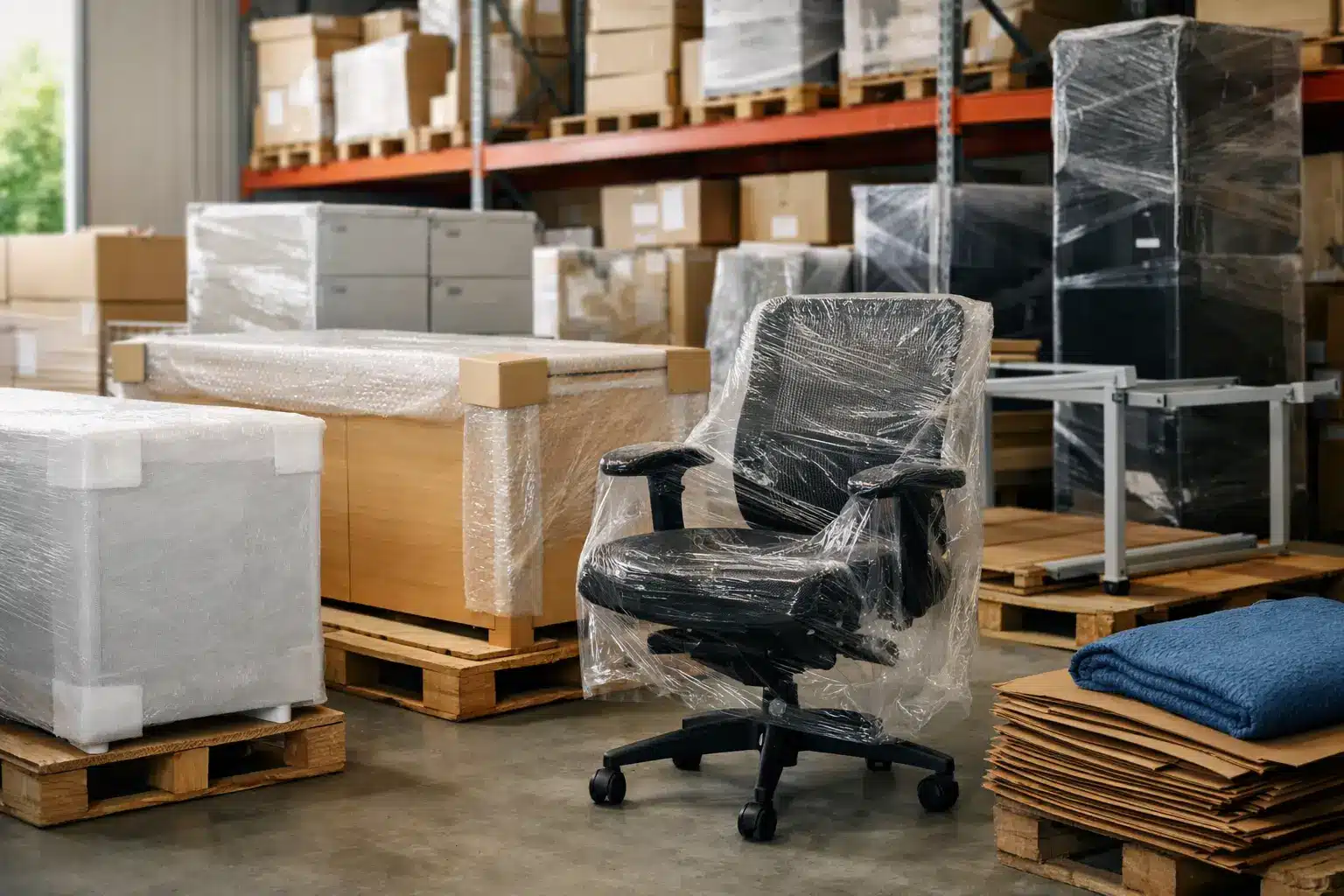
Blankets, moving pads, stretch wrap, bubble wrap, and cardboard corner protectors all have a purpose. Use moving pads or furniture blankets around desks, tables, cabinets, and wood furniture to prevent rubbing and dents. Secure the pads with stretch wrap, but do not wrap unfinished wood, leather, or delicate upholstery tightly in plastic for long-term storage. Trapped moisture can lead to damage.
Use cardboard corner protectors on table edges, desk corners, and shelving units. Wrap glass tabletops individually in moving blankets and place them upright, not flat, in a protected section of the load. Clearly mark glass and keep it away from heavy items that could shift.
Office chairs need protection, too. If possible, remove the casters or secure the chair base so it does not roll. Stack only chairs designed to stack. For nonstacking chairs, use pads between frames and avoid placing heavy boxes on seats, arms, or mesh backs.
Load Heavy Pieces First and Keep Weight Low
The safest way to load office furniture is to build a stable base. Put the heaviest, sturdiest items along the walls and toward the front of the container. Filing cabinets, desk pedestals, bookcases, and boxed documents belong low on the floor. Keep the load balanced from side to side.
Stand desks, tables, and panels upright only when they are padded and secured. Upright loading often saves floor space, but it also creates a shifting risk if pieces are not tied down. Use straps to secure furniture at regular points and keep aisles clear enough to reach items you may need later.
Avoid stacking heavy boxes on desks, credenzas, or chair seats. Even sturdy office furniture can bow, crack, or develop permanent impressions under concentrated weight. Place lighter boxes of office supplies on top of stable, flat surfaces only after those surfaces are well protected.
MODS containers are loaded at ground level, which can make it easier to move bulky furniture without carrying it up a truck ramp. Their steel construction, double-sealed doors, ventilation, and level delivery system also help businesses protect a carefully packed load during storage or transport.
Plan for Moisture and Long-Term Storage
Even clean furniture can be affected by humidity and changing temperatures. Leave a small amount of airflow between furniture and container walls rather than packing every inch tightly. Keep fabric, paper files, and electronics off the floor by using pallets or a moisture barrier where appropriate.
Use moisture absorbers for longer storage periods, particularly if you are storing during humid weather. Check them according to the product instructions. Do not place absorbers directly on wood or upholstery, and do not assume they can correct a container that was packed with damp furniture.
For storage lasting several months, schedule periodic checks when possible. Look for signs of water intrusion, pests, mold, or shifting. Open drawers and cabinets only after confirming the load is stable and nothing has shifted against the doors.
Avoid These Common Office Storage Mistakes
A few shortcuts create most furniture-storage problems:
- Loading furniture before it is clean and fully dry.
- Using plastic wrap directly against delicate materials for long periods.
- Leaving drawers full, unlocked, or unsupported during transport.
- Stacking heavy boxes on chair seats, desktops, or glass surfaces.
- Failing to label parts, hardware, cords, and destination rooms.
- Packing a container so tightly that needed items cannot be retrieved.
A little extra preparation on packing day can save hours when the office is ready to reopen. Store each piece as if the next person to handle it has never seen your workplace before, and your furniture will be easier to find, safer to move, and ready to get back to work.