
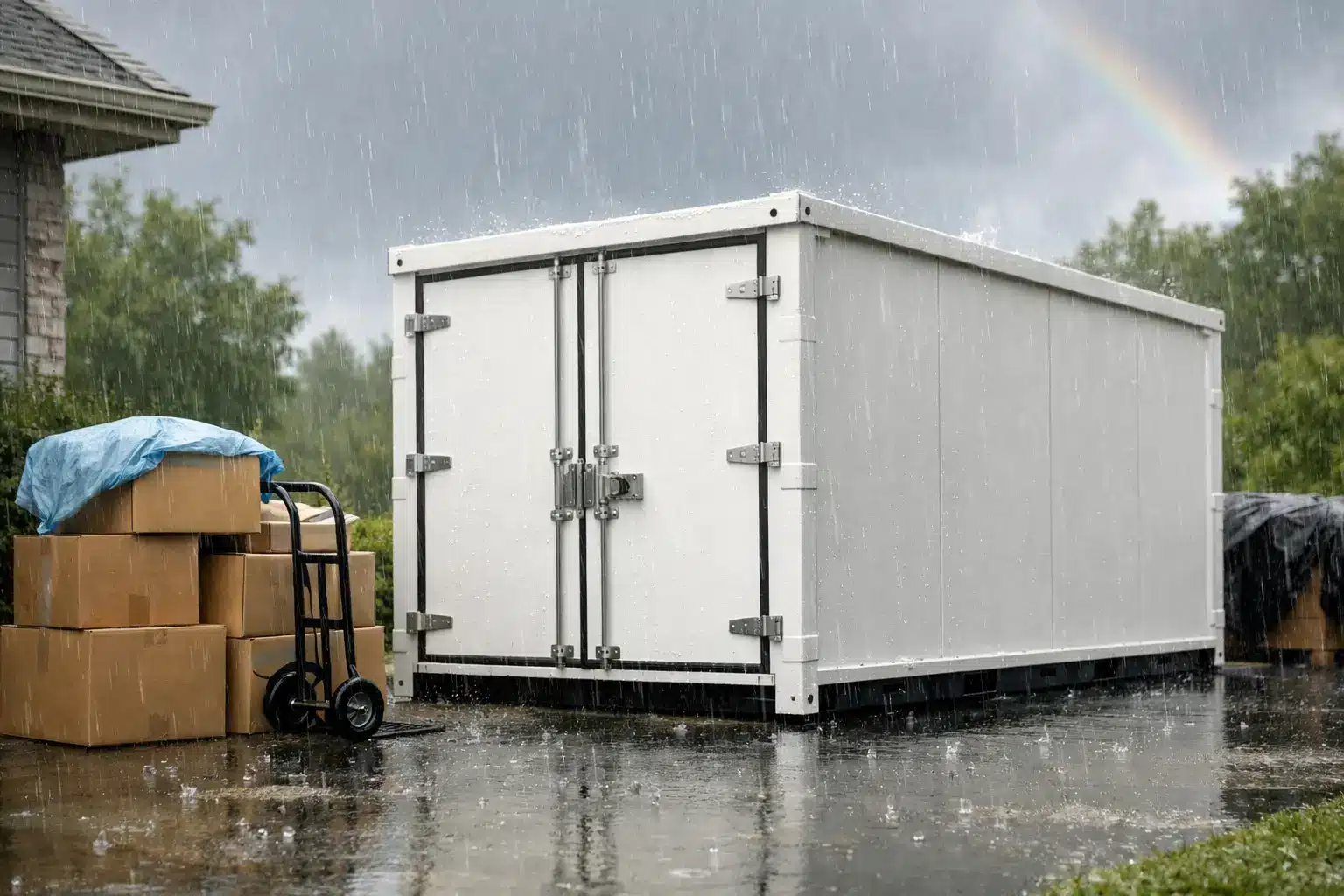
Are Moving Containers Weatherproof? What to Know
A portable container may sit in your driveway through a hard Oklahoma City rain, an Amarillo windstorm, or a hot Fort Worth afternoon. That leads to a fair question: are moving containers weatherproof? A well-built steel moving container is designed to protect your belongings from normal outdoor weather, but the protection you get also depends on the container’s condition, how it is loaded, and what you put inside.
For most household moves, renovations, and business storage needs, a quality moving container provides far more weather protection than a tarp-covered trailer or an open truck bed. Still, “weatherproof” does not mean you can ignore moisture, temperature changes, or good packing practices. Knowing the difference helps you store with confidence and avoid preventable damage.
Are moving containers weatherproof in rain and wind?
Quality moving containers are built for outdoor use. Steel walls and roofs create a solid barrier against rain, wind, dust, and direct sun. Containers with properly fitted, double-sealed doors add another line of defense by helping keep wind-driven rain from entering around the door opening.
That design matters when your container is parked at your home, business, or job site for days or weeks. Rather than rushing everything into a rental truck during a narrow weather window, you can load at ground level on a schedule that works for you. If rain is expected, simply close and secure the doors before the weather arrives.
The condition of the container matters, too. Any outdoor storage unit should be inspected before loading. Look at the door seals, roof, walls, and floor. The doors should close securely without forcing them, and there should be no obvious holes, severe dents, or damage that could compromise protection. A reputable portable storage provider checks its equipment and should be able to answer questions about the container’s construction and features.
Wind is usually less of a concern for the contents inside a closed steel container. The bigger issue is how items are packed. Loose furniture, boxes, tools, and equipment can shift if the container is transported or if high winds cause vibration. Fill gaps, stack carefully, and use straps or tie-downs for heavier items.
Weatherproof does not mean climate-controlled
This is the most important distinction for customers planning longer-term storage. A weatherproof container is intended to keep outside weather out. It is not the same as a climate-controlled storage room that maintains a set temperature and humidity level.
Steel containers can get warm in direct Texas or Oklahoma sun and cold during winter weather. Temperature swings may also create condensation when warm, humid air meets cooler metal surfaces. Good container ventilation helps air circulate and reduces the chance of trapped moisture, but it cannot eliminate every humidity-related risk.
Most common moving and storage items do well in a weatherproof container when packed correctly. Furniture, boxed household goods, tools, lawn equipment, business inventory, and renovation supplies are typical examples. Highly sensitive belongings deserve extra care or a different storage environment. That includes irreplaceable paper records, fine art, antiques, certain musical instruments, delicate electronics, wine, medications, and items that specifically require controlled humidity or temperature.
Before storing something valuable, check the manufacturer’s recommendations. If heat or humidity could cause damage, do not assume a steel container will provide climate control.
What ventilation does and does not do
Ventilation is a practical feature, not a magic fix. Vents help exchange air so humidity and odors are less likely to become trapped inside a tightly closed container. This is particularly helpful when storing items for more than a few days.
Ventilation cannot dry wet belongings or correct poor packing. Never load damp boxes, wet rugs, freshly washed fabrics, or equipment covered in rainwater. Let those items dry fully first. Otherwise, moisture starts inside the container, where it can lead to mildew, odors, or damaged cardboard even when the doors and roof are doing their job.
How to pack a moving container for weather protection
Smart packing adds a meaningful layer of protection. Start with strong, dry boxes and label them clearly. Avoid using damaged cardboard or overfilled boxes that may collapse under weight. Plastic totes can be useful for items that need extra moisture resistance, but they should still be clean and dry before packing.
Keep belongings off the floor when practical, especially if you are storing for an extended period. Pallets, shelving, or a layer of moving pads can provide separation between boxes and the container floor. This is also useful for business supplies and job-site materials that may need to stay organized for regular access.
Wrap wood furniture, mattresses, and upholstered pieces with appropriate moving blankets or breathable protective materials. Plastic wrap can help protect certain items during loading, but wrapping an item that contains moisture can trap that moisture against the surface. Make sure everything is dry before covering it.
Place heavier items along the bottom and distribute their weight from front to back. Do not create one heavy wall of boxes near the doors. Pack tightly enough to limit movement, then secure large items with straps. This protects your belongings during transportation and makes it safer to open the container later.
For an outdoor container, avoid storing liquids that can freeze, leak, or spoil. Do not store hazardous materials, gasoline, propane tanks, paint thinners, or other flammable products. Beyond the risk of damage, those items can create safety issues in an enclosed space.
Site conditions make a difference
Even a weatherproof container needs a suitable place to sit. Ask for a firm, reasonably level surface with enough room for delivery and door access. A concrete driveway, compacted gravel area, or other solid surface is generally preferable to soft ground that can become muddy after rain.
Keep the door area clear of standing water, leaves, and debris. If water regularly pools near the container, it can make loading unpleasant and may expose the door area to unnecessary moisture. A simple check after a major storm is worthwhile, especially during a longer rental.
At MODS, containers are delivered with a Level Lift system that keeps the unit level during transport. That helps reduce shifting inside while your container is moved. Once it is on site, your packing and the condition of the placement area still play a major role in protecting the load.
When should you check your container?
For a short move, inspect the container when it arrives, load it with dry belongings, close the doors fully, and check again before pickup. For on-site storage lasting several weeks or months, take a few minutes to inspect it after severe weather and periodically throughout the rental.
Look for anything unusual: a door that no longer closes normally, visible water near an entry point, a musty smell, or boxes that feel damp. Catching a problem early gives you time to repack affected items or contact your storage provider. It also helps to leave a small access path if you expect to retrieve items during storage.
Weatherproof steel construction gives moving containers a strong advantage for outdoor storage, but the best results come from treating the container as part of your moving plan, not just a box in the driveway. Choose dry packing materials, protect sensitive items thoughtfully, secure the load, and check the site after severe weather. Those few steps make it easier to keep your belongings protected while you move or store on your own timeline.