
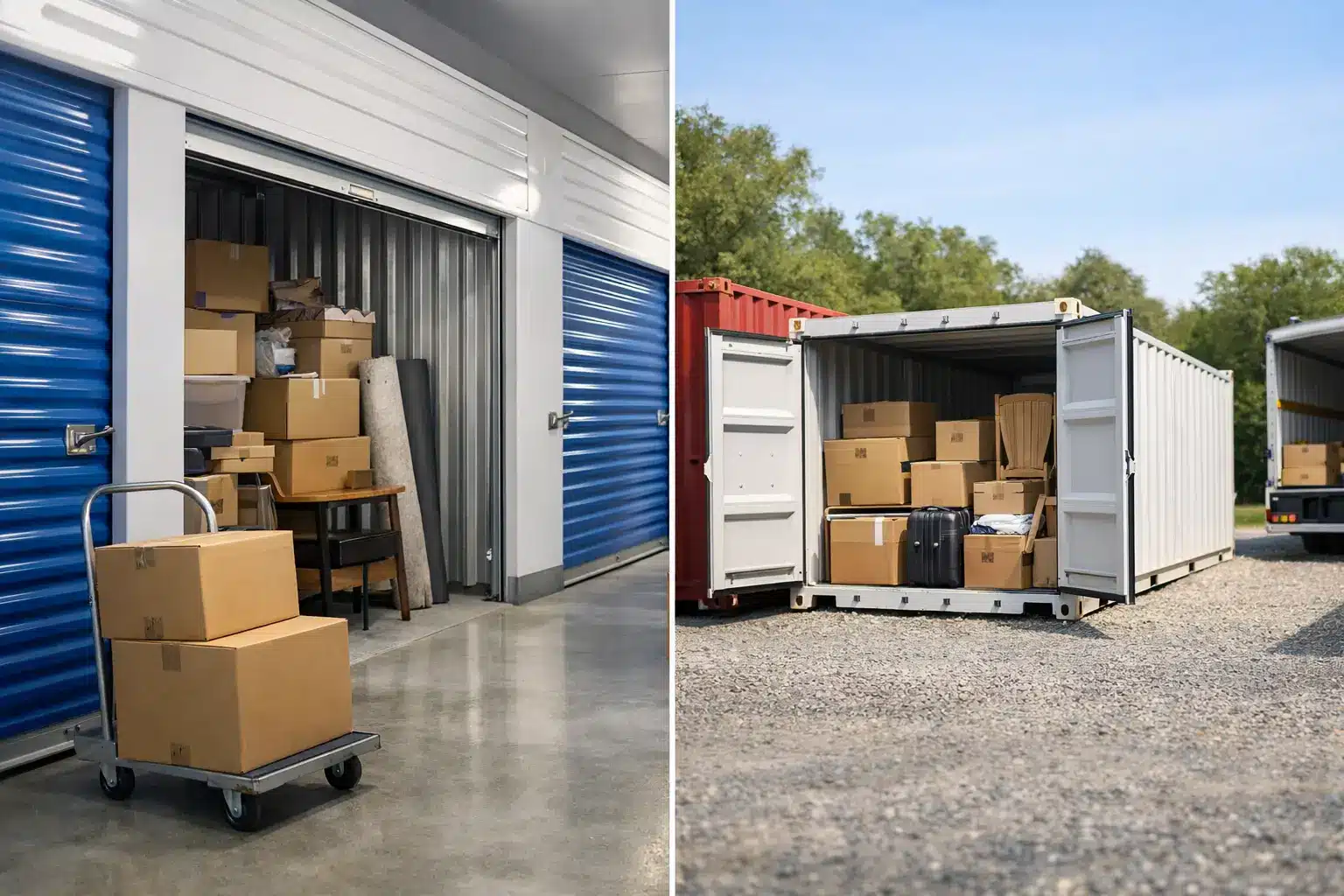
Self Storage Versus Containers for Your Move
A move rarely happens in one clean day. Closing dates shift, a renovation runs long, or a new office is not ready when the old lease ends. That is where the choice between self storage versus containers becomes more than a question of space. It affects how many times you handle your belongings, how much time you spend driving, and how much control you keep over the schedule.
Traditional self-storage units and portable storage containers can both solve a temporary space problem. The better fit depends on where you need access, what you are storing, and whether transportation is part of the plan.
Self Storage Versus Containers: The Main Difference
With traditional self storage, you rent a unit at a storage facility and bring your belongings to it. You typically load a vehicle or rental truck, drive to the facility, unload, and repeat the process when it is time to retrieve your items. The unit stays in one location, which can work well when you want regular access to your things near home or work.
A portable storage container comes to you. It is delivered to your driveway, business, or job site, where you load it at ground level on your own timeline. Afterward, the container can remain on-site, move to a new address, or be stored at a secure facility until you are ready for it.
The major difference is handling. A self-storage unit usually means loading and unloading your belongings at least twice, plus the drive between locations. A container lets you load once at your location and choose what happens next.
When Traditional Self Storage Makes Sense
Self storage is a practical choice when you have a small amount to store, can transport it easily, and expect to visit the unit often. For example, a renter may use a nearby unit for seasonal decorations, extra clothing, or a few boxes they want to access throughout the year. A business owner may keep records, small inventory, or supplies in a unit close to the office.
It can also make sense when your property has no suitable space for a container. Apartment communities, narrow streets, properties with restrictive parking rules, or downtown locations may make on-site delivery difficult. Before choosing portable storage, it is smart to confirm there is enough clear, accessible space for delivery and placement.
Traditional facilities may also offer a range of unit sizes, including very small spaces for a few personal items. If you only need room for several boxes and a couple of chairs, paying for a larger portable container may not be the most economical route.
Still, the low monthly rate advertised for a storage unit does not always show the complete cost. Add truck rental, fuel, mileage, loading help, and the time spent making multiple trips. For a larger household or a commercial cleanout, those extra steps can change the comparison quickly.
When a Portable Container Is the Better Option
Containers are built for situations where convenience and timing matter. They are especially useful when you need storage and moving help in the same plan, rather than treating them as separate projects.
You are moving on an uncertain timeline
A portable container gives you breathing room when move-out and move-in dates do not line up. You can pack room by room over several days or weeks instead of rushing to load a rental truck in one weekend. Once packed, the container can be transported to your new location or stored until the new place is ready.
This is often easier on families, especially when school, work, and closing appointments are all happening at once. It also helps people downsizing after a home sale, where deciding what stays and what goes can take longer than expected.
You are renovating your home
Keeping furniture and belongings in another room during a renovation often creates more clutter, not less. An on-site container gives contractors a clearer work area while keeping your belongings close by. You can load furniture, appliances, boxed items, and nonessential household goods without making repeated trips to a storage facility.
For an extended renovation, off-site storage may be the better choice. It keeps the container out of the way while protecting your items until the work is complete. The right option depends on whether you need frequent access during the project.
You need storage at a business or job site
Contractors and small businesses often need supplies where the work is happening. A portable container can hold tools, materials, equipment, fixtures, or inventory at a job site or business location. That can reduce daily loading and unloading from trucks and help keep valuable items organized.
For commercial use, security and durability matter. Weatherproof steel construction, secure doors, and ventilation are practical features, especially through the heat, wind, and changing weather common in Texas and Oklahoma. A container is not a replacement for climate-controlled storage when sensitive documents, electronics, artwork, or temperature-sensitive inventory are involved. But for many job-site materials and durable business items, it is a straightforward solution.
Compare the Costs Beyond the Monthly Rate
The real cost of storage is more than the rental price. With self storage, consider the truck rental, fuel, mileage, insurance options, moving labor, and the value of your own time. If the unit is not nearby, every visit adds another drive and another opportunity to damage or misplace something.
With a portable container, delivery, pickup, transportation, and monthly storage may be separate charges depending on your plan. Ask for a clear breakdown before booking so you understand what is included and what changes if your timeline extends. Monthly flexibility is useful, but it is still worth planning for how long you expect to keep the container.
The best value is not always the lowest quoted number. If one option saves you two full days of moving, avoids a truck rental, and reduces the number of times you lift a heavy dresser, it may be the more cost-effective choice even if the monthly rental looks higher at first glance.
Access and Protection Are Different With Each Option
A self-storage unit is usually best for frequent, predictable access. You drive to the facility, enter during its access hours, and retrieve what you need. That arrangement is simple if the facility is convenient and your belongings are organized inside the unit.
An on-site container provides immediate access outside your own door or at your job site. That is hard to beat during a renovation or active project. The trade-off is that you need room to keep it, and local rules, homeowners associations, or property managers may limit placement or rental duration.
For stored belongings, pack carefully either way. Use sturdy boxes, label every side, keep a center aisle when possible, and place frequently needed items near the doors. Put heavier items on the bottom, use moving blankets around furniture, and avoid storing hazardous materials, perishables, or items that cannot safely handle temperature changes.
MODS containers are made of durable steel with double-sealed doors and ventilation to help protect stored belongings. Their Level Lift delivery system keeps the container level during transport, which helps reduce shifting after you have packed it. Those details matter most when the container will be moved after loading.
Questions to Ask Before You Choose
Start with the practical questions. How much do you need to store? Do you need the contents at your property, or is off-site access enough? Are you moving, renovating, clearing out a business, or simply making more room at home? How often will you need to get inside?
Then consider the timeline. If you need one day to move everything, a truck and self-storage unit may work fine. If you need a week, a month, or an unknown amount of time, a container lets the project move at a more realistic pace.
Finally, think about physical effort. Moving items from a house to a truck, truck to a unit, unit back to a truck, and truck to a new home creates extra work. Ground-level container loading can make a noticeable difference for bulky furniture, appliances, and large quantities of boxes.
The right choice should make your next step easier, not create another moving day. If your belongings need to stay close, your timeline is flexible, or your move has more than one destination, a portable container can give you the space to handle it on your terms.