MODS versus U-Haul for Moving and Storage
A move can fall apart before the first box is loaded. A truck pickup time gets pushed back, help arrives late, or the house is not ready when the rental clock starts. That is the real difference to consider with MODS versus U-Haul: not simply how your belongings get from one address to another, but how much control you have over the process.
Both options can be useful. U-Haul is a familiar choice for people who want to drive a rental truck themselves and finish a move quickly. MODS is built for people who need more time, ground-level loading, and the option to keep belongings stored where they are or at a secure facility. The right choice depends on your timeline, how much driving you want to do, and whether your move is truly a one-day job.
MODS versus U-Haul: The Basic Difference
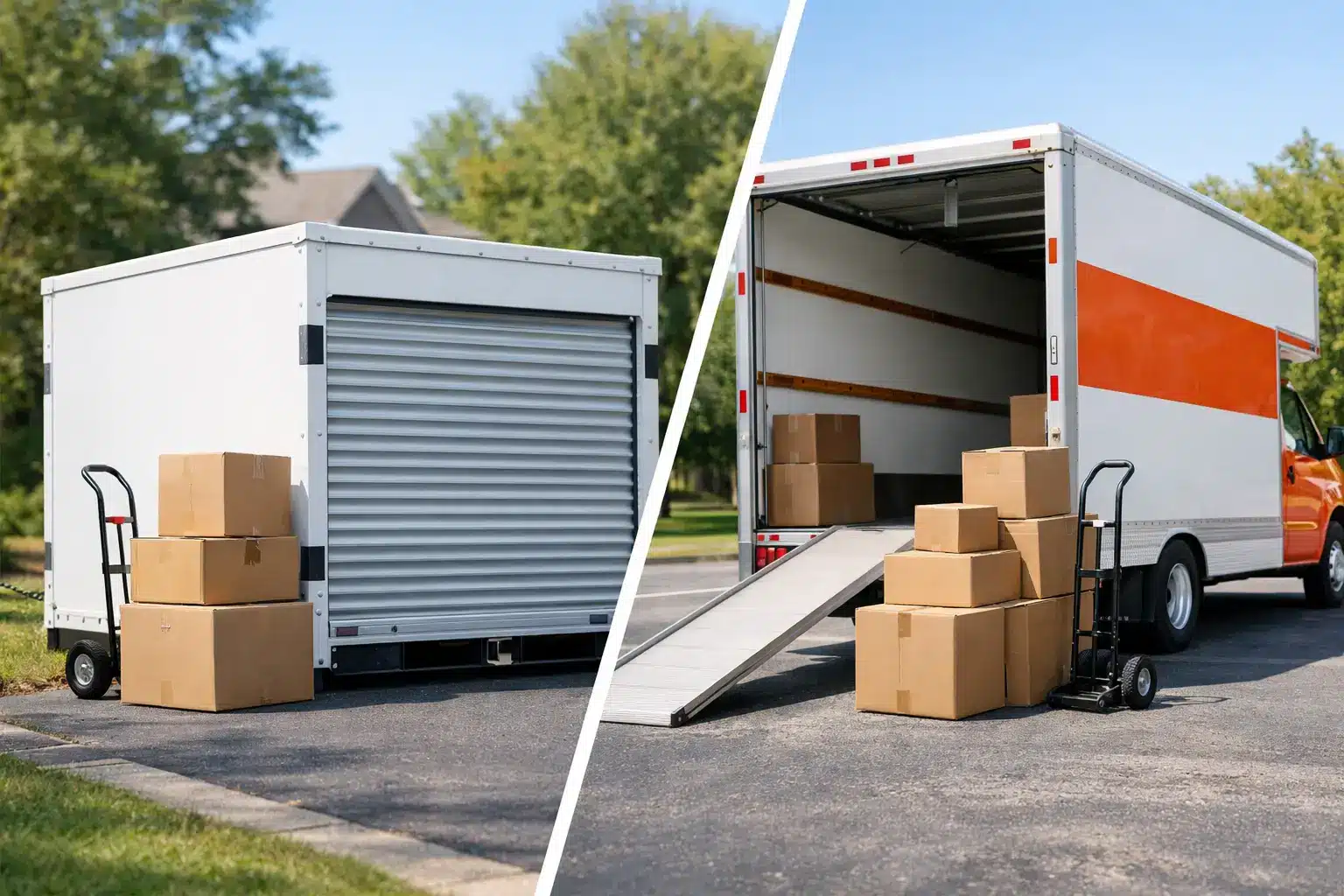
With a U-Haul truck, you reserve a vehicle, pick it up, load it, drive it, unload it, and return it. You are working within a rental period, whether that is a few hours, a day, or longer. For a small local move with a clear start and finish, that structure can make sense.
With MODS, a weatherproof steel storage container is delivered to your home, business, or job site. You load it on your schedule. When you are ready, the container can be moved to your new location, remain on-site for temporary storage, or be stored at a secure MODS facility. There is no rental truck to pick up, drive through traffic, fuel, or return.
That difference matters most when life does not follow a tight moving-day plan. Closing dates change. Renovation work runs long. A new lease starts before the old one ends. A portable storage container gives you room to adjust without rushing every box into a truck before the clock runs out.
When a U-Haul Truck May Be the Better Fit
U-Haul can be a practical option when the job is simple and speed is the priority. If you are moving a small apartment across town, have dependable help lined up, and can load and unload in a single day, a truck rental may be the most direct route.
It can also be useful when you need to make several stops or move only a few large items. A pickup truck, cargo van, or trailer may fit a project that does not require a full storage container. If you are comfortable driving a larger vehicle, know the route, and have a firm plan for returning the truck, the traditional rental model can work well.
The trade-off is that the schedule is less forgiving. You generally need to organize your crew, packing, loading, driving, unloading, and return around the truck rental. Delays can mean additional rental time, extra fuel, or a stressful final push to get the vehicle back on time. For longer moves, you also need to consider the responsibility of driving a loaded truck, including parking, clearance, weather, and unfamiliar roads.
When MODS Makes More Sense
MODS is often the better fit when moving and storage overlap. Instead of treating storage as a separate errand, you can pack once into the same container that will stay on your property, travel to your next location, or go into off-site storage.
Ground-level loading is a major practical benefit. You can walk boxes, furniture, and appliances directly into the container rather than carrying them up a steep truck ramp. That is easier for many families and businesses, especially when loading heavy items or spreading the work across several days.
The containers are also designed for protection. MODS containers are built from durable steel and include double-sealed doors and ventilation to help safeguard stored belongings. During transport, the Level Lift delivery system keeps the container level, which helps reduce the shifting that can happen when a loaded container is tilted during pickup or delivery.
For homeowners, that flexibility can make a renovation, downsizing project, or delayed closing far easier to manage. For contractors and small businesses, an on-site container can keep tools, materials, inventory, or equipment close to the work without repeated trips to a self-storage facility.
A better option for moves with unknowns
Many people begin planning with a clean, one-day moving scenario. Then the realities show up. The new place needs cleaning. The contractor needs another week. The buyer asks for a later closing. Family members can help only on different days.
A portable container is not always the cheapest answer for a fast, bare-bones move, but it can be the more cost-controlled answer when delays are likely. It removes the pressure to rent a truck again, make multiple storage trips, or pay movers to wait while plans change. Monthly rental flexibility gives you time to load carefully and make decisions without forcing everything into one rushed day.
Compare the Work, Not Just the Rental Price
The advertised rate is only part of the cost of a move. A fair MODS versus U-Haul comparison should include the work and expenses each option creates.
With a rental truck, the total may include the vehicle rate, mileage for some rentals, fuel, insurance options, moving supplies, equipment rentals, and additional days if the job takes longer than expected. You may also need a second vehicle to shuttle helpers or make return trips. Those costs can still be worthwhile when the move is quick and simple.
With a portable storage container, pricing is based on the container rental and the services you choose, such as delivery, transportation, or off-site storage. The value is in avoiding a truck rental and in having one place for your belongings while your plans come together. Ask for a clear quote that reflects your location, container size, rental period, and whether the container will stay on-site or be moved.
The lowest initial price is not automatically the lowest total cost. A truck can look less expensive until a schedule change adds another day, another tank of fuel, or a separate storage unit. On the other hand, if you can complete a small move in a few hours, paying for a container and delivery may be more service than you need.
Driving, Loading, and Physical Effort
A U-Haul puts the driving in your hands. Some customers prefer that control. Others would rather not drive a loaded box truck through Fort Worth traffic, navigate Oklahoma City highways, or back into a tight residential driveway. If driving a rental truck makes you uneasy, that should carry real weight in the decision.
MODS handles the delivery and transportation, while you control the loading pace. You still need to pack securely and arrange help if needed, but you do not have to operate the moving vehicle. This can be especially helpful for customers who are moving locally while balancing work, children, a renovation crew, or an aging family member.
Loading over multiple days also allows for better organization. You can place heavy furniture first, keep frequently needed items accessible, and avoid the hurried packing that leads to damaged boxes or misplaced essentials. A little extra time can save a lot of frustration at the other end.
Storage Changes the Decision
If you need storage before, during, or after your move, a truck rental alone is rarely the complete solution. You will need to unload into a self-storage unit, then load everything again when you are ready. That means more handling, more trips, and more chances for damage.
MODS lets you load once and choose what happens next. Keep the container at your property during a remodel, move it to your next address when you are ready, or store it at a secure facility. That is a straightforward advantage for staging a home, waiting on construction, managing an estate, or clearing business space without losing access to your belongings.
Before reserving either option, measure the items you plan to move, check driveway or placement space, and think honestly about your timeline. A fast, one-day move may call for a truck. A move with storage needs, changing dates, or a packed household usually benefits from having more time and fewer moving parts.