
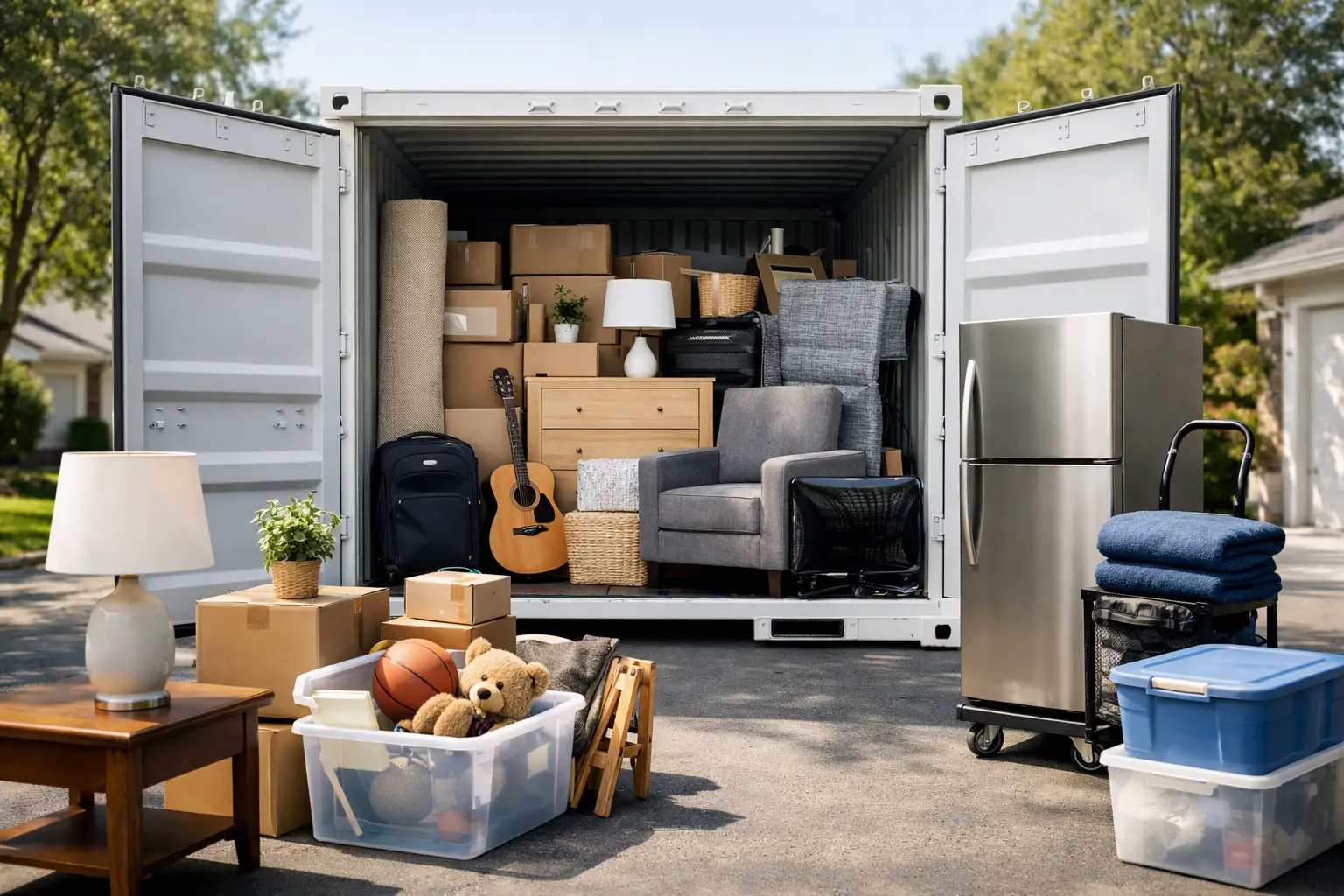
What Fits in a Moving Container?
Most people ask what fits in a moving container when they are trying to avoid two bad outcomes: paying for more space than they need, or running out of room halfway through loading. That question matters because container size affects cost, packing strategy, and how stressful moving day feels.
The short answer is that a moving container can usually hold the contents of one or more rooms, depending on the container size, how bulky your furniture is, and how efficiently you pack. But square footage alone does not tell the whole story. A home with light furniture, stacked boxes, and good planning fits very differently than one with oversized sectionals, patio furniture, and garage equipment.
What fits in a moving container depends on more than room count
People often estimate by saying, “this is a one-bedroom move” or “this is about half a house.” That helps, but it is still rough. What really determines fit is the mix of items going inside.
A container loaded with mostly boxes, chairs, and standard bedroom furniture will usually hold more than a container loaded with appliances, recliners, workshop tools, or commercial shelving. High-density items also change how you load. Books, files, tile, and tools do not take up huge amounts of space, but they add weight quickly and need to be spread out carefully.
That is why the better question is not just what fits in a moving container, but what kind of items fit comfortably and safely without forcing you to stack too high or cram pieces where they can shift in transit.
A practical way to estimate your container space
If you are packing a studio or small one-bedroom apartment, a container can often handle major furniture, mattresses, boxes, and small appliances without much trouble. For a larger one-bedroom or a modest two-bedroom home, it depends on how much extra storage you have built up in closets, patios, attics, and garages.
Families tend to underestimate those overflow areas. The spare room full of seasonal bins, the garage shelving, the backyard equipment, and the dining room hutch all count. So do business items if you are moving office furniture, records, or inventory.
A good estimate starts with your largest items first. Think about beds, sofas, dining tables, dressers, desks, washers, dryers, refrigerators, and large shelving units. Once those are accounted for, the remaining space usually goes to boxes, chairs, lamps, and loose household items. If your large furniture already fills most of the floor footprint, your container may hold fewer boxes than you expected.
Common household items that usually fit well
Moving containers are built for everyday moving and storage needs, so most standard household goods fit without issue. That includes bedroom sets, living room furniture, boxed kitchenware, clothing, toys, décor, and garage storage.
Items that typically pack well include couches, loveseats, coffee tables, end tables, mattresses, box springs, bed frames, dressers, nightstands, bookshelves, desks, dining sets, moving boxes, plastic totes, and small to midsize appliances. Patio furniture also fits well if it can be stacked or broken down.
The key is whether those pieces can be loaded tightly and secured properly. Furniture with removable legs, shelves, or glass components is easier to place efficiently. Taking a few minutes to disassemble larger pieces can make a noticeable difference in how much room you gain.
What takes up more space than people expect
Some items look manageable in a room but become awkward inside a container. Sectional sofas are a common example. So are large recliners, extra-deep armchairs, oversized headboards, and long dining tables that do not break down easily.
Garage and outdoor items also surprise people. Lawn equipment, grills, bikes, ladders, workbenches, and storage racks eat up space fast because they are hard to stack cleanly. The same goes for bulky commercial items such as display fixtures, office cabinets, and boxed inventory in odd sizes.
If you are moving out of a house with a full garage, attic, or shed, those areas may take more room than an entire bedroom. That does not mean they will not fit. It just means they should be included in your estimate from the start, not treated as afterthoughts.
What fits in a moving container for business use
For small businesses and contractors, container space is less about room count and more about function. A moving container can hold office desks, chairs, filing cabinets, boxed records, retail fixtures, tools, job-site materials, and temporary overflow storage.
This works especially well when you need on-site access while you remodel, relocate, or free up space in your building. A portable container lets you load in stages instead of shutting down operations for a rushed move.
That said, business storage often includes heavy or irregular items. Shelving parts, equipment, and dense boxes need a balanced load. If your contents are valuable, fragile, or needed in a specific order, pack with access in mind instead of simply filling every inch.
Packing style changes how much fits
Two people with the same amount of stuff can get very different results based on how they pack. Good packing is not about cramming. It is about using the full shape of the container while protecting what is inside.
Start by placing heavy, sturdy items on the floor and along the walls. Use mattresses and boxed items to create stable layers. Fill gaps with smaller boxes or soft goods, but keep the load balanced from side to side. Stack vertically when it is safe, and avoid leaving open air between items if you can secure the space better.
Uniform box sizes help a lot. Random shopping bags, loose bins, and half-filled cartons make it harder to use vertical space. Disassembling bed frames, table legs, and shelving also helps you turn awkward furniture into stackable parts.
When containers are delivered at ground level, loading is usually easier than working from a truck ramp. That matters because easier loading often leads to better packing decisions and less rushed stacking. Features like a level delivery system also help reduce shifting during transport, which is especially useful when your load includes furniture and fragile household goods.
Items you should think twice about packing
Not everything belongs in a moving container. Perishable food, hazardous materials, flammable liquids, and certain chemicals should stay out. That includes gasoline, propane, paint in some cases, and anything that could leak, ignite, or create fumes.
You should also be cautious with items that are highly sensitive to heat or cold if the container will sit for an extended period. Electronics, artwork, candles, records, and delicate instruments may need extra planning depending on season and storage length. Weatherproof steel containers offer strong protection, but climate sensitivity is still a separate issue.
If you have questions about a specific item, it is always better to ask before loading than to deal with damage or safety problems later.
How to know if you need one container or more than one
If your move includes a full multi-bedroom home, a large amount of outdoor equipment, or both household and business items, one container may not be enough. The same goes for people who are using the container as part move, part temporary storage unit.
Think about your timeline too. If you need to access some belongings during a remodel or staged move, splitting contents between containers can make life easier. One can hold furniture and long-term storage, while the other keeps daily-use items accessible.
For customers in Fort Worth, Amarillo, and Oklahoma City, this flexibility is one reason portable storage works so well. You are not forced into a one-day truck rental schedule if your move is happening in phases.
The best way to answer the size question
If you are still unsure what fits in a moving container, walk through your home or business and count by category instead of by room. List your major furniture, estimate your box count, and include everything stored outside the main living areas. That gives you a much more accurate picture than saying “two bedrooms” and hoping for the best.
It also helps to be honest about how you live. Minimalist apartments fit differently than family homes with years of stored belongings. Renovation projects fit differently than clean point-to-point moves. There is no one-size-fits-all formula, and that is exactly why flexible container service tends to work better than rigid moving options.
The smartest move is to plan for the space you actually need, not the space you wish your stuff would take up. A little extra thought before delivery can save a lot of trouble once loading starts.