
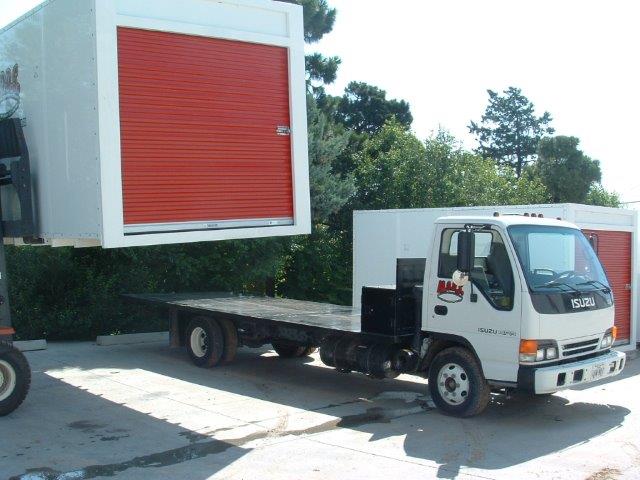
Usually yes, with conditions. Under most standard homeowners policies, your personal property is covered against named causes of loss such as theft, fire, wind, hail and vandalism wherever it is, but belongings kept away from your home, including a container stored at a provider’s yard, are typically subject to an off-premises limit equal to a percentage of your total personal property coverage. A container sitting in your own driveway is generally treated as on-premises property with your full personal property limit. Flood, rising water, mold, insects and gradual deterioration are commonly excluded regardless of location. Confirm your own policy with your agent, document what you load, and ask MODS about contents protection options for anything that exceeds your coverage.
A MODS container in the driveway is the easiest way to clear a house for a renovation, stage a home for sale or hold everything between closings. The question families ask once the container is loaded is whether the furniture, tools and boxes inside are still insured. The answer depends less on the container than on where it is parked and what your policy says about property away from home.
This guide explains how standard homeowners and renters policies typically treat belongings in a portable storage container in Texas and Oklahoma, which losses are usually covered and which are not, how to document your contents, and when it makes sense to add coverage. It is general information, not insurance advice; your own policy and agent govern your coverage.
Is a storage container in my driveway covered by my homeowners policy?
Generally yes, and usually at your full personal property limit, because the container is on your residence premises. Standard homeowners policies include a personal property section, often called Coverage C, that insures the contents of your home against a list of named perils. According to the Insurance Information Institute, that coverage follows your belongings wherever they are, with reduced limits once they leave the residence premises.
A rented container parked on your driveway or in your side yard is on your premises. The belongings inside are the same belongings that were in your garage last week, and most policies treat them that way. Two cautions apply:
- The container itself is not yours. MODS owns it. Damage to the container is handled under the rental agreement, not your homeowners policy.
- Named perils still apply. Theft, fire, lightning, wind, hail and vandalism are the usual covered causes for personal property. Flood, surface water, mold and gradual damage usually are not, whether the items are in the house or in the container.
If the container will sit on the street rather than your driveway, check two things: the city’s rules, covered in do storage containers need permits, and whether your insurer still considers the street adjacent to your lot to be on-premises. Most do not, which moves the contents into the off-premises category below.
What changes when the container is stored at a MODS facility?
The contents become off-premises property, and most standard policies cap off-premises coverage at a percentage of your personal property limit. This is the single most important distinction in the whole question. MODS can keep a loaded container at your home, at a secure MODS facility outdoors, or at a facility indoors. Once the container leaves your lot, your insurer treats the contents the way it treats belongings in a self-storage unit or a college dorm room.
Container location | How most standard policies treat the contents | What to check |
|---|---|---|
Your driveway or yard | On-premises personal property, full Coverage C limit, named perils | That the container is on your lot, not the street |
Street in front of your house | Often off-premises; depends on the policy wording | Ask your agent before loading |
MODS outdoor secure yard | Off-premises personal property; capped at a percentage of Coverage C | Whether the cap covers the value loaded |
MODS indoor facility | Same off-premises cap; lower risk of weather and theft loss | Same cap; consider added coverage for high-value items |
In transit between locations | Usually covered under the off-premises provision; some policies have separate transit language | Confirm transit is included |
For a typical household, the off-premises cap is enough to cover a few rooms of furniture but not a whole house. If you are loading a full home into two containers headed for the yard between closings, that is the moment to call your agent. The Texas Department of Insurance and the Oklahoma Insurance Department both publish consumer guides to reading the personal property section of a policy.
What kinds of damage are covered, and what is excluded?
Theft, fire, wind, hail, lightning and vandalism are typically covered; flood, surface water, mold, pests, earth movement and gradual deterioration typically are not. Because personal property is usually written on a named-perils basis, the question is not ‘was it damaged’ but ‘was it damaged by a listed cause’.
Commonly covered
- Theft and burglary, which is why locks and facility security matter; see are portable storage containers secure
- Fire and lightning
- Windstorm and hail, the two most frequent causes of property claims across Dallas-Fort Worth, the Panhandle and central Oklahoma according to National Weather Service severe weather records
- Vandalism and malicious mischief
- Vehicle impact, falling objects, weight of ice or snow on the structure
Commonly excluded
- Flood and surface water, which requires a separate flood policy
- Water that seeps in over time, condensation and humidity damage
- Mold, mildew, rot and rust
- Insects, rodents and other vermin
- Earth movement
- Wear, tear and gradual deterioration
- Business property above a small sublimit, and some categories such as cash, jewelry and firearms above their own sublimits
The excluded list is why packing matters as much as coverage. A loaded container that sits for three months through a North Texas summer can see humidity damage that no policy will pay for. The how to protect items in storage and weatherproof portable storage containers guides cover moisture control, desiccants, elevating boxes and what not to store.
Does renters insurance cover a storage container?
Yes, in the same structure: personal property coverage with an off-premises limit. Renters and condo policies insure belongings rather than the building, so a tenant who rents a MODS container for a move between apartments is typically covered for theft, fire, wind and hail up to the policy’s personal property limit at the rented premises, and up to the off-premises percentage once the container is at a MODS facility.
The common gap for renters is simply not having a policy. A container loaded with a household and no renters policy has no coverage at all unless the storage provider’s contents protection plan is purchased. Landlords’ policies never cover tenant belongings.
How do you document what you put in a storage container?
Inventory, photograph and value the contents before the door closes, and keep the records somewhere other than the container. An insurer pays on proof, and the proof is easiest to create on loading day.
- Make a numbered inventory by box and by furniture piece as it goes in. A spreadsheet or the notes app on a phone is enough.
- Photograph everything, including the open container at the end of loading and close-ups of high-value items and serial numbers on electronics and tools.
- Gather receipts or estimate replacement values for anything expensive. Replacement cost versus actual cash value is set by your policy; knowing which you have tells you how a claim would be paid.
- Separate the exclusions. Cash, important documents, jewelry, firearms and irreplaceable items should go with you, not in storage; most policies sublimit them and some storage agreements prohibit them.
- Note the location and dates. When the container was delivered, when it moved to the yard, when it came back. Off-premises limits and any transit language key off those dates.
- Email the inventory to yourself and your agent. If the container is ever involved in a claim, the file is already where it needs to be.
This takes about an hour for a typical three-bedroom load and is the difference between a claim settled in weeks and one argued for months.
When should you add coverage for a storage container?
When the value loaded exceeds your off-premises limit, when you have high-value items with sublimits, or when you have no policy at all. There are three common ways to close the gap.
- Ask your agent to raise or waive the off-premises limit for the storage period. Some insurers extend full coverage for property in storage during a move for a defined number of days; the policy wording controls.
- Schedule specific items. A scheduled personal property endorsement covers named valuables at an agreed value, usually on broader terms than the base policy, wherever they are.
- Buy a contents protection plan from the storage provider. Many portable storage companies offer protection options for the contents during storage and transit. Ask MODS what is available for your rental and how it coordinates with your own policy.
After a storm, the calculus changes. Families using containers for storm recovery storage are often moving damaged and undamaged items out of a house that is itself under claim. Keep the two separated and inventoried, because the adjuster will need to know which items were damaged by the covered storm and which were simply stored.
How does MODS reduce the risks that insurance does not cover?
With steel, weather-resistant containers, ground-level loading that keeps items dry, and secured indoor and outdoor facilities in Fort Worth, Amarillo and Oklahoma City. Insurance pays after a loss; the container and the facility are what prevent one.
- MODS portable storage containers are built to shed rain and resist wind and hail, the perils that drive most claims in this region
- Ground-level delivery and the level-lift system keep the container flat and the contents from shifting in transit
- Containers at MODS facilities sit inside secured yards or indoors, which lowers theft exposure and, for indoor storage, removes weather exposure entirely
- You bring your own lock, so only you have the key
Service areas and local details are on the Fort Worth, Oklahoma City and Amarillo location pages.
Frequently asked questions about insurance and portable storage containers
Does homeowners insurance cover items in a portable storage container?
Usually yes for named causes of loss such as theft, fire, wind, hail and vandalism. A container on your own driveway is typically covered at your full personal property limit, while a container at a storage provider’s facility is typically subject to an off-premises limit that is a percentage of that amount. Check your own policy.
Is a storage container at a MODS facility covered the same as one in my driveway?
Not usually. Once the container leaves your lot, most standard policies treat the contents as off-premises property with a reduced limit. The same perils apply, but the maximum payout is lower.
Does my policy cover the container itself?
No. MODS owns the container, and responsibility for damage to it is set by the rental agreement, not your homeowners policy.
Is hail damage to items in a storage container covered?
Hail and windstorm are typically covered perils for personal property, which matters in North Texas, the Panhandle and Oklahoma where they are the most common property claims. Water that enters gradually or condenses inside is usually excluded, so weatherproof containers and proper packing still matter.
Does homeowners insurance cover flood damage to a storage container?
Typically no. Flood and surface water are excluded from standard homeowners and renters policies and require a separate flood policy. Elevating boxes and avoiding low spots in the driveway reduce the risk.
Does renters insurance cover a portable storage container?
Yes, in the same way homeowners insurance does: personal property coverage with an off-premises limit when the container is away from the rented premises. A tenant with no renters policy has no coverage unless a contents protection plan is purchased.
What should I not put in a storage container because insurance will not cover it?
Cash, important documents, jewelry, firearms and irreplaceable items are usually sublimited or excluded and are often prohibited by storage agreements. Keep them with you.
How do I prove what was in the container if I need to file a claim?
Keep a numbered inventory, photographs of the loaded container and of high-value items with serial numbers, receipts or replacement values, and the delivery and pickup dates. Store the records outside the container and email a copy to your agent.
Can I increase coverage while my belongings are in storage?
Often yes. Ask your agent about raising the off-premises limit for the storage period, scheduling specific valuables, or a storage endorsement. Storage providers also commonly offer contents protection plans that can sit alongside your policy.
Does MODS offer contents protection?
Ask when you book. MODS can explain the storage location options, what the rental agreement covers and what contents protection is available for your rental so you can coordinate it with your own homeowners or renters coverage.
Ready to reserve a MODS container? Ask about contents protection when you book
MODS Mobile On Demand Storage delivers steel portable storage containers to homes and businesses across Dallas-Fort Worth, the Texas Panhandle and the Oklahoma City metro, with the option to keep the container at your place or at a secure MODS facility. Our team can walk you through the storage location options, what your rental agreement covers, and what protection options are available for your contents so you can match them to your own homeowners or renters policy.
Call 817-847-6637 in Fort Worth, 405-720-7344 in Oklahoma City, or contact MODS online for a free quote. Same-week delivery is available in most service areas.